
Why is a Switching Power Supply More Efficient Than a Linear Power Supply
2025-12-24
When designing an electronic system, power conversion efficiency is paramount. It impacts heat generation, energy costs, and overall reliability. The fundamental choice often boils down to two main technologies: the Switching Power Supply and the Linear Power Supply. At Starwell, we specialize in advanced power solutions, and a key question we address is: why is a Switching Power Supply demonstrably more efficient than its linear counterpart? The answer lies in their core operational principles.
A linear regulator acts like a variable resistor, dropping excess input voltage to produce a lower output voltage. This "burning off" of voltage as heat leads to significant power loss, especially when the difference between input and output is large. In contrast, a Switching Power Supply operates on a high-frequency switching principle. It rapidly turns transistors on and off to chop the input power, then uses inductors and capacitors to store and release energy, achieving the desired output. This minimizes energy wasted as heat.
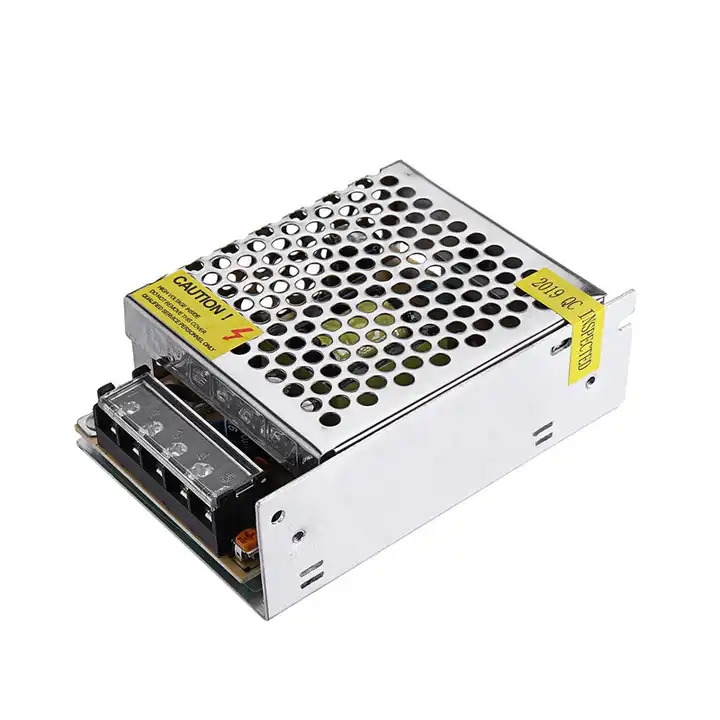
Key Efficiency Advantages of a Switching Power Supply
-
Minimal Heat Dissipation: By switching rather than dissipating, losses are dramatically reduced.
-
Wide Input Range: Efficiently handles a broad range of input voltages without a proportional increase in loss.
-
Higher Power Density: Smaller components (like transformers) at high frequencies allow for more compact and lighter designs, a hallmark of Starwell's product portfolio.
The efficiency difference can be stark, as shown in this comparison for a common 5V output application:
| Feature | Linear Power Supply | Switching Power Supply |
|---|---|---|
| Basic Operation | Dissipates excess voltage as heat | Chops & regulates via high-frequency switching |
| Typical Efficiency | 30-50% | 75-95%+ |
| Primary Loss | Heat dissipation from voltage drop | Switching & magnetic core losses |
| Heat Generation | High, often requiring large heatsinks | Low, enabling smaller form factors |
| Best For | Low-noise, low-ripple, low-power apps | High-efficiency, compact, wider input range |
Switching Power Supply FAQ
Q: What are the main disadvantages of a switching power supply?
A: The primary trade-offs are increased output noise/ripple and potential for Electromagnetic Interference (EMI) due to the high-frequency switching. Careful circuit design and filtering, which Starwell expertly implements, are crucial to mitigate these effects.
Q: Can a switching power supply be as quiet as a linear one?
A: While inherently noisier, modern Switching Power Supply designs from reputable brands like Starwell incorporate sophisticated filtering, shielding, and control techniques to achieve exceptionally low noise levels suitable for most sensitive applications, bridging the performance gap.
Q: How do I choose between a switching and linear power supply?
A: Choose a linear supply for ultra-low-noise, simple, low-current applications (e.g., audio pre-amplifiers, sensor bias). Opt for a Switching Power Supply when efficiency, compact size, or handling a wide input voltage range is critical (e.g., consumer electronics, industrial systems, computing).
In summary, the superior efficiency of a Switching Power Supply stems from its fundamental switch-mode operation, which minimizes energy loss as heat. This translates to cooler operation, lower energy costs, and more compact designs—benefits that Starwell engineers into every power solution we offer.
Ready to leverage the efficiency of a high-performance Switching Power Supply for your next project? Contact us today to discuss how Starwell's expertise can power your innovation.