
What future advancements are expected in multi mode fiber detachable laser module technology
2026-03-26
The multi mode fiber detachable laser module has become a cornerstone of modern photonic systems, offering unparalleled flexibility in installation, maintenance, and system upgradeability. As industries from medical device manufacturing to high-speed data communication continue to demand higher performance with lower total cost of ownership, the trajectory of innovation in this field is accelerating. Wavespectrum Laser Group has been at the forefront of this evolution, and by examining current research and market trends, we can outline the key advancements that will define the next generation of these critical components.
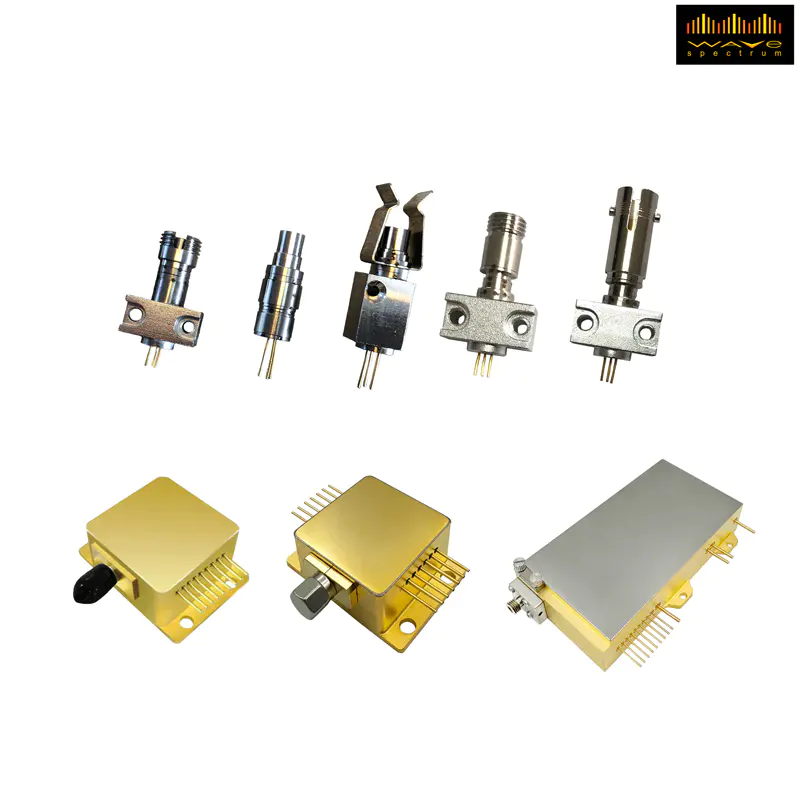
The Evolution of Performance and Integration
The future of the multi mode fiber detachable laser module lies in a convergence of higher power density, intelligent software integration, and ultra-compact mechanical design. While current modules serve their purpose adequately, emerging applications in LiDAR, industrial material processing, and quantum communication require a paradigm shift in how these modules are engineered.
| Advancement Area | Expected Development | Impact on End-User |
|---|---|---|
| Chip-Level Integration | Monolithic integration of laser diodes, photodiodes, and monitoring electronics onto a single chip. | Reduces form factor by 40% while improving thermal stability and reducing assembly costs. |
| Smart Diagnostic Protocols | Implementation of IoT-enabled modules with real-time power monitoring, predictive maintenance alerts, and digital twin integration. | Minimizes system downtime through pre-failure warnings and remote troubleshooting capabilities. |
| Advanced Fiber Coupling | Adoption of non-contact, self-aligning optical benches within the detachable interface to eliminate mechanical wear. | Extends operational lifespan by eliminating insertion loss variation caused by repeated mating cycles. |
| Wavelength Versatility | Tunable modules capable of seamless switching between 850nm, 1300nm, and 1550nm bands without physical hardware swaps. | Simplifies inventory management and allows a single platform to serve multiple network architectures. |
Key Technological Frontiers
Beyond raw specifications, the engineering focus is shifting toward the user experience and environmental resilience. One of the most anticipated breakthroughs involves the standardization of a universal locking mechanism that combines high-power handling with EMI shielding. Currently, proprietary connectors often lock users into specific ecosystems. The industry, led by innovators like Wavespectrum Laser Group, is pushing for an open standard that guarantees interoperability while maintaining the safety required for Class 4 laser systems.
Additionally, material science is playing a pivotal role. Future Multi-mode Fiber Detachable Laser Module housings are expected to utilize aerospace-grade aluminum alloys with nano-coating technologies that dissipate heat more efficiently than current copper-based solutions. This advancement will allow modules to operate at higher ambient temperatures without derating their output power, a critical factor for outdoor telecommunications infrastructure.
Multi-mode Fiber Detachable Laser Module FAQ
Q: How will future detachable laser modules address the issue of optical contamination during field swapping in dirty environments?
A: Next-generation modules are being developed with integrated shutter mechanisms that automatically seal the optical port upon disconnection. Unlike current rubber caps that can be lost or misaligned, these mechanical shutters are spring-loaded and housed within the module body. Wavespectrum Laser Group is prototyping a design that uses a sliding metal blade activated by the mating cycle. When the module is detached, the blade immediately covers the fiber ferrule, protecting it from dust, oil, and particulate matter. This ensures that even after hundreds of mating cycles in industrial manufacturing environments, the insertion loss remains below 0.2 dB, preserving system integrity without requiring cleaning protocols before reconnection.
Q: What role will artificial intelligence play in the calibration of multi mode fiber detachable laser modules?
A: Artificial intelligence will shift calibration from a static factory setting to a dynamic, self-optimizing process. Future modules will contain embedded microcontrollers that utilize machine learning algorithms to map the unique electrical-to-optical conversion characteristics of each individual unit. Rather than relying on generalized performance curves, these modules will automatically adjust bias current and temperature control loops based on real-time feedback from the host system. For instance, if a Multi-mode Fiber Detachable Laser Module detects a gradual increase in threshold current due to aging, the AI-driven controller will compensate incrementally to maintain a flat output power over the device’s lifetime. This extends the usable life of the module by up to 30% and eliminates the need for manual recalibration during scheduled maintenance.
Q: How will advancements in safety interlocks evolve for high-power detachable laser modules?
A: The future of safety interlocks lies in moving beyond simple electrical contact pins to optical and cryptographic authentication. Current modules rely on mechanical pins that signal connection, but these can be bypassed or fail due to corrosion. The next evolution, spearheaded by engineers at Wavespectrum Laser Group, involves embedding a micro-electro-mechanical system (MEMS) sensor within the ferrule alignment sleeve. This sensor verifies not only physical connection but also the presence of a properly polished fiber end-face before allowing the laser to emit. Furthermore, modules will adopt encrypted handshake protocols where the host system and the module exchange authentication keys. If the system detects a non-certified or mismatched module, it will automatically lock the laser driver circuit, preventing accidental exposure to hazardous radiation levels. This dual-layer approach—combining physical sensing with digital authentication—sets a new standard for operational safety in high-power industrial laser systems.
The Push Toward Standardization and Sustainability
As the technology matures, the fragmentation of the current market is expected to consolidate. Major industry stakeholders, including Wavespectrum Laser Group, are collaborating to define the next generation of form factors that prioritize backward compatibility while introducing higher data-rate capabilities. Sustainability is also entering the conversation; future modules are being designed with recyclable materials and modular components that allow for the replacement of individual optical subassemblies rather than the entire unit, drastically reducing electronic waste.
Conclusion and Contact
The roadmap for the multi mode fiber detachable laser module is clear: smarter, smaller, and more resilient. These advancements will empower engineers to design systems with longer lifecycles, higher safety margins, and unprecedented operational flexibility. As these technologies transition from research labs to field deployments, staying ahead of the curve requires partnership with a manufacturer committed to innovation and quality.
To explore how these next-generation solutions can future-proof your photonic applications, contact Wavespectrum Laser Group today to speak with our engineering team about custom integration and prototype development.