
How Much Does Printed Circuit Assembly Cost per Board in Low-Volume Production
2026-08-26
For engineering managers, hardware startups, and procurement specialists, the cost of Printed Circuit Assembly in low-volume runs (typically 1–100 boards) remains one of the most opaque and frequently miscalculated line items in a project budget. Unlike high-volume production where economies of scale drive unit prices down to pennies, low-volume Printed Circuit Assembly carries a fundamentally different cost structure—one where fixed overhead, setup labor, and material minimums often overshadow the per-board component costs. At Hoshineo Lcd-Tech, we have analyzed thousands of low-volume quotes and found that most buyers overpay by 30–60% simply because they do not understand how assemblers price these small batches. This guide breaks down every cost layer, provides real-world pricing benchmarks, and delivers actionable strategies to optimize your next low-volume Printed Circuit Assembly order without sacrificing quality.
The Four Pillars of Low-Volume Printed Circuit Assembly Pricing
Every quote for low-volume Printed Circuit Assembly can be deconstructed into four fundamental cost drivers. The table below summarizes their typical weight in a 10-board prototype order versus a 100-board pilot run.
| Cost Component | Typical Share (10 boards) | Typical Share (100 boards) | Key Variable |
|---|---|---|---|
| PCB Fabrication | 15–20% | 20–25% | Layer count, material, surface finish |
| Component Sourcing | 20–30% | 35–45% | Distributor markup, reel vs. cut-tape |
| Setup & Stencil | 30–40% | 15–20% | Stencil laser cutting, program creation |
| Assembly Labor & Inspection | 20–25% | 15–20% | Placement time, AOI/X-ray testing |
Detailed Cost Breakdown for a Typical 4-Layer Board
To illustrate real numbers, consider a standard 4-layer FR4 board with 150 components (mixed SMD and through-hole), dimensions 100mm x 80mm. Below are estimated ranges from multiple U.S.-based and offshore Printed Circuit Assembly providers in Q2 2026.
| Quantity | PCB Fab (bare board) | Components (BOM cost) | Setup + Stencil | Assembly + Test | Total per Board |
|---|---|---|---|---|---|
| 5 pcs | $18–$22 | $45–$55 | $280–$350 | $60–$75 | $380–$500 |
| 25 pcs | $12–$15 | $40–$48 | $280–$320 | $40–$50 | $155–$195 |
| 100 pcs | $8–$10 | $35–$42 | $250–$290 | $28–$35 | $68–$82 |
Observation: The per-board cost drops by nearly 80% from 5 to 100 pieces, but the setup charge remains almost flat—proving that low-volume Printed Circuit Assembly is a fixed-cost game. The breakeven point where setup becomes less than 20% of total cost typically occurs above 50 units.
Hidden Costs That Inflate Your Quote
Beyond the line items above, three overlooked factors routinely add 15–25% to low-volume Printed Circuit Assembly invoices:
-
Engineering validation (NRE): Many assemblers charge $150–$300 for DFM (Design for Manufacturability) review and test fixture design, even for small batches.
-
Component moq penalties: If your BOM includes resistors or capacitors in tape-reel packaging (typically 5,000 pieces), you will pay for the full reel even if you only need 100. Hoshineo Lcd-Tech recommends specifying cut-tape or digi-reel formats for low volumes to avoid this surcharge.
-
Shipping and handling for partial reels: Freight costs for split reels from multiple distributors can add $50–$100 per order.
How to Reduce Low-Volume Printed Circuit Assembly Costs
Based on our internal data at Hoshineo Lcd-Tech, the following five strategies yield the highest ROI for low-volume buyers:
-
Consolidate BOM suppliers – Use a single distributor (e.g., DigiKey or Mouser) to qualify for volume tier discounts, even on small orders.
-
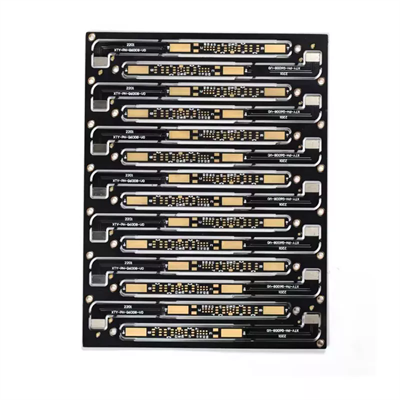
Panelize your PCB – Combine multiple designs into one panel and depanel after assembly; this shares the stencil and setup cost across several boards.
-
Choose standard thickness (1.6mm) and finish (HASL or ENIG) – Avoid exotic materials that require special handling.
-
Provide complete XY data and centroid files – Reducing the programmer’s time directly lowers the setup line item.
-
Ask for "prototype pooling" – Some assemblers combine multiple customers’ low-volume jobs on one production line, slashing setup fees by up to 50%.
Frequently Asked Questions About Low-Volume Printed Circuit Assembly
Q1: Why is the per-board cost so high for 5–10 pieces compared to 100 pieces?
A: The primary reason is that setup activities—stencil manufacturing, pick-and-place program generation, solder paste profiling, and first-article inspection—are fixed costs independent of quantity. For a 5-piece run, these fixed costs are spread over only 5 units, making each board bear a disproportionately large share. For a 100-piece run, the same fixed cost is distributed across 100 boards, dramatically lowering the unit price. Additionally, component pricing improves with larger tape sizes, and machine placement time per board becomes more efficient as the line runs continuously without re-calibration.
Q2: Does a fully turnkey Printed Circuit Assembly service always cost less than consignment?
A: Not necessarily—and the answer depends on your BOM complexity and your existing supply chain relationships. Turnkey (where the assembler sources all components) saves you procurement labor and often benefits from the assembler’s volume agreements with distributors, potentially lowering part costs by 5–12%. However, turnkey providers typically add a 10–18% handling fee on top of component costs. Consignment (where you supply your own parts) eliminates that fee but exposes you to inventory risks, shipping delays, and re-stocking charges if parts are damaged. For low volumes, Hoshineo Lcd-Tech observes that turnkey is usually 5–10% cheaper overall for BOMs with more than 50 unique part numbers, because the assembler’s sourcing efficiency outweighs their markup. For simple BOMs (under 20 parts), consignment often wins.
Q3: How can I get an accurate quote without committing to a full order?
A: Most reputable Printed Circuit Assembly houses, including Hoshineo Lcd-Tech, offer a DFM quote package where you submit your Gerber files, BOM, and placement list. They return a preliminary quote within 24–48 hours that includes three price tiers (e.g., 5, 25, and 100 pieces). To make this quote binding, ensure your BOM has manufacturer part numbers (MPNs) and preferred distributors listed—generic descriptions like "10kΩ 0603 resistor" lead to wide price variances. Additionally, request a separate line item for setup amortization so you can see exactly how much fixed cost you are paying. Finally, ask whether the quote includes electrical testing (flying probe or bed-of-nails) and conformal coating, as these are often excluded from initial proposals and added later as change orders.
Final Benchmark: What Should You Expect to Pay?
For a typical mixed-technology board (2–6 layers, 100–300 components) in 2026:
-
Prototype qty (1–5): $400–$700 per board (including NRE)
-
Pilot qty (25–50): $120–$220 per board
-
Low-volume production (75–150): $60–$95 per board
These figures assume standard FR4, lead-free HASL, and no exotic components (BGAs or micro-vias). If your design includes high-density interconnects or impedance control, add 30–50% to the assembly labor portion.
Take Control of Your Next Printed Circuit Assembly Project
Understanding the cost mechanics of low-volume Printed Circuit Assembly is the first step toward intelligent negotiation and design optimization. Whether you are prototyping a medical device, industrial sensor, or consumer IoT product, the difference between a $500 board and a $150 board often comes down to BOM consolidation, panelization, and choosing the right service tier. Hoshineo Lcd-Tech specializes in transparent, fixed-cost quoting for low-to-mid volume assemblies with no hidden fees for stencil reuse or minor BOM revisions.
Contact us today with your Gerber files and BOM—our engineering team will return a detailed, line-itemized quote within 48 hours, along with specific redesign suggestions to lower your per-board cost by at least 15%. Visit our website or email [email protected] to start your no-obligation cost audit. Let us turn your low-volume challenge into a manufacturing advantage.