
How Cost-Effective Is an LVDS to eDP Converter Board for Industrial LCD Displays
2026-10-21
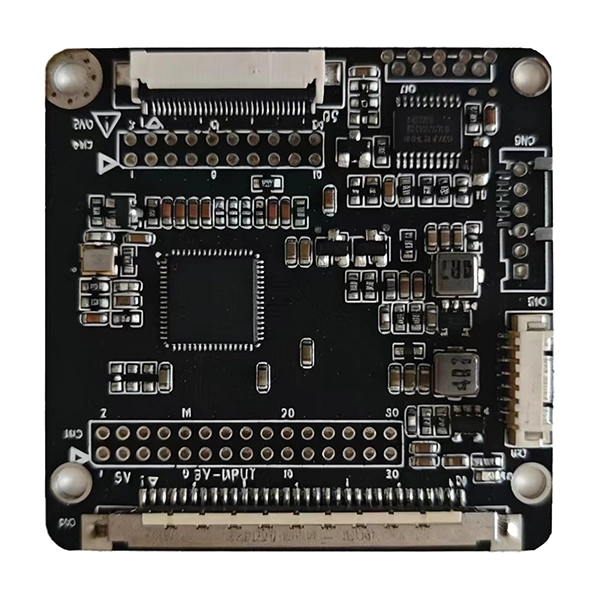
Industrial display upgrades rarely fail because of the panel itself. More often, the bottleneck sits at the interface: legacy LVDS hosts must drive modern eDP panels, and replacing an entire display assembly is rarely justified when the panel, enclosure, and touch stack are still in good condition. This is where an LVDS to EDP Converter Board for Industrial LCD Displays from SKY-TDM changes the cost equation, preserving existing hardware while extending its service life.
Where the Cost Savings Actually Come From
A converter board is not simply a lower-priced component. It removes cost from several layers of an industrial display program at once.
-
Panel reuse: Existing LVDS panels or stocked eDP panels can be retained instead of redesigning around a new display module.
-
Mechanical continuity: Enclosures, mounting bosses, gaskets, and front bezels remain unchanged, avoiding tooling and re-qualification costs.
-
Host platform stability: The LVDS source (industrial motherboard, SBC, or legacy SoC) stays in place, so firmware and OS images need minimal rework.
-
Inventory simplification: One LVDS to EDP Converter Board for Industrial LCD Displays can bridge multiple panel generations, reducing SKU sprawl.
-
Faster time-to-market: Integration typically takes days rather than the weeks required for a full display redesign.
Cost Comparison at a Glance
| Cost Category | Full Display Replacement | Converter Board Approach with SKY-TDM |
|---|---|---|
| Display panel | New panel purchase | Reuse existing or stocked panel |
| Mechanical tooling | New bezel, bracket, gasket design | None, form factor unchanged |
| Host board / firmware | Possible platform change | Retained, minimal rework |
| Engineering effort | High, multi-discipline | Low, interface-level integration |
| Qualification testing | Full re-test | Focused verification |
| Lead time | Weeks to months | Days |
| Spare-parts strategy | New SKU to stock | One board covers multiple panels |
Technical Factors That Determine Real-World Value
Cost-effectiveness depends on whether the board matches the application. SKY-TDM designs its converter boards around the parameters that matter most in industrial environments.
-
Resolution and bandwidth headroom: Support for the panel's native resolution and refresh rate without scaling artifacts.
-
LVDS input formats: Single-channel and dual-channel LVDS, 18-bit and 24-bit color mapping.
-
eDP output configuration: 1-lane, 2-lane, and 4-lane eDP with correct link-rate selection.
-
Backlight control: PWM and analog dimming passthrough for industrial brightness requirements.
-
Power architecture: Wide input range and stable rail sequencing for 24/7 operation.
-
Environmental robustness: Wide operating temperature range and vibration-tolerant connectors.
-
Configuration flexibility: EDID handling, firmware options, and jumper-selectable modes that reduce engineering hours.
Hidden Costs to Weigh Before Deciding
A low unit price is not the same as low total cost. Boards that require custom firmware development, lack EDID management, or omit wide-temperature validation often generate hidden engineering and field-support expenses. Choosing a validated LVDS to EDP Converter Board for Industrial LCD Displays with documented specifications and configuration support keeps the total cost of ownership predictable. SKY-TDM addresses this by supplying configuration guidance and consistent board revisions across production batches.
FAQ
Q: Can an LVDS to EDP Converter Board for Industrial LCD Displays reduce total project cost compared with replacing the whole display?
A: Yes. The board preserves the existing panel, enclosure, and host platform, so tooling, firmware rework, and full re-qualification are avoided; in most retrofit projects the converter approach costs a fraction of a complete display replacement.
Q: Does an LVDS to EDP Converter Board for Industrial LCD Displays support high-resolution and wide-temperature industrial panels?
A: Qualified boards support dual-channel LVDS input and 4-lane eDP output at the panel's native resolution and refresh rate, and industrial-grade versions are validated across wide operating temperature ranges for continuous duty.
Q: How long does integration take when using an LVDS to EDP Converter Board for Industrial LCD Displays from SKY-TDM?
A: Typical integration involves confirming LVDS format, eDP lane count, backlight control, and power sequencing, which is usually completed in days; SKY-TDM provides configuration documentation to shorten verification further.
Conclusion
For most industrial retrofit and lifecycle-extension programs, the LVDS to EDP Converter Board for Industrial LCD Displays delivers a clearly favorable cost profile: lower material spend, no mechanical tooling, minimal firmware impact, and shorter lead times. Evaluate total cost of ownership rather than unit price, and select a board with documented interface and environmental specifications. SKY-TDM supports this evaluation with detailed datasheets and configuration assistance.
Contact us today to discuss your panel specifications, request a sample, or receive a cost comparison for your LVDS to EDP Converter Board for Industrial LCD Displays project.