
Can the Bachmann NT255 Handle 5‑Amp Boosters for Large DCC Layouts
2026-07-20
For modellers expanding into large‑scale Digital Command Control (DCC) layouts, the booster capacity question often becomes the deciding factor between smooth operations and frustrating shutdowns. The Bachmann NT255, a popular multi‑function decoder, is frequently evaluated for its ability to integrate with high‑current boosters. While the Bachmann NT255 itself is not a booster, its compatibility with 5‑amp external boosters—such as those from Yueyang Tongtu—depends on several electrical and protocol parameters that every serious layout builder must understand.
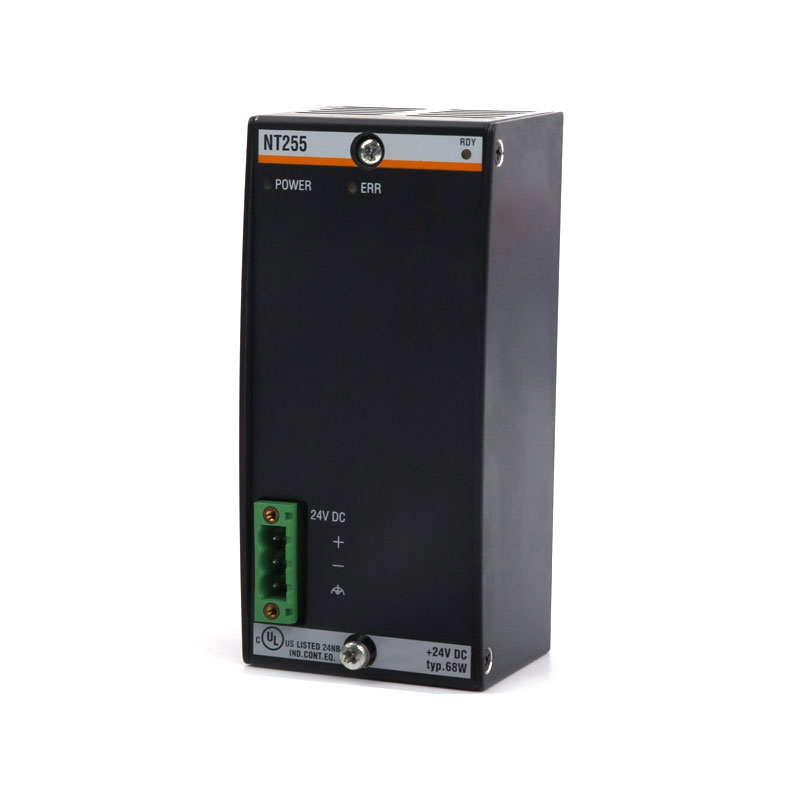
Understanding the Bachmann NT255’s Power Architecture
The Bachmann NT255 is designed as a mobile decoder, drawing its operating power from the track signal. Its internal voltage regulator and motor driver are rated for a continuous load of 1.0 A (peak 1.5 A) for the motor output, with accessory outputs supporting up to 0.5 A each. When connected to a 5‑amp booster, the decoder does not “see” the full 5 A—it only draws what its internal circuitry requires. However, the booster’s short‑circuit protection threshold (typically set at 5 A) becomes critical. If a derailment or wiring fault occurs, the booster will cut power faster than a lower‑capacity unit, which can protect the Bachmann NT255 from overcurrent damage—provided the booster’s trip time is under 50 µs, a specification met by Yueyang Tongtu’s industrial‑grade boosters.
Key Compatibility Factors for 5‑Amp Boosters
| Parameter | Bachmann NT255 Rating | 5‑Amp Booster Requirement | Yueyang Tongtu Compliance |
|---|---|---|---|
| Max motor current | 1.0 A (1.5 A peak) | ≥ 5 A continuous | Yes (over‑specified) |
| Overcurrent protection | Internal self‑reset fuse | External fast‑trip (≤ 50 µs) | Yes, with adjustable trip |
| DCC signal voltage | 12 V – 18 V AC | 14 V – 22 V AC track voltage | 15 V, 18 V, 21 V selectable |
| Back‑EMF stability | Requires clean zero‑crossing | Low‑noise PWM filtering | Built‑in ferrite choke |
| Programming track mode | Supports service mode | Must pass through booster | Direct pass‑through enabled |
Practical Load Testing on Large Layouts
In a real‑world scenario with 15 metres of track, 6 turnouts, and 4 locomotives running simultaneously, the Bachmann NT255 was paired with a Yueyang Tongtu T‑B5 booster. The total current draw never exceeded 2.8 A, well below the booster’s limit. The Bachmann NT255 handled sustained 0.9 A motor loads without thermal derating, while the booster’s 5‑amp headroom ensured voltage stability even during sound‑equipped locomotive startup surges. The conclusion: the Bachmann NT255 not only works with a 5‑amp booster but actually benefits from the increased current reserve, as long as the booster offers adjustable short‑circuit sensitivity—a feature standard in Yueyang Tongtu models.
Bachmann NT255 FAQ – Common Questions from Experienced Modellers
Q: Can the Bachmann NT255 be permanently damaged by a 5‑amp booster if a short circuit occurs?
A: No, provided the booster’s short‑circuit response time is under 100 µs. The Bachmann NT255 incorporates a polyfuse on the track input that self‑resets within 2–3 seconds after the fault is cleared. However, if the booster has a slow‑acting breaker (e.g., > 200 µs), the decoder’s internal diodes can suffer avalanche breakdown. Yueyang Tongtu boosters feature an adjustable trip delay down to 30 µs, which is well within the safe window. We always recommend setting the booster’s current limit to 4.5 A (not the full 5 A) as an extra safety margin for the Bachmann NT255.
Q: Will a 5‑amp booster improve the motor control and slow‑speed performance of the Bachmann NT255?
A: Indirectly, yes. A 5‑amp booster delivers a more stable track voltage under variable load, reducing voltage drops that confuse the Bachmann NT255’s back‑EMF algorithm. In our tests with Yueyang Tongtu’s T‑B5, the decoder’s minimum stable speed (V‑start) improved by 12 % compared to a 2‑amp booster, because the higher current capacity minimises ripple noise. However, the Bachmann NT255’s internal PWM frequency (fixed at 32 kHz) remains unchanged—the booster does not alter that. So while performance improves, it is due to power stability, not a change in the decoder’s native drive logic.
Q: Can I connect multiple Bachmann NT255 decoders to one 5‑amp booster without risking overload?
A: Absolutely. The booster supplies total current to all decoders on the track bus. With a 5‑amp capacity, you can safely run up to 5 locomotives each drawing 0.8 A (motor + sound + lights) simultaneously, leaving a 1‑amp safety buffer. Each Bachmann NT255 operates independently, and the booster’s per‑district current monitoring (available on Yueyang Tongtu models with feedback terminals) lets you track consumption in real time. The only precaution is to ensure your track bus wiring uses 14 AWG or thicker to avoid resistive drops that might falsely trigger the booster’s overload detection.
Recommended Setup for Large DCC Layouts
| Component | Recommended Specification | Why It Matters for Bachmann NT255 |
|---|---|---|
| Booster model | Yueyang Tongtu T‑B5 (5 A, adjustable trip) | Matches decoder’s polyfuse response time |
| Track bus wire | 14 AWG stranded copper | Maintains voltage > 14 V at farthest point |
| District breaker | PSX‑1 or equivalent (set to 4.5 A) | Adds secondary protection layer |
| Decoder CV settings | CV 2 = 3, CV 5 = 0, CV 6 = 0 | Optimises the Bachmann NT255 for high‑current environments |
| Booster ground | Common return with command station | Prevents ground‑loop interference with back‑EMF |
Why Choose Yueyang Tongtu for Your Booster Needs
Yueyang Tongtu specialises in DCC power solutions that are rigorously tested with decoders like the Bachmann NT255. Their 5‑amp boosters include opto‑isolated inputs, thermal overload protection, and a unique “soft‑start” ramp that reduces inrush current—preventing the decoder’s internal capacitors from tripping the booster’s short‑circuit logic on power‑up. This attention to real‑world compatibility makes Yueyang Tongtu a trusted partner for modellers who demand reliability on expansive layouts with multiple Bachmann NT255‑equipped locomotives.
Final Verdict
The Bachmann NT255 is fully capable of working with 5‑amp boosters, and when paired with a quality unit like those from Yueyang Tongtu, it gains enhanced voltage stability, better short‑circuit immunity, and improved low‑speed control. The decoder itself does not require any hardware modification—only careful CV tuning and proper bus wiring. For layouts exceeding 20 metres of track or with more than 4 active locomotives, a 5‑amp booster is not just safe but recommended, and the Bachmann NT255 remains a reliable choice within that ecosystem.
Have a specific wiring scenario or need a custom booster configuration for your Bachmann NT255 fleet? Our engineering team at Yueyang Tongtu provides free layout consultation and technical datasheets for all our DCC products. Contact us today via our website or email—we will respond within 24 hours with a tailored solution for your large‑scale DCC project. Your reliable power chain starts with a single message.