
Top Pillow Gel Pad Options for Cooler, Deeper Sleep
2026-11-01
If you’ve ever flipped your pillow at 2 a.m. hunting for the cool side, you know the struggle. A quality pillow gel pad can change that, but with so many options out there, finding one that actually works isn’t easy. That’s why we’ve rounded up the top choices for cooler, deeper sleep—including standout pads from Kunbao that are worth a closer look.
What Actually Makes a Gel Pad Feel Cold?
Your skin doesn’t measure temperature directly—it senses how quickly heat leaves your body. A gel pad feels icy because it pulls warmth away far faster than air or fabric ever could. The polymer matrix is packed with water, and water has a high specific heat capacity. That means it can absorb a lot of thermal energy before its own temperature rises, so the surface stays cool against your skin for minutes, not seconds.
Then there’s the initial shock of contact. Most gel pads are stored at room temperature, yet they still feel colder than the air around them. This comes down to thermal effusivity—a material’s ability to exchange heat with whatever touches it. Dense, moist gels rank high on that scale, so even a 70-degree pad can trigger the same cold receptors you’d expect from something much chillier.
Some formulas add phase-change compounds or extra water-retaining agents to prolong the effect. As the pad absorbs body heat, those ingredients slowly adjust, keeping the contact surface from warming too quickly. The result is a steady, cool sensation that feels more like a chilled compress than a piece of plastic.
The Best Picks for Side Sleepers Who Run Hot
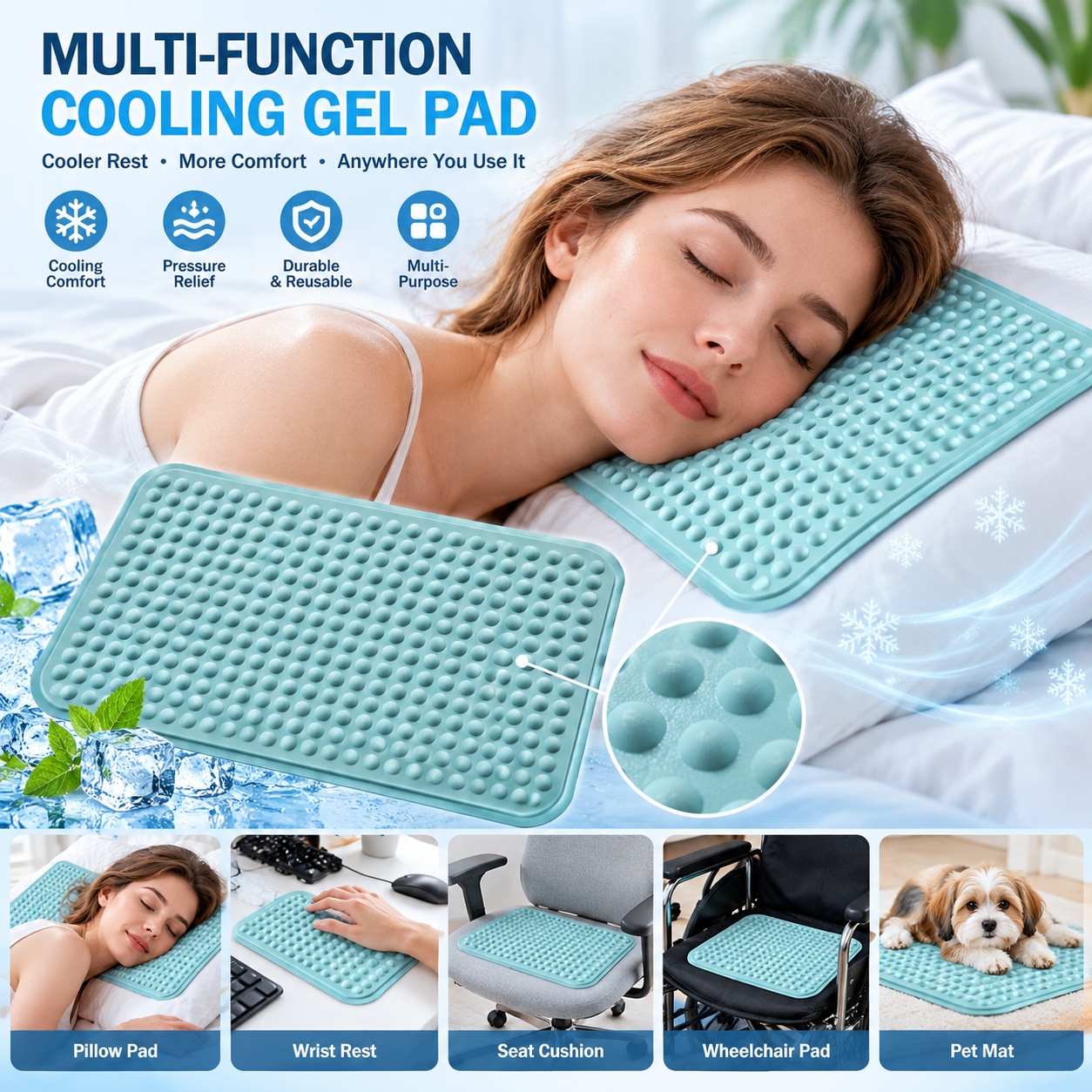
Side sleepers already need extra pressure relief at the shoulder and hip, but when you add night sweats into the mix, most standard foam beds turn into heat traps. The smartest route is a hybrid or latex mattress with a breathable coil core and a top layer that doesn’t hug too tightly. Look for models that use gel-infused or copper-infused foam, perforated airflow channels, or a zoned support system that keeps your spine aligned without sinking you into a warm pocket.
Pillows matter just as much. A lofty, solid-slab memory foam pillow might support your neck, but it rarely lets heat escape. Instead, try a shredded memory foam or latex pillow with an adjustable fill, which lets you dial in the loft while air moves freely between the pieces. If you want something simpler, a contour pillow with a mesh or Tencel cover can wick moisture away from your face and ears, which is often where hot sleepers feel it first.
Finally, don’t underestimate the power of your sheets and protector. A waterproof mattress protector can trap body heat, so if you use one, choose a version with a breathable polyurethane backing or a wool-based alternative. Sheets in percale cotton, bamboo rayon, or eucalyptus lyocell feel cool to the touch and don’t cling to sweaty skin the way sateen or microfiber often does.
Cheap vs. Premium: Where the Extra Money Goes
When you pick up a $30 pair of headphones and a $300 pair, the plastic shells might look similar from a distance. But the cheap version likely uses a single thin diaphragm that distorts bass at higher volumes, while the premium set has a multi-layered driver with a tuned acoustic chamber. That extra cost goes into components you can't see at first glance: better magnets, thicker voice coils, and damping materials that reduce resonance instead of just amplifying noise.
The same split shows up in clothing. A fast-fashion jacket might use a polyester shell with glued seams that crack after one winter. A higher-end jacket from a smaller brand often uses a woven nylon with a DWR finish that survives dozens of washes, plus taped seams and YKK zippers that don't snag. You're not paying for the logo alone; you're paying for the factory's willingness to reject imperfect stitching and use fabric that doesn't pill after three wears.
Sometimes the extra money buys longevity rather than performance. A budget chef's knife will need sharpening every week and may chip on a chicken bone, while a premium knife holds its edge for months because the steel contains more carbon and vanadium, and the heat treatment was done in smaller batches. That doesn't mean the cheap version is worthless—it just means the gap between the two is often hidden in the details of manufacturing, not in the packaging.
How to Keep Your Gel Pad from Sliding Around
A gel pad that shifts with every movement can quickly turn from a comfort booster into a daily annoyance. The simplest fix usually comes down to creating a bit of friction between the pad and the surface beneath it. Start by wiping down both the gel pad and the chair or mattress with a clean, slightly damp cloth, then allow them to dry fully. Any dust, oil, or residue will reduce grip, so this small step often makes a noticeable difference right away.
If cleaning alone doesn't hold the pad in place, try a reusable non-adhesive shelf liner cut slightly smaller than the pad. It grips both the gel surface and the underlying material without leaving sticky marks. For chairs with a smooth seat, a thin layer of silicone caulk applied in small dots or wavy lines on the underside of the gel pad can work wonders once cured. Just let it dry for a full day before placing the pad back down, and avoid using too much—four or five small dots near the corners and center are usually enough.
Another overlooked trick is to adjust how you sit or move. If you tend to slide forward while working or watching TV, the pad will follow that motion. Adding a small lumbar cushion behind your back can reduce forward pressure, keeping both you and the gel pad from drifting. For bed use, tucking the pad inside a fitted sheet or placing a thin, textured cotton cover over it will stop it from bunching without compromising the cooling effect. Small changes like these often hold better than straps or adhesives that wear out quickly.
Cleaning and Care Without the Hassle
Most people assume that keeping furniture or everyday items clean means setting aside an afternoon, digging out specialty sprays, and wrestling with removable covers that never quite fit back on. But it doesn't have to be that way. The real trick is choosing materials and finishes that shrug off spills before they become stains. Look for tightly woven fabrics with a subtle water-repellent treatment, or surfaces with a matte, micro-textured coating that hides fingerprints and wipes clean with a single pass of a damp cloth. When you start with the right foundation, routine care takes minutes, not hours.
Of course, even the most forgiving materials need a little attention now and then. Instead of relying on harsh chemicals, keep a simple kit nearby: a microfiber cloth, a bowl of warm water with a drop of mild dish soap, and a soft-bristle brush for corners. For daily upkeep, just vacuum or wipe down the surface while you're already tidying the room. If something does get spilled, blot it immediately with a dry cloth rather than rubbing, which pushes the liquid deeper. For tougher marks, use the soapy water sparingly and let the area air-dry away from direct heat. That's about as complicated as it needs to get.
What really makes a difference is building small, almost invisible habits into your routine. Flip or rotate cushions once a month so wear and fading stay even. Keep a small lint roller in a drawer for quick touch-ups on fabric, and place a washable runner or tray in high-traffic spots to catch drips before they reach the main surface. When you do launder something, follow the care tag but skip the fabric softener—it can leave a residue that attracts dirt. A quick shake outside or a five-minute tumble on low with wool dryer balls often restores loft and freshness without any extra effort. Clean doesn't have to mean complicated; it just means being a little proactive.
Real Buyer Complaints Worth Knowing Before You Buy
Before you check out, it helps to know that a decent chunk of reviews mention the same frustration: the included screws strip easily if you use anything but a hand screwdriver. Once that happens, you're stuck with a half-built item and a trip to the hardware store.
Another pattern in the complaints is the finish. On camera it looks smooth and premium, but several buyers say the edges have a slight roughness that catches on fabric. A few also noted that the color in person runs a shade darker than the listing photos suggest.
Shipping damage isn't the brand's fault, but how it's handled left some people annoyed. Instead of sending a replacement part quickly, customer service asked for multiple photos and then went quiet for nearly two weeks. If you need this item by a specific date, that delay is worth factoring in.
FAQ
A breathable outer cover matters as much as the gel core. Look for pads with open-cell or mesh fabric that lets air circulate, and check the thickness—anything over half an inch can trap heat instead of releasing it. A reversible design also helps since you can flip to the cooler side after the gel warms up.
Gel is a phase-change material: it absorbs heat from your skin and slowly releases it into the air. High-quality pads don't feel icy on contact; they stay a few degrees below body temperature for hours. If a pad only feels cool for ten minutes, the gel layer is probably too thin or poorly distributed.
Yes, but you want a pad with a sealed, quilted grid rather than a single flat pocket. The quilting keeps the gel from shifting into lumps, and a double-sealed edge prevents leaks when you adjust the pillow at night. Cheaper pads often cut corners here, so look for reinforced borders.
Some pads are designed to be trimmable, but most are not. If you cut into a sealed gel pocket, the gel will ooze out and the pad is ruined. Instead, choose a half-size or travel-specific gel pad, or tuck the extra material under the pillowcase rather than cutting it.
Yes, and they're especially useful because memory foam holds heat. Place the gel pad on top of the pillow, not underneath, so the gel makes direct contact with your skin through the pillowcase. Avoid pads with a sticky backing unless you want them to stay put on a smooth memory foam surface.
A gel-infused pillow mixes gel beads or fragments into the foam itself, which can reduce heat buildup slightly but often feels uneven. A separate gel pad gives you a consistent cooling layer you can move from pillow to pillow. If you already like your pillow's firmness, a pad is the cheaper and more flexible fix.
Spot clean only. Submerging the pad in water risks breaking the seals and letting moisture into the gel chambers. Use a damp cloth with mild soap, then let it air dry completely. Washing machines, even on gentle cycle, will eventually ruin the quilted compartments.
Several brands now use medical-grade silicone gel, which is naturally resistant to dust mites and mold. Look for a pad with a certified hypoallergenic cover and no added fragrances. Some budget pads use petroleum-based gels that can irritate skin, so check the material list before buying.
Conclusion
Many shoppers assume any gel pad will stay icy all night, but the cooling effect depends on the gel’s density, thickness, and whether it uses phase-change materials that absorb body heat instead of just sitting on top of your pillow. Cheaper pads often rely on thin, squishy gel layers that warm up quickly and lose their chill within an hour. Premium options add breathable mesh covers, medical-grade cooling gel, or contoured channels that let air move through the pad rather than trapping it against your face. For side sleepers who run hot, the best picks aren’t necessarily the thickest—they’re the ones shaped to support the neck without flattening under shoulder pressure, because a collapsed pad blocks airflow and turns warm fast.
Keeping a gel pad in place matters just as much as the gel itself. Thin straps, silicone corner dots, or a lightly textured underside stop the pad from sliding off a smooth pillowcase without making it stiff. Most quality pads wipe clean with a damp cloth and mild soap, but machine washing is a quick way to ruin the gel layer or crack the seams. Before buying, pay attention to real complaints: off-gassing smells that linger for days, gel clumping after a few weeks, and edges that curl upward against your ear. Those issues are far more telling than any temperature rating. A well-built pad shouldn’t need frequent adjustments, and if the gel shifts or the cover pills after one wash, it’s not worth the higher price. Look for patterns in negative reviews rather than isolated gripes.
Contact Us
Contact Person: Catherine Peng
Email: [email protected]
Tel/WhatsApp: +86-13434169510
Website: https://www.kbcoolgel.com/