
Top 10 DIN Rail Power Supplies for Reliable Industrial Automation
2026-05-23
In industrial automation, power reliability isn't just a preference—it's a necessity. DIN rail power supplies form the backbone of countless control cabinets, yet finding the right one can be surprisingly tricky. With so many brands and specs competing for attention, a clear comparison is long overdue. This list spotlights ten standout models that combine durability, efficiency, and genuine field-tested performance. Among them, you'll discover why TPS consistently earns its place in demanding environments—often outperforming far more expensive alternatives. Whether you're upgrading aging infrastructure or specifying for a new project, this guide cuts through the noise and helps you invest wisely.
The Backbone of Uninterrupted Automation
True automation isn't just about executing tasks—it's about doing so without pause, day after day. The real foundation lies in systems that anticipate failure before it happens, rerouting processes and adjusting resources in real time. Without this invisible layer of resilience, even the smartest workflows grind to a halt the moment something deviates from the script.
What separates fragile automation from industrial-strength continuity is often the mundane work of redundancy engineering. It's the unglamorous duplication of critical pathways, the constant health checks running in the background, and the clever fallback routines that keep operations flowing when primary components buckle. These elements don't make headlines, but they're what keep factories humming and data centers serving requests through the night.
At its core, the backbone of such systems is a quiet, relentless discipline. It's a design philosophy that treats errors not as exceptions but as inevitable events to be absorbed gracefully. When built correctly, the end user never sees the near misses—only the smooth, uninterrupted output that feels almost boring in its consistency.
Efficiency Metrics That Impact Your Bottom Line
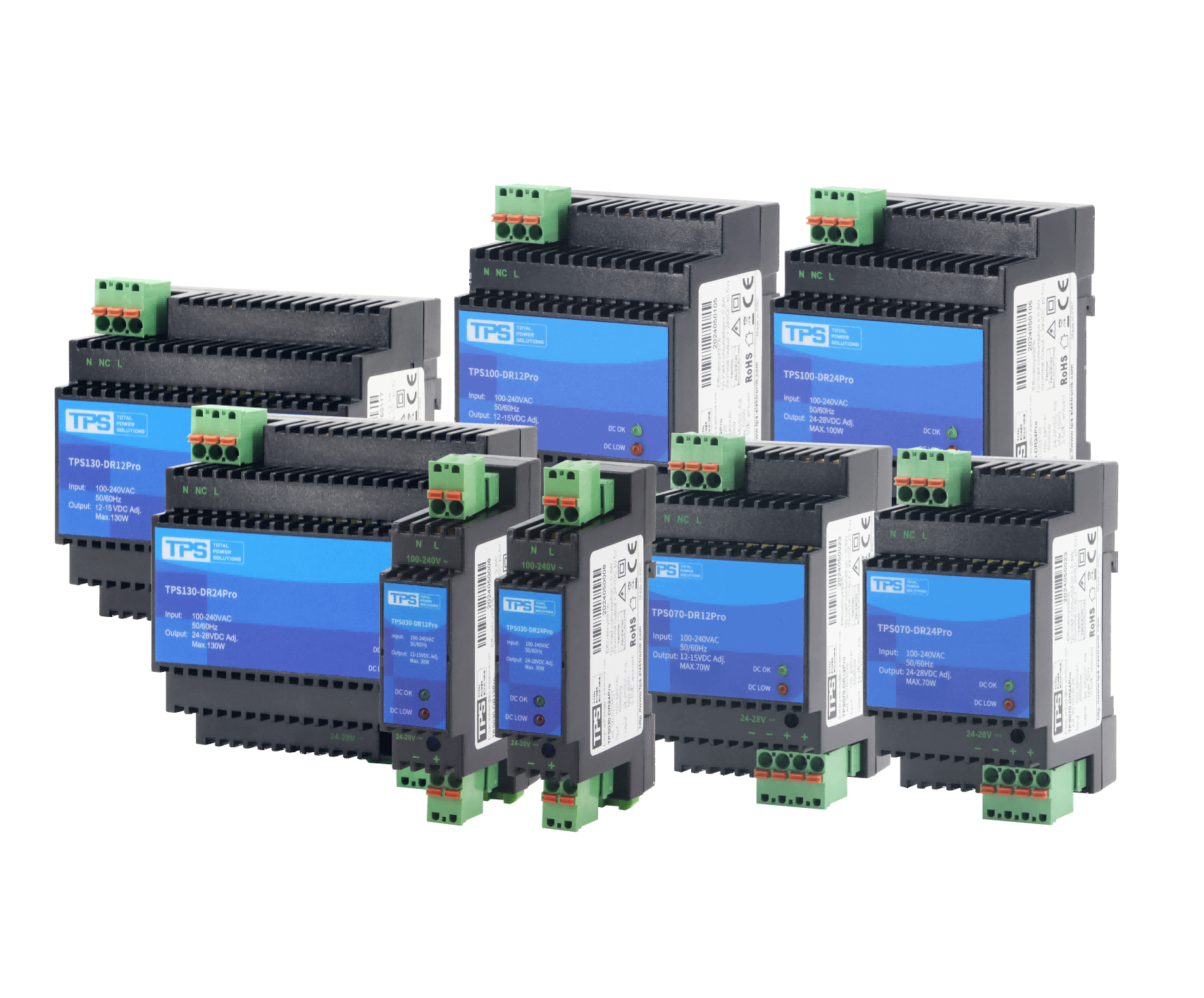
Every wasted minute in your operations quietly drains profit, yet many teams overlook the simplest indicators. Tracking metrics like cycle time, resource utilization, and error rates unlocks a direct line of sight into where money seeps out unnoticed. A subtle shift in how quickly tasks move from start to finish can reveal hidden bottlenecks that, once resolved, often pay for themselves within weeks.
Operational efficiency isn't about working harder—it's about identifying friction. For example, measuring first-pass yield exposes rework that silently multiplies labor costs without adding value. When you pair this with capacity utilization rates, you gain the power to balance workloads in ways that reduce overtime spend and equipment idle time simultaneously. The numbers tell a story that gut feelings simply can't.
Ultimately, the metrics that matter most are those that connect daily actions to financial outcomes. Cash-to-cash cycle time, for instance, illuminates how operational tempo affects liquidity. By reducing the gap between spending on production and receiving customer payments, even small operational tweaks can have an outsized impact on your working capital—proof that efficiency is a strategic lever, not just a cost-cutting exercise.
Compact Units, No Compromise on Power
Small doesn’t have to mean weak. These units are engineered to deliver remarkable output while occupying minimal space, making them ideal for environments where every inch counts but performance can’t be sacrificed.
Beneath their modest exteriors lie advanced internals that punch well above their size. Precision components and intelligent design ensure that you get robust, consistent power—without the bulk you’d normally associate with such capability.
From tight corners to mobile setups, they adapt effortlessly without ever holding back. It’s a seamless blend of spatial efficiency and raw strength, proving that you don’t have to choose between a tidy footprint and serious muscle.
Surviving the Shop Floor: Rugged Builds Explained
A device that lasts beyond the first few drops on concrete isn't a coincidence—it's a decision made early in the design phase. Rugged builds start not with reinforced corners, but with a simple question: what will this machine actually face? From vibration harmonics that loosen internal connectors to the slow, grinding wear of airborne metal dust, the shop floor punishes every weak point relentlessly. That's why true durability comes from material choices like magnesium alloy frames that flex instead of shattering, and sealed port covers that don't just snap shut but lock out particles at the micron level.
Many people confuse rugged with heavy, but the smartest industrial laptops and tablets flip that assumption. Advanced thermal management—often using fanless designs with heat pipes and phase-change materials—eliminates both moving parts and the dust they'd ingest. Sealed keyboards with individual switch domes handle repeated cycles of grit and coolant mist, while hot-swappable batteries mean downtime isn't dictated by a dying charge. These aren't afterthoughts; they're the core architecture that decides whether a tool stays productive or becomes a paperweight by lunchtime.
Field-testing tells a story no spec sheet can. Builders who know their equipment will survive a three-shift stamping plant tend to talk less about IP ratings and more about connectors that still click firmly after 10,000 cycles, or screens readable through oily fingerprints under glare. The real measure of a rugged build isn't just passing a drop test—it's that moment of trust when a supervisor tosses a tablet onto a cart without a second thought, knowing it will fire up instantly and log every scan. That quiet confidence is earned in the details.
Smart Diagnostics: When Power Supplies Get Chatty
Modern power supplies have evolved far beyond simple voltage converters. They now bristle with microcontrollers that monitor everything from fan speed to ripple voltage, quietly logging performance data that used to require an oscilloscope and a trained eye. This internal chatter isn’t just digital noise—it’s a running commentary on system health, catching subtle deviations long before they escalate into visible instability or component damage.
The real magic happens when that data stream is tapped into by diagnostic software. Instead of waiting for a crash, technicians can read the PSU’s own version of events: a slight rise in 12V rail droop under load, a gradual temperature creep in the secondary capacitors, or an unexpected switching frequency shift. These whispers from the power supply paint a predictive picture, turning reactive troubleshooting into proactive maintenance.
For system builders and IT managers, it means fewer “random” failures and more informed upgrades. A power supply that reports its own aging components, warns of borderline overcurrent conditions, or even flags a failing fan bearing gives you time to act. It’s a quiet partnership where the hardware finally speaks the user’s language, blending reliability engineering with plain, actionable insights.
Picking the Perfect Match for Your PLC Systems
Selecting the right components for your PLC system isn't just about compatibility—it's about building a foundation that can grow with your operations. Start by mapping out your current needs and future ambitions. Consider the types of inputs and outputs you'll handle, the communication protocols your devices rely on, and the environmental challenges your setup will face. A thoughtful match today saves you from costly retrofits tomorrow.
Beyond the spec sheet, think about the ecosystem. The ideal PLC isn't an island; it's a hub that brings together sensors, actuators, and HMIs into a cohesive whole. Look for platforms that offer modularity, so you can adapt as your processes evolve. Pay attention to programming environments and support communities—these can dramatically affect how smoothly your team integrates and maintains the system over time.
Finally, don't overlook the human element. The perfect match is one your team can commission quickly and troubleshoot with confidence. Prioritize solutions with clear documentation and training resources that suit your skill sets. Sometimes, the best choice isn't the most feature-packed controller, but the one that empowers your people to do their best work without unnecessary complexity.
FAQ
Beyond the wattage rating, pay close attention to hold-up time, ripple, and overload behavior. A unit that can ride through a 20ms power dip without resetting your PLC is worth far more than one with just a higher peak current on paper. Also, check how the terminals are positioned—some designs make wiring a nightmare in tight panels.
Derating is the real answer. Most supplies start losing capacity above 50°C. Instead of guessing, measure the actual air temperature around the unit during peak load, then choose a model rated for at least 30% more than your calculation. Also, leave a finger’s width of space above and below for convection—those tiny vents matter more than you think.
It can be, if it's a reinforced polycarbonate with proper IP rating and the internal components are potted. But I’ve seen cheap plastic cases crack eventually. If the budget allows, go for a metal chassis supply with conformally coated PCBs. They handle the constant buzz of heavy machinery without developing micro-fractures over time.
Often it means it can accept 100-240VAC without a switch, which is handy for global use. However, inrush current can spike dramatically at 240V—enough to nuisance-trip a circuit breaker if you’re not careful. For automation, pair it with a breaker that has a D-curve characteristic, or you might find your line going dark at every power cycle.
You can, but you’ll likely regret it. LED drivers often lack the tight regulation needed for sensitive electronics like sensors and controllers. Their ripple specs are looser, and the overload protection might latch off instead of hiccup, leaving a sensor powered off until you cycle the mains. Spend a bit more for a proper industrial supply—it’s cheaper than unexplained machine halts.
It’s a simple way to hardwire a fault signal to your control system, so the PLC knows the 24V rail is healthy before trying to run a sequence. If you rely on network diagnostics alone, you’re adding latency. In systems where a delayed shutdown could damage tooling, a DC OK signal triggers a fast, deterministic stop. For basic applications it’s optional, but in critical loops it’s a safety net.
Conclusion
DIN rail power supplies quietly hold together the rhythm of automated factories, delivering steady current to PLCs, sensors, and actuators without missing a beat. Their role goes beyond simple conversion—they cushion against mains fluctuations and brief outages, buying critical milliseconds for systems to ride through disturbances. Efficiency now plays a starring role, with heat loss trimmed to single-digit percentages in premium units, directly lowering cooling overhead and energy spend. The push for smaller control panels hasn’t forced a trade-off in output; modern compact designs cram impressive wattage into tight spaces while maintaining clean regulation and overload headroom.
Shop floors are unforgiving, so ruggedized power supplies lean on sealed enclosures, vibration-proof terminals, and wide temperature tolerances to shrug off grime and shock. Beyond brute durability, the latest generations communicate—blinking fault codes, tripping remote alarms, or streaming performance data to the plant network, so operators catch anomalies before they escalate. Pairing a power supply with a PLC demands scrutiny: peak currents during motor starts, hold-up time during dips, and the need for isolated outputs all come into play. The top-rated selections on this list earn their place by fusing all these traits, giving you a power backbone that adapts rather than just survives.
Contact Us
Contact Person: Lily
Email: [email protected]
Tel/WhatsApp: +49 (0) 2161 49526-0
Website: https://tps-elektronik.com/en/