
Top 10 Chain Link Fence Companies from China You Should Know
2026-09-18
Chain link fencing remains a go-to choice for security, enclosures, and property boundaries, and China has become a dominant manufacturing hub for it. Yet with countless suppliers competing for attention, separating reliable partners from the rest can feel like a gamble. That's why we've narrowed down ten standout companies worth your attention—including Topfencesolar, a name that's been quietly building a reputation for blending traditional fencing with solar innovation. Whether you're sourcing for a large-scale project or just exploring your options, this list will give you a practical starting point.
Why the Best Chain Link Fence Factories in China Aren't Fighting on Price Alone
For years, chain link fencing from China carried a reputation for being cheap and disposable. But that reputation is getting outdated. The better factories have moved away from squeezing pennies on raw wire and instead put money into things customers can't see on a first quote: tighter zinc coating adhesion, knuckled selvages that don't poke out, and post diameters that actually match the spec sheet. They know a fence that sags or rusts in two years costs more in the long run than one that holds up, and they've built their production lines around that logic.
Another shift is the willingness to engineer around specific site conditions. Instead of refusing anything that isn't a standard roll size, top-tier plants now offer custom heights, varied mesh openings, and coated finishes tuned for coastal salt exposure or industrial chemical environments. Some even run small-batch prototyping before a full container goes into production. That kind of flexibility used to be rare, but it's become the quiet reason buyers return without demanding a discount.
Behind the Scenes at China's Most Reliable Fence Manufacturing Hubs
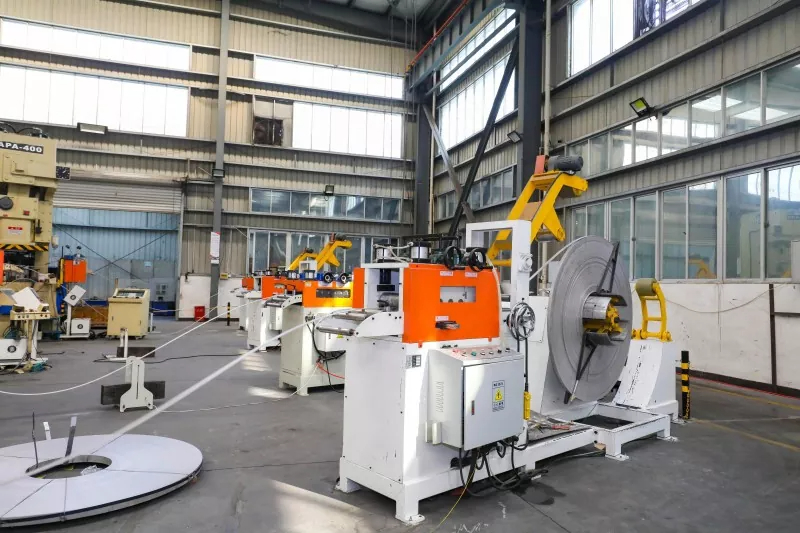
Walking through a fence manufacturing hub in China, the first thing that strikes you isn't the noise or the scale—it's the quiet choreography of quality control. In one corner, a worker runs a gloved hand along a freshly welded panel, checking for burrs that a machine might miss. Nearby, a batch of galvanized posts is being measured against a tolerance of half a millimeter. These aren't token inspections; they're repeated dozens of times a day, often by people who have spent years learning how steel behaves under different temperatures and humidity levels. The result is a product that rarely fails in the field, whether it's securing a construction site in Shenzhen or lining a highway in Kazakhstan.
Reliability here also comes from an unusual blend of old and new. Laser cutters and automated welding lines handle the high-volume work, but final assembly often still relies on hand-finishing techniques passed down through small teams. One factory we visited keeps a set of custom jigs from the 1990s because they consistently produce a tighter corner joint than any robotic clamp. Suppliers are chosen not just on price but on their track record for delivering the same zinc coating thickness season after season. That kind of stubborn consistency means a fence ordered in July will look and perform like one ordered in December—something importers rarely take for granted.
Finally, the hubs that earn the label "most reliable" tend to be the ones that test beyond the obvious. Yes, they check tensile strength and weld integrity, but they also simulate years of sun exposure, salt spray, and repeated impact in on-site labs. One production manager told us they deliberately leave sample panels outside for a full monsoon season before approving a new powder-coat formula. Such patience doesn't make for flashy marketing, but it does mean that when a container of fencing arrives on another continent, it fits together without cursing, stands straight without shims, and keeps doing its job long after the warranty expires.
A Buyer’s Crash Course in Chinese Chain Link Fence Standards and Materials
Most buyers jump straight to price when sourcing chain link fence from China, but that's exactly how you end up with wire that rusts through in two years or mesh that sags under its own weight. The real leverage comes from understanding two things: the actual standards factories follow (and which ones they quietly skip) and the material choices that determine longevity. Without this baseline, you're not negotiating—you're guessing.
Chinese chain link fence typically references GB/T 3428 for galvanized steel wire, but many suppliers cut corners by using lower zinc coating weights than the standard specifies. Ask for the exact grams per square meter of zinc, not just “hot-dipped.” A common trick is to show you a sample with heavy galvanization, then ship production runs with a thinner coat. Also check the wire diameter tolerance—some mills run on the low end to save steel, which weakens the entire roll.
For materials, the practical split is between electro-galvanized, hot-dip galvanized, and PVC-coated wire. Electro is fine for indoor or dry climates but useless near salt air. Hot-dip gives real corrosion resistance, while PVC coating adds a second layer but can hide inferior wire underneath. If you're buying for coastal or industrial use, insist on hot-dip base wire with a separate PVC coat—anything less and you'll be replacing the fence before the project is even fully depreciated.
What Seasoned Importers Wish They Knew Before Choosing a Chinese Fence Supplier
Most first-time buyers focus almost entirely on the quoted price per meter, but veterans will tell you that's a trap. A low initial quote often hides thinner galvanization, weaker wire diameters, or inconsistent powder coating that won't show up until the fence has been through a season of weather. One importer we work with learned this the hard way when two containers from the same factory arrived with visibly different panel stiffness. They later discovered the factory had switched steel suppliers mid-production without any notice.
Another thing seasoned buyers wish they'd known is how much the factory's internal quality control matters more than the sample they hand you. A perfect prototype can be made by hand, but mass production is where corners get cut. It's worth paying for a third-party inspection before the goods leave the factory, not after they arrive at your port. Checking things like weld consistency, zinc coating thickness, and packaging integrity on-site saves thousands in returns and chargebacks.
Finally, experienced importers stress the importance of nailing down every material specification in the contract, right down to the tolerance for wire diameter and the type of anti-rust treatment. If something is left vague, you can bet the factory will interpret it in the cheapest way possible. Include clear penalty clauses for delayed shipment and make sure the payment schedule is tied to inspection milestones, not just the bill of lading. It feels awkward to be that detailed at first, but after one or two bad shipments, you'll understand why it's necessary.
The Real Differences Between Galvanized, PVC-Coated, and Aluminum Chain Link from China
A lot of buyers assume all galvanized chain link from China is the same, but the zinc layer tells a different story. Hot-dip galvanizing, where the steel wire passes through molten zinc, leaves a thick, bumpy coating that holds up for decades even in damp conditions. Electro-galvanized mesh, by contrast, gets a thin, smooth zinc flash that looks shiny in product photos but starts rusting within a year or two near coastal air. If you’re comparing quotes, ask for the coating weight in grams per square meter—anything under 40 g/m² is basically indoor-only. Chinese factories often default to the cheaper electro method unless the buyer specifies hot-dip, which is why two identical-looking rolls can differ in price by 30 percent.
PVC-coated chain link is often sold as the premium option, but the real quality hinges on what’s underneath the plastic. A proper product starts with galvanized wire, then adds a UV-stabilized PVC layer that’s at least 0.5 mm thick. That thickness matters because it covers scratches and gives the fence a softer, more residential look. Some Chinese suppliers cut corners by applying PVC directly over bare steel or using recycled PVC that turns chalky after two summers. You’ll see color choices beyond green—black, brown, white—but the dark colors hide dirt better. If the price seems too good, ask for a cross-section photo: the PVC should be uniform, not thin on one side, and the inner core should still show zinc.
Aluminum chain link rarely gets attention, but it solves a problem the other two can’t: it never needs a coating to resist corrosion. The metal forms its own oxide layer, so even if the surface gets scratched, it won’t rust. That makes it the best choice for saltwater marinas or chemical plants, where galvanized and PVC-coated steel both fail early. The trade-off is strength—aluminum wire is softer and easier to bend, so you’ll often see a heavier gauge used to compensate, which raises the cost. Most Chinese aluminum mesh is 5052 or 6061 alloy, and it’s noticeably lighter to handle. Expect to pay about twice the price of hot-dip galvanized for the same height and mesh size, but you’ll skip the periodic repainting or replacement.
How Automation and Green Practices Are Rewriting the Rules for Chinese Fence Makers
For years, Chinese fence manufacturers competed largely on price, churning out standardized panels with minimal variation. That playbook is rapidly becoming obsolete. Automation has shifted the battleground to precision and flexibility—laser-guided cutting systems now turn out custom patterns in a fraction of the time it once took, while robotic welding ensures consistent joints that human hands could never replicate at scale. The result is a quiet but decisive move away from low-margin commodity output toward higher-value, made-to-order production that still undercuts Western rivals on turnaround.
Green practices are doing more than just satisfying overseas buyers' environmental checklists. Leading factories have started integrating recycled steel and low-VOC powder coatings into their lines, cutting both raw material costs and carbon footprints simultaneously. Some are even running solar-powered galvanizing baths, which dramatically lowers energy bills and positions them favorably for tightening EU and North American import rules. This isn't greenwashing—it's a structural cost advantage that smaller or slower-moving competitors can't easily copy.
Together, these shifts are forcing a redefinition of what "made in China" means for fences. The new winners aren't the ones with the cheapest labor but those who can combine automated precision with verifiable sustainability data—think QR codes on packaging that trace recycled content back to source. International buyers are noticing, and the old assumption that Chinese fencing is only good for temporary or budget projects is fading fast. The rules have changed, and the factories that adapted early are already pulling ahead.
FAQ
Companies like Anping County Huaxiang Wire Mesh, Anping County Yongji Wire Mesh, and Hebei Shangjia Metal Products have been shipping to North America, Europe, and the Middle East for years. They hold ISO and CE certifications, and some keep local warehouses in key markets to shorten lead times.
Look at whether the factory produces its own wire and mesh rather than outsourcing, what quality checks are in place, if they will send a sample without hesitation, and how flexible they are with custom specs such as wire diameter, mesh opening, galvanizing thickness, and PVC coating color.
Some manufacturers produce reinforced mesh with thicker wire, smaller openings, and anti-climb features that work for prisons, airports, and military sites. Ask for project-specific certifications and independent test reports to confirm the fence meets the required security level.
Pricing differences usually come down to wire diameter, zinc coating weight, type of coating, and packaging. The cheapest quote often means thinner galvanizing or lighter wire. Request a minimum zinc coating per industry standards and arrange third-party inspection before shipment.
Yes, many of them run automated production lines with monthly capacity in the thousands of tons. They can produce to ASTM, BS, or DIN standards, provide project bidding support, and coordinate multi-container shipments to meet tight construction schedules.
Comparing only unit price, ignoring zinc layer thickness and mesh tension, overlooking export packaging requirements, and failing to confirm realistic delivery dates. It is safer to work with an experienced export team and schedule a pre-shipment inspection.
Anping County in Hebei Province is the core production area, often called the hometown of wire mesh in China. Tianjin and parts of Shandong also have large-scale factories. Anping benefits from a complete raw material supply chain and a skilled local workforce.
Request samples, ask for third-party test reports from labs like SGS or BV, do a live video factory tour, check the galvanizing line and storage conditions, and review their past export records for similar project scales.
Conclusion
The most impressive chain link fence manufacturers in China have moved far beyond competing on price. Walk through their facilities and you will see why: automated wire drawing lines, robotic weaving stations, and in-house galvanizing baths allow them to hold tight tolerances while still offering sharp quotes. The material choices matter more than many buyers realize. Hot-dip galvanized mesh remains the workhorse for industrial sites, but PVC-coated panels dominate residential and recreational projects because the bonded layer resists scratches and coastal corrosion. Aluminum chain link, though pricier, solves a specific headache in chemical plants and salt-heavy environments where rust is unacceptable. Smart importers now ask for mill certificates and salt spray test reports before signing anything, and they understand that Chinese standards like GB/T 26941.1 or ASTM A392 can coexist depending on the end market.
Seasoned buyers often regret not visiting the production hub earlier—places like Anping or Wuxi reveal how much is subcontracted versus made in one house. The most reliable factories run closed-loop water recycling for pickling and use zinc recovery systems, which lowers both cost and environmental risk. Those green practices are not marketing fluff; they keep a plant running when local environmental inspections tighten. Another lesson: request bent knuckle selvage on edges unless the fence is purely decorative, because twisted selvage can slice hands during installation. The top names on any shortlist earn their place by combining consistent wire gauge, correct zinc coating weight, and honest scheduling—not by sending the lowest sample price and then swapping materials on the container. That gap between sample and shipment is where trust is won or lost.
Contact Us
Contact Person: Nancy
Email: [email protected]
Tel/WhatsApp: +86-13365923720
Website: https://www.topfencesolar.com/