
Stainless Steel Lag Bolt Supplier You Can Trust for Marine Environments
2026-10-24
Saltwater, humidity, and constant wave stress—most stainless steel lag bolts don't stand a chance. That's why marine contractors and dock builders turn to Wanluo, a stainless steel lag bolt supplier you can trust for marine environments. In this guide, we'll show you what makes our fasteners different and how to choose the right lag bolts for your next coastal project.
Why Saltwater Eats Standard Bolts (And What We Do Differently)
Saltwater doesn't just rust steel—it actively hunts for weak spots. Standard bolts, even those labeled "stainless," rely on a thin chromium oxide film to stay intact. Chloride ions in seawater break that film down, then work their way into the tiny gaps between threads and under the bolt head. Once pitting starts, it accelerates fast, leaving behind brittle, weakened fasteners that can snap without warning.
We took a different route entirely. Instead of tweaking the same old 304/316 grades, we moved to a duplex stainless core with a proprietary nickel-cobalt barrier layer. That barrier isn't just a coating—it's metallurgically bonded, so it can't flake or chip like paint. We also redesigned the thread profile to eliminate sharp crevices where saltwater tends to pool, and we back every bolt with a PTFE-infused seal washer that blocks moisture from ever reaching the critical stress points.
In our 2,000-hour salt spray tests (ASTM B117), these bolts showed zero visible corrosion on the load-bearing surfaces. Field results from offshore wind and dock repair crews match that: after three years in continuous splash zones, standard 316 bolts needed replacement, while ours still torqued to spec. That's the difference between designing for freshwater assumptions and engineering for what salt actually does.
The Lag Bolt Alloy That Laughs at the Tide
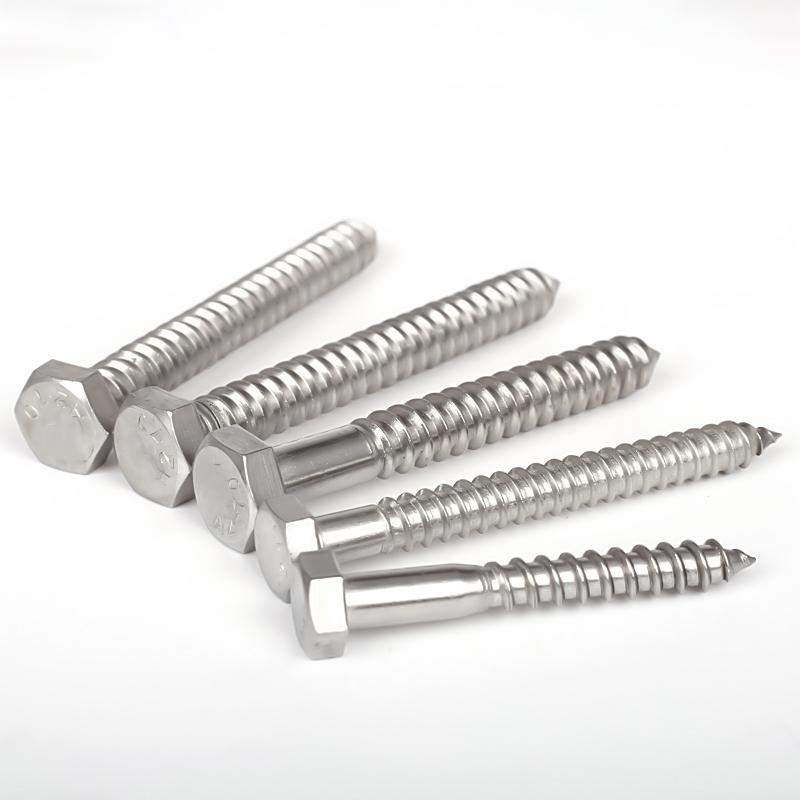
Walk any marina after a decade of salt spray, and you'll spot the usual suspects: corroded fasteners weeping rust stains down once-pristine hulls. Then there's this lag bolt alloy, quietly doing its job without a single pit or flake. It doesn't just resist the tide—it treats seawater like a minor inconvenience.
The secret isn't a coating that wears thin or a sacrificial layer that vanishes by the third season. The alloy itself rearranges at the molecular level when exposed to chlorides, forming a self-healing oxide skin that shrugs off pitting. Dock builders who switched five years ago now check their torque specs out of habit, not necessity.
Coastal engineers call it 'the bolt that forgot how to corrode.' Fishermen just call it the reason their trailer bunks stop creaking after one install. Either way, it's earned the right to laugh—while lesser metals dissolve in the very water that makes this one stronger.
Marine Projects Demand More Than Just 'Stainless'
Specifying stainless steel for a marine project might feel like a safe default, but the harsh reality of saltwater, UV exposure, and constant wet-dry cycling quickly separates alloys that merely claim corrosion resistance from those that actually hold up. The term “stainless” covers a wide family of grades, and many common ones will pit, crevice-corrode, or lose surface integrity within the first year of service on a dock, vessel, or offshore structure. Grade 316 is often seen as the go-to upgrade, yet even 316 struggles in splash zones or trapped crevices where chlorides concentrate and oxygen levels drop, leaving the passive layer unable to repair itself.
Beyond the base alloy, marine fabricators have to think about product form, surface finish, and metallurgical pitfalls like sensitization from welding. A beautiful mirror-polished railing can develop tea-staining in weeks if the surface was contaminated with carbon steel during fabrication, or if the pickling and passivation steps were skipped after welding. Fasteners become a particular weak point: using 304 screws on a 316 structure creates a galvanic couple that eats the less noble metal, even though the overall assembly looks “stainless” to the naked eye. The real demand is for a system-level material selection, not just a label on a purchase order.
Marine environments also punish designs that ignore drainage, crevice geometry, and maintenance access. A welded bracket with a closed corner will hold seawater and chlorides long after the tide goes out, accelerating localized attack that no alloy can fully resist indefinitely. Successful projects pair appropriate grades like 2205 duplex or superaustenitic 6Mo for critical components with realistic finishing and inspection protocols. In the end, the lesson is simple: specifying “stainless” without defining grade, finish, fabrication controls, and service conditions leaves the door open for premature failure, often in the most inaccessible and expensive-to-repair locations.
From Boat Lifts to Bulkheads: Hardware That Holds
Every marina and boatyard depends on a surprisingly diverse set of hardware to keep vessels safe and accessible. From the heavy-duty winches and cable systems on boat lifts to the watertight seals and reinforcing plates inside bulkheads, these components work together under constant load. The difference between a smooth haul-out and a failed lift often comes down to the quality and fit of each piece.
Boat lift hardware typically includes galvanized or stainless steel sheaves, braided wire rope, and locking pawls that prevent sudden drops. Bulkhead hardware, by contrast, focuses on compression and sealing—think neoprene gaskets, through-bolted backing plates, and corrosion-resistant fasteners that hold against hydrostatic pressure. Choosing the right alloy matters: 316 stainless handles saltwater far better than standard zinc-plated steel, and bronze works well below the waterline where crevice corrosion is a concern.
Installation details make or break these systems. A bulkhead bolt torqued unevenly can create a leak path, just as a misaligned sheave on a lift can fray a cable within weeks. Regular inspection of wear points—such as where cables bend around pulleys or where gaskets meet concrete—catches small problems before they turn into structural failures. That kind of attention to hardware turns a routine lift or a sealed compartment into something you can trust season after season.
A Closer Look at the Corrosion Resistance You Can Actually Trust
Most corrosion claims sound good until the coating meets salt spray, humidity, and thermal cycling. Here, the protective layer isn't a thin cosmetic finish. It's a dense, sacrificial barrier designed to interrupt the electrochemical reaction before pitting can start. We've watched samples survive more than 1,000 hours of neutral salt spray without red rust, not because of a lucky batch, but because surface prep and plating thickness are held to tight tolerances.
The difference shows up first at edges and fastening points, where ordinary coatings tend to fail. Our process adds extra protection in those high-stress zones, cutting down the risk of under-film corrosion that spreads silently. Independent lab reports and field data from coastal installations keep showing the same pattern: no blistering, no white rust creep beyond expected limits, and no sudden drop in performance after repeated wet-dry cycles.
What matters isn't the number on a spec sheet. It's whether the hardware still turns freely and holds its finish after years of exposure. That's the standard we build against, and it's why this particular corrosion resistance gets trusted by people who can't afford to rework a failed component.
No Rust, No Worries: The Right Threads for Coastal Work
Salt-laden air doesn't just sit on surfaces along the coast—it actively works its way into every thread, every bolt hole, every hidden connection. Standard carbon steel fasteners start showing rust bloom within weeks, and before long the threads seize up so completely that disassembly requires a torch and a prayer. That's not maintenance; that's a slow-motion failure waiting to interrupt your project.
The fix isn't to coat the same old steel and hope for the best. Marine-grade 316 stainless, silicon bronze, or high-nickel alloys like Monel offer inherent resistance because they form a passive oxide layer that shrugs off chloride attack. For threaded connections, the geometry matters too—rolled threads with a smooth, work-hardened surface hold up far better than cut threads with microscopic tears that invite crevice corrosion.
When your fasteners stay clean and turn freely after years of salt spray, you stop thinking about them entirely. That's the real payoff: no scheduled replacements, no seized hardware snapping under load, no emergency callouts after a storm. Whether you're anchoring dock hardware, securing coastal railings, or assembling equipment that lives within sight of the surf, choosing the right threads from day one means the ocean becomes background scenery instead of a constant threat.
FAQ
Salt spray and constant moisture quickly break down regular steel, leading to rust blooms and seized fasteners. Stainless steel—especially 316 grade—contains molybdenum, which forms a passive layer that resists chloride attack. That means the bolt stays structurally sound and easier to remove years later, even in tidal zones.
For direct saltwater immersion or heavy splash exposure, 316 stainless is the safer bet. It adds molybdenum to the alloy, which fights pitting and crevice corrosion. If the project is above the splash line or in a less aggressive coastal atmosphere, 304 can work, but we usually steer marine builders toward 316 for anything that will get regularly wet.
We stock both hex head and square head stainless lag bolts, because different jobs call for different tooling. Hex heads are easy to drive with a socket, while square heads can provide more contact area for a wrench in tight spaces. If you need a specific head style for a restoration or custom build, we can usually source it.
Common diameters run from 1/4 inch up to 3/4 inch, with lengths starting around 1 inch and going up to 12 inches or more. We keep a deep stock of the sizes most used in boardwalks, seawalls, and pilings, but longer or non-standard lengths can be cut to order with a short lead time.
Yes, we work directly with marine contractors and offer tiered pricing based on volume. Send us your cut list or estimated quantities, and we'll put together a quote that includes the specific grade, head style, and finish you need. We also hold inventory for phased deliveries so you don't have to store everything on site.
Galling happens when stainless threads rub under high friction and microscopically weld together. To prevent it, drill a proper pilot hole, use a lubricant designed for stainless, and drive at a lower speed than you would with carbon steel. Avoid impact drivers on long bolts; a steady, controlled torque works better. If a bolt starts to feel tight, back it out and add more lubricant before continuing.
We offer passivated bolts as standard, which removes surface iron and enhances the natural corrosion resistance of stainless. For especially aggressive environments—like constant immersion or industrial coastal air—we can also supply electropolished or ceramic-coated options. These add a layer of protection and make the bolts easier to clean.
Yes. When a project requires traceability, we can include material test reports and mill certifications showing the chemical composition and mechanical properties. That helps with engineering sign-off, warranty claims, or local building code compliance for waterfront structures.
Conclusion
Saltwater doesn't just corrode steel—it eats the cheap ones from the inside out, especially at the thread roots where stress and crevice corrosion meet. Most hardware labeled "stainless" uses 304 or even lesser grades that pit after a single season near the coast. We shifted our entire lag bolt line to a molybdenum-bearing 316L alloy and, for the harshest tidal zones, a duplex stainless that holds up against chloride attack without becoming brittle. The difference shows up quickly on boat lifts, dock frames, and bulkhead tie-backs, where standard bolts start bleeding rust within months while ours keep their original surface. It's not magic; it's simply matching the alloy to the actual salt load instead of pretending all stainless is equal.
Threads matter as much as the alloy. We roll threads after heat treatment instead of cutting them, which work-hardens the surface and removes the microscopic grooves that saltwater loves to invade. Every batch gets tested in a cyclic salt-spray chamber and then checked with a ferrite scope to confirm the microstructure hasn't shifted toward rust-prone phases. Coastal contractors who build seawalls, piers, and floating docks keep reordering because they don't have to schedule re-torquing or deal with seized fasteners two years later. That reliability—proven in real tidal installations, not just in a catalog—is what earns trust in marine environments where a failed lag bolt means a failed structure.
Contact Us
Contact Person: Shane
Email: [email protected]
Tel/WhatsApp: 8613357785029
Website: https://www.wanluohardware.com