
Sampling Valve Vendor Guide: What to Look for Before You Buy
2026-09-15
Choosing a sampling valve can feel like a small decision until a failed seal or dead leg contaminates an entire batch. This guide cuts through supplier claims to focus on what actually matters before you buy—materials, cleanability, and long-term maintainability. Whether you're upgrading a single line or specifying a full process skid, knowing the right questions to ask a vendor saves time, money, and compliance headaches. At AVM, we've seen too many teams overpay for features they don't need or overlook tolerances that cause sampling errors later. Here's what to look for in a sampling valve vendor—so your next purchase works as well on day 500 as it does on day one.
Your Process Fluid Should Pick the Valve, Not the Other Way Around
Most valve selection guides start with a style—ball, butterfly, globe—then try to make the process fit. That's backwards. The fluid already knows what it needs: its viscosity, solids content, temperature, vapor pressure, and corrosion profile will rule out most options long before you think about a handle or actuator. A thick latex emulsion and a dry chlorine gas stream share almost nothing except the need to be isolated, so the same quarter-turn valve will not serve both.
If you install a metal-seated ball valve in a slurry line because it worked on a clean water system, the seats will wash out in weeks. If you put a soft-seated butterfly valve on a hot aromatic stream, the elastomer swells and the valve either sticks or leaks. The fluid does not adapt; it simply finds the weakest material or geometry and keeps working on it until something fails. Reading failure reports is often just the fluid's way of telling you it was given the wrong valve.
Start with a one-page data sheet: full chemical composition, percentage of suspended solids by weight, viscosity at the lowest expected temperature, vapor pressure at the highest expected temperature, normal and upset flow rates, and any cleaning or steam-out requirements. That sheet will eliminate half the valve types before you compare prices. For example, a fluid with 6% abrasive solids will point you toward a lined or ceramic trim and away from small clearances. A fluid that flashes across a throttling valve will demand hardened trim or anti-cavitation geometry. Let the process fluid make the shortlist; your job is only to pick the survivor that fits the pipe and the budget.
The Crevice That Ruins Your Sample: A Design Flaw You Can’t Ignore
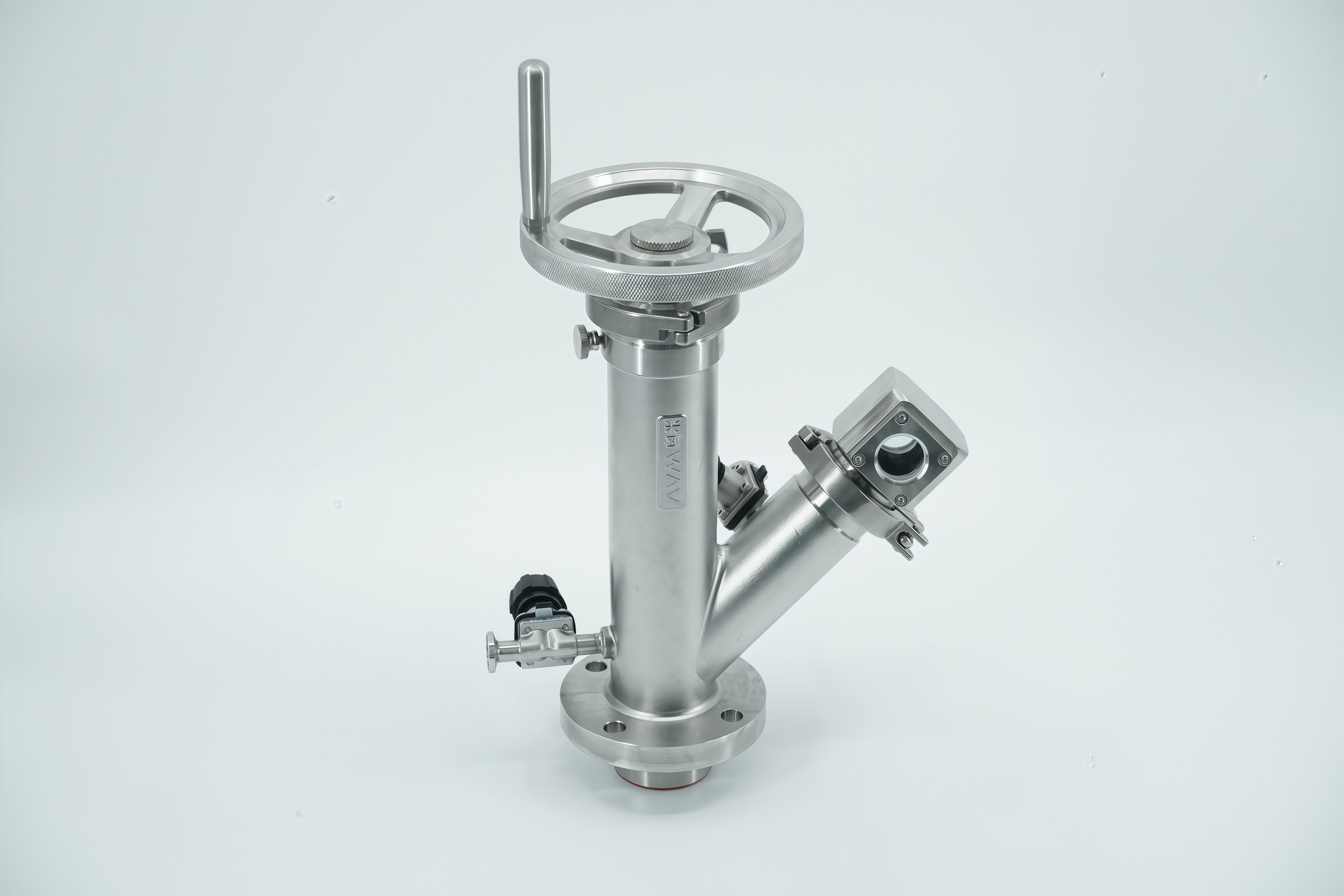
Every researcher knows the frustration of a sample that behaves perfectly in theory but fails in practice. Often, the culprit isn't the material or the preparation protocol—it's a gap so small you'd never notice it without magnification. In high-precision instruments, a crevice of just a few micrometers can trap moisture, solvents, or debris from earlier steps. When the sample is analyzed, that hidden contamination leaches out, skewing spectral readings or creating artifacts in imaging. The damage isn't always immediate; sometimes the crevice acts as a slow-release reservoir, corrupting data over hours or days until the entire batch becomes unreliable.
Design reviews tend to focus on visible interfaces: mating surfaces, seals, fasteners. But the real threat often hides where two supposedly rigid components meet at a slight angle mismatched by thermal expansion or machining tolerance. These micro-crevices are rarely specified on drawings because they fall within standard clearance allowances. Yet under repeated thermal cycling or vibration, they widen imperceptibly, turning a benign gap into a capillary channel. A practical fix involves cross-sectioning a prototype and inspecting it under oblique lighting—shadowing reveals crevices that normal dimensional checks miss. Redesigning with a compressible gasket or a slight interference fit at the suspect interface can eliminate the problem before it ruins your next sample.
Surface Finish Specs: The Difference Between Clean and Actually Clean
A surface that looks spotless under shop lighting can still fail a coating adhesion test or leak test. The gap between clean and actually clean often comes down to what’s left in the valleys of the surface profile—polishing debris, trapped coolant, or a monolayer of mold release. Visual inspection only catches gross contamination, not the micron-level residue that interferes with bonding or sealing.
Many specs define cleanliness by a single roughness number, but Ra alone says nothing about whether the surface is chemically clean. A part with Ra 0.2 µm might still carry chloride salts or silicone from handling. High-purity applications typically demand particle counts, non-volatile residue limits, and surface energy checks—not just a wipe with solvent.
When a drawing says “clean and free of oil,” that phrase is nearly meaningless without a measurement method or acceptance limit. Actually clean means the surface meets a written standard: for example, no particles larger than 500 µm per ISO 16232, or a total NVR below 1 mg/ft². If the spec doesn’t define how clean is verified, you’re arguing about opinions, not engineering requirements.
Elastomer Compatibility: The Small Part That Causes Big Failures
Most engineers spend hours sizing pipes, valves, and actuators, then grab whatever O-ring is on the shelf. That habit can turn a two-cent seal into a six-figure shutdown. Elastomers react with process fluids in ways that metals never will—some absorb the fluid and swell, others lose plasticizers and shrink, and a few simply crack under chemical attack or ozone. A pump that runs flawlessly on a test bench with water can leak aggressively after three days of exposure to a solvent or ester-based lubricant, because the seal material was never truly compatible with the environment.
The classic example is nitrile rubber, which holds up fine in petroleum oils but degrades rapidly in synthetic transmission fluids or strong alkaline cleaners. Swap to EPDM and the opposite happens—it loves hot water and brake fluid but turns to goo in mineral oil. Even within the same base polymer family, compound formulation matters: plasticizers, cure systems, and fillers change chemical resistance dramatically. A seal that passes a simple immersion test at room temperature can fail when temperature cycling causes repeated swelling and contraction, eventually tearing the elastomer matrix.
That is why compatibility testing should not end with a generic chart. Pull the actual elastomer batch, soak it in the real process fluid at operating temperature and under the expected pressure pulses, then measure hardness, volume change, and tensile strength before and after. If the volume changes more than a few percent or the material feels tacky, brittle, or spongy, it is not going to survive. Small parts cause big failures because they sit quietly at the interface between systems—and when that interface degrades, the leak path is already formed before anyone notices a pressure drop.
Real-World Validation: Demand More Than a Certificate on Paper
A certificate can hang on a wall and still mean nothing if the skills behind it were never tested outside a controlled exam room. Real-world validation means watching someone handle a live system failure, a sudden security breach, or a messy data migration—not just answer multiple-choice questions about them. Employers are increasingly asking for proof of work: a reproducible project, a case study with metrics, or a recorded troubleshooting session. Without that, even the most polished credential is just paper.
Think about the last time you trusted a surgeon, a pilot, or a structural engineer. You didn't ask to see their diploma; you assumed they'd logged hundreds of supervised hours in real conditions. The same logic applies to technical and business certifications. If a training program only simulates ideal scenarios, it produces people who freeze when reality deviates from the textbook. Demand to see portfolio artifacts, incident post-mortems, or client references that document actual performance under pressure—not just completion badges.
One practical way to cut through the noise is to ask a simple question: "What did you break, and how did you fix it?" Genuine learning leaves a trail of mistakes, rollbacks, and hard-won fixes. Candidates who can narrate those moments—with specific tools, timeframes, and outcomes—offer far more than a certificate can ever guarantee. If the answer is vague or rehearsed, that's your signal to keep looking. Paper credentials are easy to buy; hard-earned judgment is not.
The True Cost of Ownership: Spare Parts, Downtime, and Vendor Responsiveness
The real cost of a machine rarely shows up on the purchase order. It hides in the spare parts you should have bought but didn't, and in the hours you spend waiting for a courier while production stalls. I've seen a single worn-out coupling delay a packaging line for two days because the vendor's local warehouse didn't stock it and their phone support kept routing to voicemail.
Downtime is never just lost output. It eats into shift schedules, forces overtime later, and makes your team question whether anyone planned for this. A responsive vendor changes that equation. When they pick up on the second ring, know the part number from memory, and can have a replacement on a truck by noon, the extra money you might spend with them up front starts to look like a bargain.
Spare parts strategy and vendor responsiveness are two sides of the same coin. Buying from the cheapest source often means carrying your own safety stock, managing multiple suppliers, and absorbing the risk of long lead times. The ownership cost that matters is not on the invoice—it is the price of every hour you lose waiting for a part that should have been nearby.
FAQ
Check the wetted parts carefully. For acidic or high-chloride streams, 316L stainless steel often isn't enough; you may need Hastelloy C-276 or AL-6XN. Ask the vendor for a full material traceability report and, if possible, samples for coupon testing in your actual media. Don't rely on generic chemical compatibility charts alone.
Dead space is the usual culprit for misleading results. Look for a valve with a flush-mounted or minimal-cavity design where the sample point sits directly in the product flow. Valves with long internal pockets trap old product, so your fresh sample ends up being a mix. A good vendor will provide cross-section drawings to prove there's no stagnant zone.
If you're in food, dairy, or pharma, yes, and don't treat them as optional. These certifications mean the valve has passed third-party testing for cleanability and bacterial ingress. But ask for the actual certificate number and verify it on the issuing body's website. Some smaller shops claim designed to 3-A standards without ever completing certification.
Ask about the number of parts in the seal replacement kit and whether the valve can be serviced in place. A design that lets you swap a seat or O-ring without pulling the whole valve from the line saves hours. Also check if the vendor offers quick-change stems or pre-assembled cartridge inserts. If the maintenance manual is over 20 pages, expect downtime.
Request documented spray coverage or riboflavin test reports from the vendor. Not all sampling valves clean equally when installed vertically versus horizontally. Ask about minimum flow velocities needed to flood the sample chamber and whether the valve has any dead-end branches that CIP fluid can't reach. A vendor who hesitates on sharing these reports probably hasn't done the work.
It tells you a lot. Standard stainless valves often ship in 2-3 weeks; anything over 8 weeks for non-custom items suggests the vendor is either overwhelmed or sourcing components from far away. More importantly, ask how they handle expedited orders when a line goes down. The best vendors keep critical seal kits and body castings in stock locally.
At minimum, ask for a video of the valve cycling with a clear liquid and a dye injection to show how it samples. Better yet, request a trial unit for a few weeks. Many issues like dripping after actuation, sample aeration, or difficult manual grips only show up when you use the valve in your own environment. A vendor confident in their product will support a trial.
Look beyond the invoice. A cheaper valve might need new seals every three months, require special tools for maintenance, or have a high rate of false samples. Ask for maintenance interval data, spare parts pricing, and whether the vendor offers a fixed-cost service agreement. Calculate the cost per sample over a 5-year period, including labor and downtime; that's where expensive valves often become cheaper.
Conclusion
A sampling valve is only as good as its fit for the fluid it touches. Too many buyers start with a catalog number and then try to make the process adapt; that's backwards. The first question should be what the liquid or gas will do to the valve body, the seal, and the sample itself. A dead-leg crevice can trap product from a previous draw and silently contaminate the next result, so look for a design that eliminates or at least minimizes any recess where the process stream isn't flushed clean. Surface finish is not just a number on a drawing; a mirror-like Ra value doesn't mean much if the actual wetted surfaces have pits, weld seams, or polishing lines that hold bacteria or residue. Ask for honest before-and-after photos or sample coupons, not just a spec sheet.
Then move to the parts that fail first. Elastomer compatibility is where a seemingly minor O-ring choice can shut down a line or leak process fluid into a clean area. Demand the vendor show test data with your exact fluid, temperature, and cleaning chemicals—not a generic chemical resistance chart. Certificates alone are not validation; insist on a documented trial with your own medium and cycle count. Finally, calculate the true cost of ownership. A low purchase price often hides high spare-part prices, weeks of lead time for a diaphragm, and a vendor that disappears after the invoice. Ask current users how quickly the vendor responds when a valve sticks or a seal tears. The best valve is the one that keeps sampling accurately and reliably for years, not the one that wins on paper.
Contact Us
Contact Person: Ananda
Email: [email protected]
Tel/WhatsApp: 8619016718200
Website: https://www.wzaomi.com