
Programmable Power Supply Basics: How Known Technologies Shape Modern Electronics
2026-05-14
Powering modern electronics goes far beyond simply flipping a switch. Beneath every reliable circuit lies a precise, controllable energy source—and that’s where programmable power supplies come into play. These versatile tools have quietly reshaped how engineers design, test, and validate everything from IoT sensors to high-power industrial drives. At the heart of this evolution, TPS brings decades of expertise in crafting power solutions that adapt to your exact needs. Curious how familiar technologies like digital control loops and modular architectures make all this possible? Let’s peel back the layers and explore the fundamentals that define modern electronics.
The Digital Core: How Software-Defined Control Replaces Analog Knobs
Inside modern devices, physical dials and switches are giving way to a more fluid kind of interface. What once required a dedicated potentiometer or a fixed-function button is now handled by reconfigurable software layers. This shift means a single surface can morph from a volume slider into a color picker or a navigation pad, all without changing a single physical component.
The real power lies in abstraction. Instead of a potentiometer directly varying resistance in an audio circuit, a control surface sends abstract gestures—like a swipe or a long press—to an interpreter. That interpreter then maps those gestures to any parameter in the system, from gain staging to LFO rate. This decoupling frees designers from the constraints of one-to-one functionality, allowing a single knob to serve multiple roles dynamically.
Under the hood, software-defined control relies on a combination of sensor fusion and real-time processing. Capacitive touch, haptic feedback, and inertial sensors feed raw data into algorithms that determine intent. The result is a tactile experience that feels immediate and analog-like, yet can be rewired with a firmware update. It’s a quiet revolution that turns physical interactions into a malleable language the system understands.
Efficiency by Design: Why Modern Supplies Borrow from Switch-Mode Technology
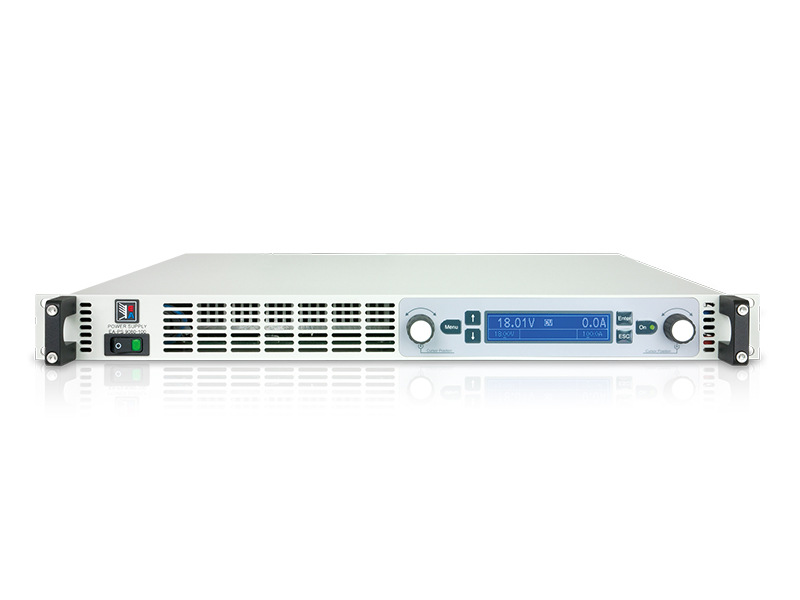
Linear power supplies once dominated electronics, but their reliance on heavy transformers and linear regulators made them inherently wasteful. Any time you drop voltage through a resistive element, you burn off the excess as heat—simple physics. This not only demands bulky heatsinks and ventilation but also limits the practical power density. As devices shrank and energy standards tightened, the old approach became untenable. Designers needed a way to deliver clean, regulated power without turning half of it into a space heater.
Switch-mode technology turned that problem on its head. By rapidly toggling a transistor between full-on and full-off states, a switch-mode supply minimizes the time spent in the lossy linear region. Energy is stored temporarily in inductors or capacitors and then released at the desired voltage, much like a bucket brigade moving water. Because the switching element dissipates very little power when fully saturated or completely cut off, efficiency can soar past 90%, dramatically reducing waste heat. That leap allowed power bricks to shrink from brick-sized to pocket-sized, and it’s why your laptop charger no longer doubles as a foot warmer.
But the real genius isn’t just in the transistor—it’s in the control loop. Modern switch-mode designs borrow sophisticated feedback and modulation techniques to adapt on the fly, keeping output steady despite fluctuating loads or input voltages. By pushing switching frequencies into the hundreds of kilohertz or even megahertz, they shrink magnetics and capacitors to almost comically small dimensions. This convergence of control theory and power electronics is what makes everything from USB-C phone chargers to server farm power supplies efficient, lightweight, and, against all odds, affordable.
Precision Under Load: Reliable Output in a World of Sensitive Circuits
When a circuit is tasked with delivering consistent performance, even minor shifts in load can introduce unexpected deviations. Sensitive designs—like those in medical instrumentation or high-speed data converters—often have little tolerance for fluctuation. The interplay between current demand, thermal drift, and component nonlinearities means that what works on the benchtop can easily falter under real operating stress. Maintaining exact output parameters isn’t just about choosing the right specs on paper; it’s about anticipating how each element behaves when power draw suddenly spikes or ambient temperature creeps upward.
Achieving reliable output starts with thoughtful compensation and layout. A tightly controlled feedback loop can reject many disturbances, but its effectiveness hinges on the quality of reference voltages and the placement of decoupling capacitors. Ground planes must be arranged to guide return currents away from sensitive nodes, while differential signaling helps attenuate common-mode noise. In precision analog paths, even the material of a resistor or the dielectric absorption of a capacitor can introduce subtle errors that multiply under changing loads. The trick is to tame these variables without overcomplicating the design, preserving enough margin for real-world unpredictability.
Ultimately, durability in precision circuits comes from treating every trace, via, and component as a potential vulnerability. Testing at the extremes of the expected load profile—not just the nominal case—reveals weaknesses that simulations often miss. In environments where accuracy directly affects safety or data integrity, there is no substitute for iterative prototyping and in-situ verification. It’s a discipline that shifts the focus from theoretical stability to demonstrated resilience, ensuring that sensitive systems deliver exactly what they promise, no matter how hard they are pushed.
Adaptive Voltage Rails: Meeting the Demands of Next-Gen Processors
Modern processors push the boundaries of performance, but their hunger for power creates a delicate balancing act. Adaptive voltage rails tackle this by dynamically adjusting the supply voltage based on real-time workload demands, slashing energy waste without sacrificing speed. Unlike traditional fixed-voltage designs that leave headroom for worst-case scenarios, this approach trims voltage levels during lighter tasks, delivering power precisely when and where it’s needed. The result is a cooler, more efficient chip that can sustain peak performance longer, a critical advantage as transistor densities skyrocket and thermal constraints tighten.
Implementing adaptive voltage rails requires a tight integration between the processor’s power management unit and the voltage regulator. Telemetry from on-die sensors feeds instantaneous data on current draw, temperature, and timing margins straight to a control loop that responds in microseconds. This fine-grained reaction allows the rail to dip into lower voltage states during idle windows and spike back up for demanding computation bursts, all while maintaining rock-solid stability. Engineers are now layering predictive algorithms into the mix, enabling the system to anticipate load shifts before they even occur, which cuts response latency and avoids costly voltage droops that can cripple high-frequency cores.
For next-gen processors built on bleeding-edge nodes, adaptive voltage rails aren’t just an optimization—they’re a necessity. Process variations and aging effects cause each chip to have distinct voltage-frequency characteristics, and a one-size-fits-all voltage setting leaves performance on the table. By tailoring voltage to each core’s unique profile and even adjusting per-clock-cycle, manufacturers can reclaim margins once lost to over-provisioning. This technology also extends the lifespan of mobile and embedded devices by reducing electromigration and hot-carrier degradation. As the industry barrels toward more heterogeneous architectures and AI-driven workloads, adaptive voltage rails will quietly reshape the foundation of power delivery, keeping tomorrow’s ultra-dense silicon running smoothly.
From Bench to Factory Floor: Programmability Across the Product Lifecycle
The shift from isolated experimentation to scalable production demands a thread of programmability woven through every stage. Early-stage research often thrives on flexibility—scripts, notebooks, and ad hoc toolchains that let scientists explore freely. But without a deliberate bridge to manufacturing, those same workflows become bottlenecks. The real challenge lies in capturing intent: translating a lab protocol into a reproducible, auditable sequence that can be reliably executed on industrial equipment, all while preserving the nuance that made the original discovery possible.
Programmability here isn't just about writing code; it's about codifying process knowledge in a way that survives the transition between contexts. A reaction optimized in a glass flask doesn’t directly map to a 10,000-liter reactor, yet the underlying logic—parameters, dependencies, safety edges—must transfer seamlessly. This requires platforms that abstract away device-specific quirks while exposing enough granularity for experts to tune. When done right, the same programmable core can drive both a benchtop synthesiser and a full production line, collapsing the typical handoff delays and reducing the risk that scale-up distorts the product’s critical attributes.
Maintaining programmability throughout the lifecycle also transforms how we handle change. A process revision triggered by regulatory feedback or raw material variability needn’t mean restarting from scratch. Instead, changes propagate as versioned updates to a shared digital model, rippling from simulation to execution with full traceability. This blurs the line between development and production, fostering a continuous improvement loop where insights from the factory floor feed directly back into the next generation of experiments—tightening the cycle from idea to impact.
Protection Without Compromise: Safeguarding Circuits with Intelligent Features
Modern electronic systems demand robust circuit protection that doesn't sacrifice performance. Traditional fuses and passive limiters often force a trade-off between safety and efficiency, leaving designs vulnerable to either overcurrent damage or unnecessary power loss. Intelligent protection ICs step in by continuously monitoring current flow and responding to faults with precision, effectively clamping surges while maintaining normal operation within tight thresholds. This real-time adaptability ensures that sensitive components stay safe without derating the system's full potential, even in harsh environments where voltage spikes and inrush currents are common.
Beyond basic overvoltage and overcurrent blocking, these smart devices bring a suite of programmable features that anticipate and mitigate risks before they escalate. Integrated thermal regulation, for instance, allows the protection circuitry to throttle back under extreme temperatures rather than abruptly disconnecting, buying critical seconds for backup systems or graceful shutdowns. Meanwhile, configurable undervoltage lockout prevents erratic behavior during brownouts, and active reverse current blocking stops power backflow that could damage sources or parallel rails. By embedding diagnostic outputs and fault flagging, engineers gain visibility into system health, turning circuit protection from a blown fuse mystery into an informed maintenance tool.
The real breakthrough lies in eliminating bulky heat sinks and oversized passives. With low-RDS(ON) internal switches and energy-efficient control algorithms, intelligent protectors dissipate minimal heat even under sustained load, enabling compact, dense PCB layouts. They also reduce design complexity—gone are the days of painstakingly selecting discrete TVS diodes, zener clamps, and fuse holders for each rail. A single IC can guard multiple channels with coordinated timing, ensuring that power-up sequences don't trigger false faults. This integration speeds time-to-market and improves reliability, empowering engineers to protect circuits without compromise, in everything from IoT edge nodes to automotive ECUs.
FAQ
A programmable power supply lets you control voltage, current, and often other parameters through digital interfaces like USB, Ethernet, or GPIB, and can run automated test sequences. In contrast, a standard bench supply typically requires manual knob-turning and lacks remote control. The programmability makes it essential for automated testing, where repeatability and logging are key.
They allow precise, repeatable power delivery that can simulate real-world conditions—like battery voltage sag or power supply noise. This is critical for validating circuit behavior across different power states, which manual supplies can't consistently achieve. Their ability to log data and integrate into test systems also speeds up development and quality assurance cycles.
MOSFETs provide efficient, fast-switching control of voltage and current with minimal heat loss, while microcontrollers (often with ADCs and DACs) continuously monitor output and adjust in real-time. Together, they enable feedback loops that maintain stable output under changing loads, and allow complex features like arbitrary waveform generation for power profiles.
SCPI (Standard Commands for Programmable Instruments) provides a common language for test scripts, so a supply from any vendor can be controlled with similar commands. LXI (LAN eXtensions for Instrumentation) adds web-based control and synchronization over Ethernet. This standardization simplifies building automated test setups with mixed instruments, cutting down on custom driver development.
When testing a smartphone or wearable, engineers use a programmable supply to mimic a Li-ion battery's discharge curve—voltage drops from 4.2V to 3.0V over time, with current limits. The supply can also simulate internal resistance changes or transient load steps, ensuring the device's power management ICs respond correctly without needing actual batteries at every test cycle.
They're used in semiconductor characterization to measure IV curves, in LED backlight testing where brightness depends on precise current, in electrochemical processes like electroplating that require specific voltage profiles, and even in educational labs to demonstrate control theory. Some models can act as electronic loads, sinking current to test power sources—a dual-role that saves bench space.
Digital control adds software layers that can introduce bugs or communication glitches, but when well-designed, it dramatically improves reliability through self-calibration, over-temperature protection, and predictive fault detection. Troubleshooting shifts from probing analog circuits to checking logs and remote status queries, which is faster but requires different skills—blending power electronics with basic scripting knowledge.
Key factors include output range, resolution, ripple and noise levels, transient response time, interface options, and whether you need isolated channels or series/parallel operation. Also consider the supply's command set and software ecosystem—if you're deeply invested in Python or LabVIEW, driver availability can make or break productivity. Don't overlook physical size and cooling if it's going into a dense rack.
Conclusion
The shift from twiddling physical knobs to typing commands encapsulates the core of modern programmable power supplies. At their heart lies a digital control loop that replaces analog potentiometers with software-defined precision, enabling real-time voltage and current adjustments across a wide range. This architecture borrows heavily from switch-mode conversion techniques, where high-frequency switching and advanced topologies push efficiency well beyond what linear designs could achieve. By slashing heat dissipation and shrinking component sizes, these supplies mirror the broader industry’s drive toward dense, energy-conscious systems. The result is a bench tool that no longer just supplies power but actively manages it, responding to scripts and profiles with a level of agility that turns a once-static resource into a dynamic test instrument.
That agility extends into the very circuits being powered. Sensitive loads—from sensor arrays to high-speed digital logic—demand not just stable rails but clean, transient-free delivery, a challenge met by precision regulation and low-noise output stages. As processors employ adaptive voltage scaling to squeeze out performance per watt, power supplies must track sub-microsecond changes without overshoot, a feat accomplished through intelligent feedback and programmable ramp rates. This programmability doesn’t stop at the lab bench; the same supply that characterizes a prototype can be integrated into automated test floors, replicating sequencing and margining tests with production-line repeatability. Throughout, smart protection features—overcurrent foldback, overvoltage clamping, and thermal monitoring—guard both the supply and the device under test without sacrificing flexibility, ensuring that as electronics evolve, the power driving them does not become the weak link.
Contact Us
Contact Person: Lily
Email: [email protected]
Tel/WhatsApp: +49 (0) 2161 49526-0
Website: https://tps-elektronik.com/en/