
Portable Combined Flood Control Board Manufacturer Reveals What Buyers Must Know
2026-10-29
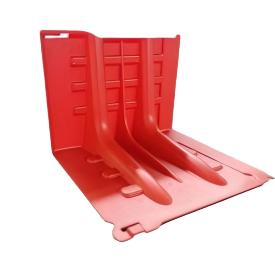
When floodwaters rise, the difference between a dry facility and a disaster often comes down to one overlooked decision: which flood control board you trust. As a portable combined flood control board manufacturer, Jianghe Flood Prevention has watched too many buyers prioritize upfront cost or generic specs, only to face buckling panels, failed seals, and dangerous delays. Before you place an order, here’s what buyers must know to avoid the most common—and costly—mistakes.
The Materials That Separate Long-Lasting Barriers from Disposable Ones
A barrier's lifespan often comes down to the substrate. Galvanized steel with a zinc coating shrugs off rust for decades, while thin, uncoated metal flakes apart after a single season of rain. High-density polyethylene and reinforced vinyl hold their shape through freeze-thaw cycles, whereas cheap polypropylene turns brittle under direct sun.
Coatings and additives are the quiet difference-makers. Powder-coated aluminum resists chips and fading far better than wet paint, and UV stabilizers mixed into the resin keep plastic barriers from yellowing and cracking. Disposable versions skip these steps, relying on bare materials that start degrading the moment they leave the factory.
Even the hardware matters. Stainless steel rivets and compression-molded joints outlast the spot-welded or snap-together fittings found on short-term products. Long-lasting barriers are built so that no single weak point—fastener, hinge, or panel edge—becomes the failure that sends the whole unit to a landfill.
Why Quick Deployment Claims Need a Closer Look
When a vendor promises deployment in days, not weeks, the first thing worth asking is what exactly gets deployed. Often the initial setup is little more than a skeleton—admin panels, default dashboards, and a few prebuilt connectors. The real work of mapping data fields, configuring security rules, and integrating with legacy systems still lies ahead. That gap between a live URL and a functional system is where timelines quietly double.
Another layer to peel back is the fine print around custom code. Quick starts lean heavily on templates, which work beautifully until you need a workflow that deviates from the demo. At that point, the platform's constraints surface, and teams find themselves writing workarounds or waiting on vendor support. The speed you gained at kickoff can evaporate in a series of small, unplanned delays that never made it into the sales deck.
It's also worth checking how deployment claims handle environments beyond the first one. Spinning up a sandbox in a day is not the same as promoting a release through staging, QA, and production with proper approvals. When multiple stakeholders need to sign off, and audit logs are a requirement, the process slows in ways that have little to do with the tool itself. A closer look often reveals that the quick deployment was for a demo, not for the durable system your team will actually rely on.
Seal Integrity: Where Most Flood Boards Fail
The weak link in most flood boards isn’t the board itself, but the seal. A rigid panel can look solid while water seeps through hairline gaps along the bottom edge or side channels. Once pressure builds, even a few millimetres of uneven contact becomes a steady leak.
Common seal failures come from foam strips that compress unevenly or harden over time. If the board doesn’t press the gasket with consistent force, low spots develop. Water follows the path of least resistance, and that’s often where the seal has lost its rebound.
Better designs focus on the seating surface, not just the gasket material. A smooth, continuous contact area makes the seal work as intended. Otherwise the board becomes a false reassurance, dry in tests but wet when it matters.
Storage Footprint and Transport Weight Often Overlooked
Most product teams obsess over unit economics tied to manufacturing, but the physical space an item occupies in a warehouse and its weight on a truck rarely enter early design conversations. A slightly bulkier housing or a heavier gauge of material might seem trivial on paper, yet those choices quietly multiply across pallets, containers, and delivery routes. The result is higher storage fees, more fuel burned per shipment, and tighter constraints on how many units can move at once.
What gets missed is that these factors compound in ways that aren't immediately visible. A product that's 20% larger in volume doesn't just cost 20% more to store—it can force a switch from standard racking to specialized systems, reduce the number of units per carton, and trigger dimensional weight pricing from carriers. Similarly, an extra half-kilogram per box adds up to hundreds of kilograms across a full load, pushing vehicles into higher weight classes and sometimes requiring split shipments. These hidden layers erode margins long after the initial sale is made.
Forward-thinking teams treat storage footprint and transport weight as design constraints, not afterthoughts. By testing packaging prototypes for stackability, measuring how many units fit on a standard pallet, and comparing shipping weights across material options, they can avoid expensive retrofits later. Small adjustments—like slightly tapering a side panel or selecting a lighter but equally durable polymer—often unlock significant savings. The companies that win on logistics are the ones that ask these questions while the product is still on the drawing board.
The Real Cost of Cheap Panels Over a Decade
When a solar array goes in for a bargain price, the savings rarely survive the first hail storm. Ten years on, those low-cost panels have often lost a fifth of their rated output while premium modules still hum along near original spec. The real expense shows up in quieter ways too: microcracks spreading across cells, discolored backsheets letting moisture creep in, and junction boxes that corrode just out of warranty. Every percentage point of efficiency fade means buying more power from the grid, and that bill arrives every single month.
Then there’s the labor side. Cheap panels tend to come with flimsy frames and mismatched connectors, so a simple service call turns into a half-day hunt for obsolete parts. Installers who specialize in budget brands are often gone within a few years, leaving you to explain to a new technician why the mounting rails don’t match the roof layout. Compare that to established manufacturers who stock replacement diodes and glass for a decade or more — the difference is not just convenience, it’s the ability to repair instead of replace.
Over the full lifespan, the math flips completely. A system that costs 30% less upfront but degrades twice as fast and needs two service visits in its first decade ends up costing more per kilowatt-hour than the so-called expensive option. Smart buyers now ask for degradation warranties, hail test certifications, and third-party reliability data before signing. The true cost of a cheap panel isn’t on the invoice — it’s spread across every rainy day, every voltage drop, and every call to a support line that no longer answers.
Certifications and Field Testing That Actually Matter
Most certification labels look impressive until you dig into how they were earned. The ones worth trusting come from independent labs that publish their test methods and failure criteria, not from vendors handing themselves a stamp. Look for marks tied to recognized standards bodies, and check whether the product was pulled from a retail shelf or hand-picked for the test.
Field testing matters when it happens outside a controlled warehouse. A jacket that survives a lab spray test can still wet out after a full day of wind-driven rain. Pay attention to who ran the trial, how long it lasted, and whether the results match the conditions you actually face. If the only proof is a stock photo and a vague claim, that certification is doing more for the brand than for you.
FAQ
Sandbags require thousands of pounds of material, take a crew hours to pile correctly, and often end up as contaminated waste. A portable combined board system interlocks in minutes, seals tight against the frame, and can be dismantled and stored for the next event. You also avoid the mess of split bags and the labor of disposal.
Start by measuring every ground-level opening, including doorways, garage entries, and vents. Pay attention to the lowest point where water would first enter. Compare that to your local flood risk data, but add extra height if drainage tends to back up. Most manufacturers will review your measurements and photos before quoting, so you don't end up with boards that are too short.
It depends on the panel width and material. Narrow boards made from reinforced polymer or aluminum can often be set in place by one person, while wider commercial sections may need two. Even with a one-person design, practice the full installation before a storm arrives so you aren't figuring out the seals in the dark.
Marine-grade aluminum and UV-stabilized composite panels hold up far better than plain steel or thin plastic. Check the seals too; EPDM rubber and silicone tend to resist cracking over time. If you're near saltwater, ask specifically about corrosion resistance on the metal parts and fasteners.
Keep them in a dry, shaded area, ideally stacked flat on a shelf or hung vertically from their mounting points. Direct sunlight and dampness degrade seals faster than anything else. Leave the bottom gaskets clean and free of grit, and avoid piling heavy boxes on top of the panels.
Some systems require pre-installed side channels or a permanent base plate, which adds to the initial quote if you don't already have them. Ask the manufacturer to list every component included: bottom seal, corner pieces, locking pins, and any required frame. Installation labor is separate unless you're comfortable drilling into concrete or masonry yourself.
Rinse each panel with fresh water to remove silt and debris, dry it fully, and inspect the rubber seals for compression marks or cracks. Replace any seal that feels stiff or torn. If the system has moving parts like latches or hinges, apply a light silicone lubricant before storage.
Conclusion
When a portable combined flood control board manufacturer starts talking openly about what buyers actually need to watch for, it usually means too many people have learned the hard way. The first thing to check is the core material. Cheap boards often use hollow or recycled plastic that warps after a few cycles and cracks under real water pressure. You want solid, UV-stabilized, impact-resistant engineering plastic or aluminum with reinforced ribs—that’s what separates a barrier you’ll reuse for years from something that ends up in a landfill after one season. Quick deployment is another claim that deserves scrutiny. Many boards look easy to connect in a demo video, but out in the field with mud, uneven ground, and cold hands, those tight tolerances and flimsy locking pins become a nightmare. Ask for a timed setup with two people on rough terrain, not a polished warehouse floor. Seal integrity is where most failures happen. The gaskets and compression joints may work fine on day one, but after sun exposure, freezing temperatures, and repeated handling, they lose their grip. Look for replaceable, self-aligning seals that don’t require special tools or exact alignment to hold back water.
Storage footprint and transport weight rarely get the attention they deserve until the boards are stacked in your garage or loaded into a truck. Some systems claim to be portable but weigh so much that a two-person crew struggles to move more than a few panels at a time. Check the folded or nested dimensions and the real weight per square meter, including connectors. Over a decade, the cheapest panels often become the most expensive. Warped corners, failed seals, and missing pins mean you’ll buy replacements, pay for extra labor during emergencies, and possibly still get water damage. Do the math with a ten-year horizon and include maintenance time, not just the initial price. Finally, certifications and field testing matter more than marketing language. Look for third-party hydrostatic tests, impact resistance ratings, and evidence from actual flood events, not just lab simulations. A manufacturer that can show you independent test reports and names of municipalities that have used their boards in real storms is far more trustworthy than one that only offers a glossy brochure.
Contact Us
Contact Person: Kristin Zhang
Email: [email protected]
Tel/WhatsApp: +8615366239752
Website: https://www.jianghecn.com/