
PCB Assembly Factory: Streamlining Your Electronics Production
2026-06-11
Bringing a new electronic product to life hinges on one critical step: transforming a bare PCB into a fully functional assembly. At TPS, we understand that precision, speed, and reliability are non-negotiable in today’s competitive landscape. But what really goes on behind the factory doors, and how can the right partner cut weeks off your production timeline while eliminating costly errors? Whether you're prototyping a breakthrough device or scaling to mass production, the choices you make now will define your product’s quality and your time to market. Let’s dive into the key factors that turn a good PCB assembly factory into your strongest strategic advantage.
From Prototype to Production: How We Simplify PCB Assembly
Shifting from a hand-soldered prototype to a high-volume PCB assembly run often exposes gaps in design files, component availability, and process readiness. We close those gaps early by embedding production-level reviews right at the prototyping stage. Every prototype build triggers a thorough engineering check: we scrutinize footprints, validate part orientations, and flag any solderability concerns before they become expensive re-spins. This upfront diligence means that the same files used to order five boards can confidently be reused to order five thousand, with zero surprises.
We also smooth the journey by managing the entire bill of materials in real time. Instead of juggling spreadsheets and supplier lead times on your own, our system tracks component stocks and alternatives as soon as you upload a design. If a capacitor goes end-of-life between prototype and production, we automatically propose a compatible substitute and verify it in-circuit, so you never lose momentum hunting for parts. This keeps the supply chain transparent and aligned with your production schedule.
Finally, we treat assembly process parameters as a living document that evolves with your product. Start with a small batch and we'll capture everything from paste stencil requirements to reflow profiles. When you scale up, those proven settings transfer directly to the production line, eliminating trial-and-error and dramatically cutting ramp-up time. The result is a consistent, repeatable assembly workflow that lets you focus on what actually matters—getting your product to market.
Cutting-Edge Equipment, Flawless Results
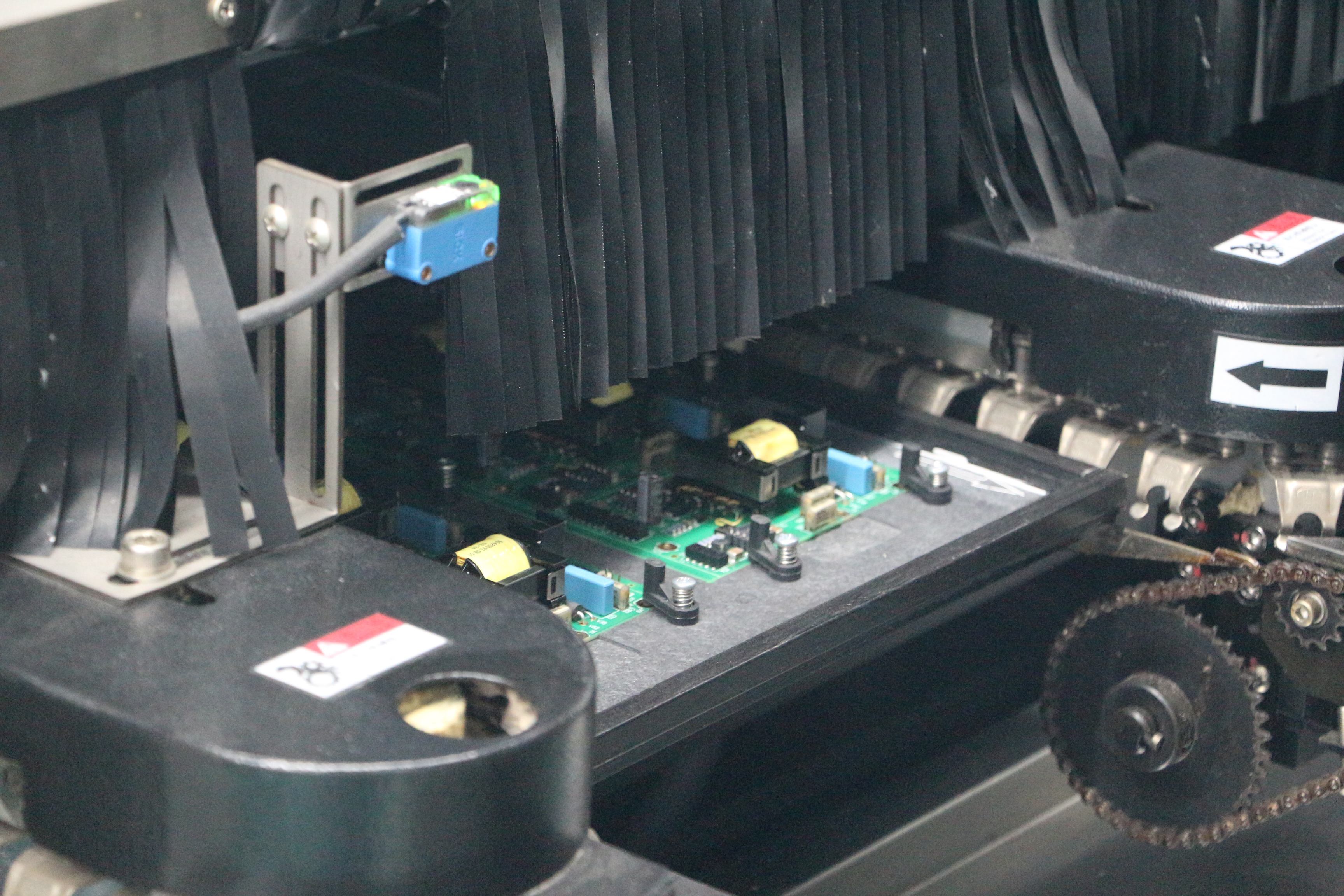
The machinery we rely on combines precision engineering with real-time monitoring, so every cut, weld, or finish matches the exact specifications provided. This eliminates guesswork and keeps output consistent from the first piece to the last.
Advanced automation handles repetitive tasks with micron-level accuracy, reducing the small variations that often come from manual processes. Continuous calibration during operation means adjustments happen instantly, preventing defects before they can form.
From raw material handling to final inspection, the entire workflow is designed to catch potential issues early. Integrated sensors and feedback loops ensure that even complex projects deliver a surface quality and structural integrity that require little to no rework.
Your Project, Our Precision: Tailored Assembly Services
From initial concept to final execution, our assembly services are shaped around your project's exact requirements. No two builds are alike, which is why we take the time to understand your specifications and the end goal. That focused approach means every step—from component sourcing to final fit—reflects your vision, not a generic template.
Our hands-on team brings a level of care that goes beyond checklists. We work through each stage with a mindset of building something that fits seamlessly into your workflow. Instead of force-fitting your needs into a standard process, we adapt our methods, tooling, and quality checks to match what your project actually demands. The result is an assembly that feels purpose‑built, with a finish that speaks to real craftsmanship.
Whether you're scaling a prototype or launching a limited production run, we adjust capacity and oversight so nothing slips through the cracks. Communication stays direct, timelines are realistic, and the final output arrives ready to perform. For projects where precision isn't a luxury but a baseline, having a partner who treats your goals as their own makes all the difference.
Speed Without Sacrifice: Fast Turnaround, Quality Boards
Getting boards fast usually means corners get cut somewhere. That’s not how we work. Our process is built to move quickly without ever letting quality slide, so you get precision results on your timeline.
Every board goes through rigorous checks at each stage of production. We’ve automated the tedious parts while keeping human oversight where it matters, making sure no defect slips through just to save a few hours.
The end result? Dependable circuit boards delivered when you need them—no excuses, no delays, no drop in standards. It’s simply manufacturing done right, on your schedule.
Transparent Process, Reliable Partnerships
We believe that real transparency isn't about flooding you with data—it's about giving you clarity exactly when you need it. That's why our process centers on regular, jargon-free updates that highlight decisions, trade-offs, and next steps. You'll always know where things stand without having to dig through reports or chase down answers.
Partnerships built to last require more than a handshake. They're forged through shared accountability and a genuine commitment to each other's success. We actively seek your input at key milestones, not just as a formality, but because the best solutions emerge when perspectives collide. When challenges arise, we lean into them together, treating your obstacles as our own.
The result is a collaboration that feels less like a vendor-client dynamic and more like an extension of your team. Over time, this blend of open process and mutual reliability transforms one-off projects into enduring relationships—grounded in trust, proven by results, and free from the usual surprises.
Scaling Made Simple: Support for Any Volume
Growing businesses often face unpredictable spikes in demand, but our infrastructure makes scaling feel like second nature. Instead of wrestling with complex configurations or overprovisioning resources, you can adjust capacity in real time with a few straightforward controls. This approach keeps costs aligned with actual usage while maintaining the smooth experience your users expect.
Behind the scenes, automated distribution intelligently routes workloads across our global network, so even when traffic surges from a new market or seasonal peak, everything holds steady. You won't need to overhaul your setup or call in specialists—the system adapts on its own, preserving the speed and reliability you've come to rely on.
From a handful of daily interactions to millions of concurrent sessions, the same core fabric handles it all without forced upgrades or disruptive migrations. That consistency helps your team stay focused on building great features, rather than constantly rethinking architecture. As your ambitions widen, the underlying resources quietly stretch alongside them, making growth feel less like a milestone and more like a natural next step.
FAQ
A PCB assembly factory takes bare printed circuit boards and populates them with electronic components—like resistors, capacitors, and ICs—using soldering processes, turning them into functional electronic assemblies. Unlike bare board fabrication, which only creates the conductive traces, assembly brings the board to life, handling component sourcing, placement, soldering, and testing under one roof.
It eliminates the need to manage multiple suppliers and in-house assembly lines. The factory handles everything from procuring hard-to-find components to performing rigorous inspections, so you can focus on product design and market launch. This consolidation cuts lead times, reduces logistical headaches, and minimizes production bottlenecks.
Modern factories use automated SMT lines with high-speed pick-and-place machines, in-line 3D solder paste inspection, and reflow ovens that provide real-time thermal profiling. Combined with quick-turn prototyping services and concurrent engineering support, they shorten the gap from prototype validation to full-scale production significantly.
Risks like component counterfeiting or soldering defects do exist, but top-tier factories mitigate them through strict vendor qualification, X-ray inspection for BGA joints, automated optical inspection (AOI), and compliance with IPC-A-610 standards. Asking for process documentation and visiting the facility can further ensure quality isn't compromised.
Turnkey service shifts the burden of component sourcing, inventory management, and kitting to the assembler, which often results in volume pricing and fewer production delays. Consignment may save on per-component costs for high-volume commodity parts, but it requires internal teams to manage stock and forecast accurately—turnkey simplifies everything end-to-end.
Smart factories integrate IoT sensors on equipment to monitor placement accuracy, feeder status, and oven temperatures in real time. This data feeds into AI-driven predictive maintenance and statistical process control systems, reducing downtime and scrap rates while maintaining consistent output quality—even during high-mix, low-volume runs.
Many adaptable facilities now feature separate agile lines for rapid prototyping and dedicated high-speed lines for volume production. They share a common material management system and process knowledge base, allowing a smooth transition without requalification. Look for factories that emphasize ‘NPI-friendly’ services to avoid costly ramp-up delays.
Beyond basic certifications, check their ability to handle your specific board complexities—like fine-pitch components, lead-free or RoHS compliance, mixed-technology (SMT and through-hole), and conformal coating. Ask about their design-for-manufacturability (DFM) feedback process; a factory that proactively suggests improvements can save rework and improve yield from day one.
Conclusion
Bringing an electronics design to life demands a PCB assembly partner that truly understands the journey from concept to final product. It’s not just about soldering components onto a board—it’s about intelligence, speed, and unwavering reliability from prototype to production. We’ve built our factory around the idea that every project deserves a tailored approach, with engineers who troubleshoot alongside you and refine your design for manufacturability. Our advanced equipment ensures each joint is flawless, and our fast turnaround doesn’t come at the expense of quality. You get boards that perform as intended, every time.
But what really sets us apart is how we handle growth. Scaling becomes effortless whether you need ten boards or ten thousand; our processes adapt without missing a beat. We keep you in the loop with a transparent workflow, so you always know where your order stands. It’s this combination of precision, speed, and genuine partnership that streamlines your entire production timeline. Instead of wrestling with logistics and quality issues, you get a seamless extension of your team—one that’s as invested in your success as you are.
Contact Us
Contact Person: Lily
Email: [email protected]
Tel/WhatsApp: +49 (0) 2161 49526-0
Website: https://tps-elektronik.com/en/