
ODM Aluminum Cases: Customizable, Rugged Protection for Your Devices
2026-10-01
Off-the-shelf enclosures often leave your device's unique shape unprotected and your brand invisible. Peak Fasten ODM aluminum cases change that — fully customizable, genuinely rugged, and made to fit your exact specs. Ready to see how?
When Standard Cases Fail: The Case for Custom Aluminum
Standard aluminum enclosures often force compromises that look like bad design but are really just fit problems. A PCB with a heat sink on one side may sit 4 mm too tall for the nearest catalog case, so you add a spacer or mill a pocket by hand. Boards that are 127 mm wide force a choice between a 120 mm case and a 150 mm one, and neither leaves the connectors flush. Those gaps and extra brackets add labor, not value.
Custom aluminum fabrication removes those constraints at the drawing stage. You specify wall thickness, internal bosses, cutout positions, and even the direction of the brushed finish. Laser cutting and CNC bending hold tolerances tight enough that a USB-C port sits exactly in its opening and the lid seals without foam tape. For enclosures that have to shed heat, survive vibration, or block dust, custom work lets you place fins, gasket grooves, and mounting points where the design actually needs them.
The case also becomes part of the product instead of an afterthought. Anodizing color, laser-etched markings, and a shape that follows the internal layout make a device look intentional. Unit cost may run higher than an off-the-shelf box, but skipping rework, extra brackets, and cosmetic fixes often narrows the gap faster than a bill of materials suggests.
Material Matters: Why Aluminum Beats Plastic for Device Protection
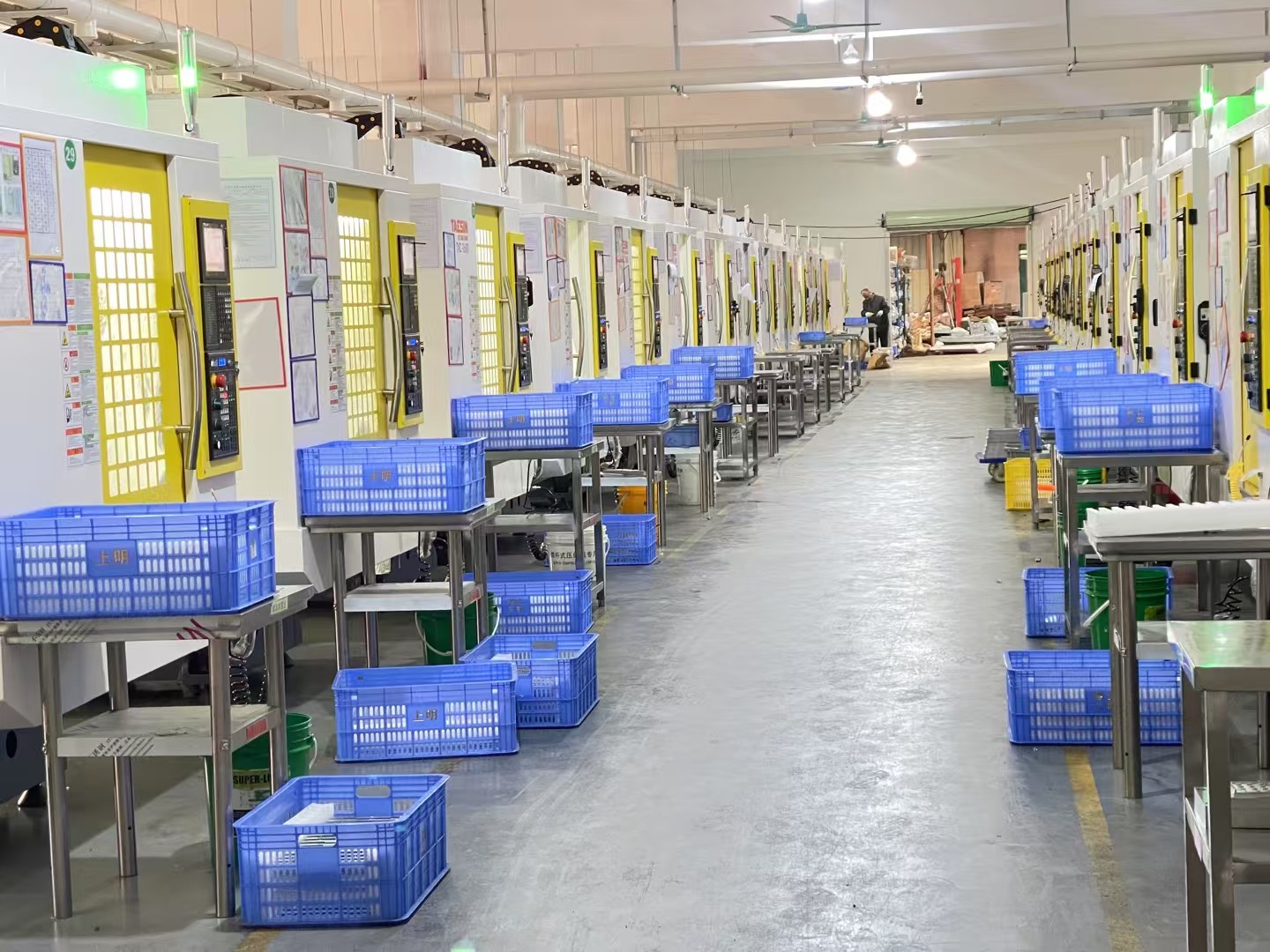
Plastic cases may look rugged, but under stress they flex and transfer force straight into the device chassis. Aluminum behaves differently. A well-milled aluminum shell acts as a rigid exoskeleton, spreading impact energy across its entire frame instead of letting it concentrate at a single corner. The tensile strength of 6061 or 7075 aluminum is several times that of common case plastics like ABS or polycarbonate, so the same thickness gives you far more resistance to bending, twisting, and cracking. That stiffness also keeps ports and buttons aligned under load, which is where plastic protectors often fail first.
Heat is the silent killer of electronics, and plastic traps it against the device body. Aluminum's thermal conductivity turns the case into a passive heat sink, pulling warmth away from hotspots and helping the chipset maintain higher performance for longer. This is tangible protection: less thermal throttling during heavy use, slower battery degradation over months, and a surface that feels cooler to the touch instead of clammy. A plastic shell cannot replicate that behavior no matter how many vent cutouts it has.
Long-term wear also tells the story. Plastic scratches white, absorbs skin oils, and grows brittle after repeated UV exposure or temperature swings. Aluminum ages differently: small scuffs can be polished out, and the metal keeps its structural integrity for years. It adds a feeling of precision without needing extra bulk, so you get better protection in a slimmer profile. When a plastic case starts to look disposable after six months, a well-made aluminum one still feels like part of the device.
Tailored to Fit: Customization Beyond Just Color and Logo
Most people think of customization as slapping on a new shade or swapping out a logo, but true tailoring goes much deeper. It means understanding the rhythm of your daily routines, the quirks of your workspace, and the way you actually use a product hour after hour. Instead of offering a fixed set of options, the approach starts with observation: how your hands move, where you reach instinctively, what slows you down. From there, the design adapts in ways that feel less like add-ons and more like the item was always meant for you.
This philosophy shifts the focus from surface aesthetics to functional fit. Think of a backpack whose strap angle mirrors your shoulder slope, or a desk organizer whose compartments match the exact width of your notebook and the charger you never unplug. The materials, the weight distribution, even the sound of a zipper can be tuned. It's not about offering a hundred variations for the sake of choice; it's about identifying the handful of adjustments that make a tangible difference. That kind of precision doesn't come from a dropdown menu—it grows out of conversation and careful measurement.
The result is a product that quietly disappears into your life, not because it's generic, but because it fits so well you forget it was ever made for someone else. Colleagues might notice the unique details, but you'll simply notice how much easier the day feels. And when something breaks or wears down, the same tailored logic applies to repairs and replacements, so the item evolves with you instead of being swapped for a mass-produced stand-in.
Built for the Unexpected: Rigorous Testing for Harsh Environments
Field failures rarely announce themselves. That's why our engineers drag prototypes to a frozen gravel pit in northern Sweden, then straight into a 50°C sandstorm chamber without letting the circuit boards cool down. The goal isn't to pass a checklist—it's to find the weak solder joint, the seal that cracks at -38°C, the display that fogs up after three days of salt spray.
Drop tests here are less about a single clean hit and more about the cumulative abuse of real life: a corner impact off a loading dock, followed by six hours of vibration on a truck bed, then submerged in muddy water while still powered on. We've had housings survive 100G shocks but fail from a slow, persistent leak of fine dust. That kind of failure only shows up when you test the way the world actually breaks things.
The data from these brutal sessions doesn't sit in a report. It loops back into the design within days—a thicker gasket, a relocated antenna, a reflow profile tweak. By the time a unit ships, it has already been dropped, baked, frozen, drowned, and shaken harder than most equipment will ever see in a decade of service. That's not overconfidence. It's just the only way to build for the unexpected.
Light Yet Tough: The Engineering Behind Aluminum's Strength
Aluminum's reputation for being light is well deserved, but its strength doesn't come from the pure metal—left alone, it's too soft for structural use. The real magic lies in alloying: small additions of copper, magnesium, zinc, or silicon create solid solutions and tiny intermetallic particles inside the aluminum lattice. These particles act as pins that block the movement of dislocations, the line defects that allow metals to deform plastically. By carefully controlling the size and distribution of these precipitates through heat treatment, engineers can push the yield strength of aluminum alloys into territory once reserved for steel, all while keeping the density roughly one-third that of iron.
Mechanical working adds another layer of strength. Rolling or forging the alloy at room temperature stretches grains and tangles dislocations, making further deformation harder—a process known as work hardening. Combine this with a carefully timed aging treatment and you get tempers like T6 or T7, where fine precipitates and dense dislocation networks reinforce each other. But there's always a trade-off: pushing strength too high can reduce ductility and corrosion resistance. That's why different aluminum grades exist—aircraft skins need high fatigue strength, car body panels demand formability, and bike frames balance stiffness with ride comfort. The engineering isn't just about making aluminum stronger; it's about finding the right compromise for each application.
From Prototype to Production: How ODM Streamlines Your Design
Moving a concept from the first sketch to a fully assembled unit is often where projects stall. With an ODM, that gap narrows considerably. Instead of coordinating separate vendors for electronics, enclosures, and firmware, you work with a single partner who already has proven modules and tooling ready. This means your prototype isn't just a one-off bench build—it's built on components that have already passed reliability testing and can be ordered in volume without redesign.
The real advantage shows up in the details. An experienced ODM will flag design choices that cause headaches later, like a connector that's hard to source or a PCB layout that complicates assembly. They optimize for manufacturability from day one, so you avoid the costly loop of tweaking a prototype that works by hand but falls apart on an automated line. That early feedback keeps your timeline realistic and your budget from ballooning.
By the time you approve the final sample, the factory documentation, test fixtures, and component sourcing are already in motion. There's no handoff cliff where a design leaves your hands and gets reinterpreted by a new team. You get a smoother transition to mass production because the same people who helped you refine the prototype are the ones setting up the line.
FAQ
ODM means we handle design and manufacturing under your brand, so you're not stuck with off-the-shelf shapes. You can adjust dimensions, cutouts, finishes, even add logo engraving, and get a case that feels like it was built from scratch for your device.
They're made from high-grade aluminum with reinforced corners and shock-absorbing inner lining. We've seen them survive drops onto concrete, vibration-heavy shipping, and dusty workshop environments without the device inside taking damage.
Practically every opening can be placed to match your device's exact layout. Send us a drawing or even a sample unit, and we'll map the I/O, buttons, and vents so nothing is blocked or misaligned.
You can choose anodized coatings in matte, brushed, or sandblasted textures, plus custom colors and laser-etched graphics. The anodizing isn't just cosmetic—it adds a hard layer that resists scratches, corrosion, and fingerprints.
They weigh a bit more, but the trade-off is worth it. Aluminum gives you better heat dissipation, EMI shielding, and structural rigidity, so your device stays cooler and safer in harsh conditions.
Yes, we support low minimum order quantities for prototyping and pilot runs. That way you can validate the design, get real-world feedback, and tweak anything before scaling up.
Aluminum is lighter and naturally corrosion-resistant, while still offering excellent strength and a premium look. Steel can be tougher in some impact scenarios, but for most portable or rack-mounted devices, aluminum hits the sweet spot between weight, durability, and thermal performance.
Conclusion
When off-the-shelf cases fail to secure sensitive equipment, custom aluminum becomes the logical upgrade. Not all enclosures are equal—plastic shells crack under pressure, while aluminum offers a rare combination of lightness and rigidity. By tailoring every dimension, cutout, and internal frame to the device itself, ODM aluminum cases eliminate wasted space and unnecessary movement. The material itself does the heavy lifting: high-grade aluminum resists corrosion, dissipates heat, and withstands impacts that would shatter polymer alternatives. This is protection designed from the inside out, not a one-size-fits-most compromise.
Durability claims mean little without proof. ODM cases undergo repeated drop, vibration, and environmental testing—simulating years of field abuse before a single unit ships. From water spray to dust ingress, each case is pushed past its rated limits so that real-world surprises don't become failures. And because ODM handles the entire path from initial concept to final production run, engineers refine the design iteratively, balancing shielding, weight, and serviceability without the delays of third-party tooling. The result is a rugged aluminum enclosure that fits your device exactly, survives the unexpected, and stays light enough to carry every day.
Contact Us
Contact Person: Mason Lv
Email: [email protected]
Tel/WhatsApp: +86 13027998452
Website: https://www.peakfastentech.com