
Leading China Beverage Production Line Supplier for Automated Bottling Solutions
2026-09-22
Bottling downtime isn't just a headache—it's profit leaking away. As consumer demand shifts toward faster turnaround and varied packaging, beverage producers are under pressure to automate without overcomplicating their lines. That's where INTOP Machinery changes the equation. As a leading China-based supplier of complete beverage production systems, they pair precision engineering with practical automation, helping plants hit higher output while keeping changeovers smooth. In this post, we'll break down what sets their bottling solutions apart and why more international operators are tapping Chinese manufacturing expertise for reliable, scalable lines.
Bottling lines that arrive pre-tested and ready to bottle
The moment your bottling line rolls off the delivery truck, you shouldn't have to wonder if it's going to work. That's the whole point of a pre-tested system. Every valve, filler head, and conveyor belt has already been run through a full cycle back at the manufacturer's facility, so what arrives at your plant isn't a pile of parts with a manual—it's a machine that's already proven it can bottle.
Think about the first few hours after installation. With a pre-tested line, you're not spending that time chasing down leaky seals or recalibrating sensors. The testing process typically involves running actual product or a close substitute through the entire line, which catches issues that static inspections always miss. That means the first bottle off the line at your facility is far less likely to be a surprise.
For a production manager, the real value shows up in the schedule. Pre-tested lines cut commissioning time dramatically—sometimes from weeks down to a single day. You can move straight from placement to production without the usual back-and-forth with remote support teams. It's the closest thing to plug-and-play you'll find in industrial bottling equipment, and it leaves your crew free to focus on throughput instead of troubleshooting.
Fill accuracy that holds steady at 40,000 bottles per hour
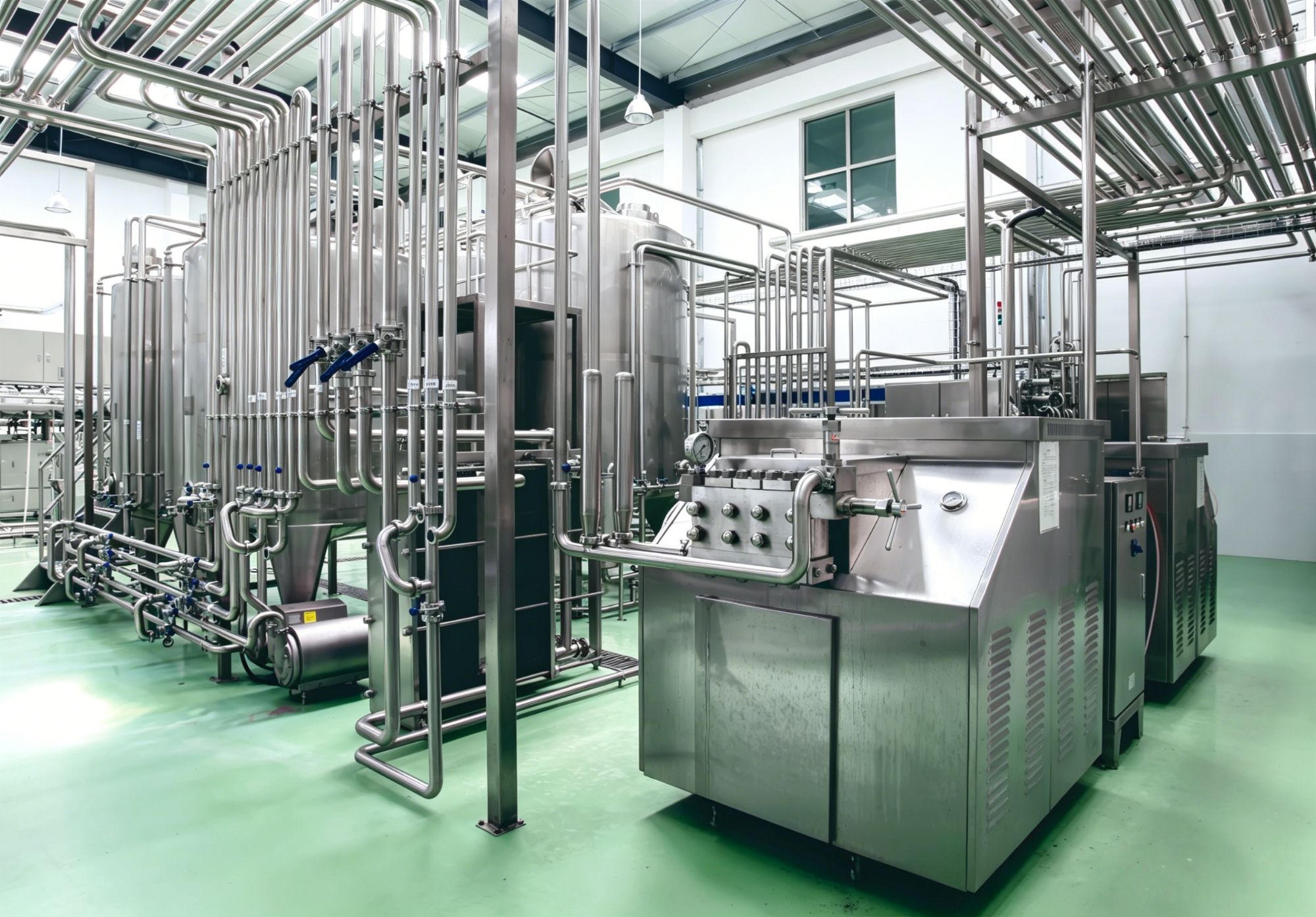
At 40,000 bottles per hour, the filling system doesn’t just keep pace—it holds each container to a tolerance of ±0.5% by volume. That kind of consistency comes from a closed-loop control architecture: magnetic flow meters sample product flow every few milliseconds, and servo-driven filling valves adjust on the fly to compensate for viscosity shifts, foam, or slight pressure changes in the supply line.
Instead of relying on a single calibration point, the line continuously averages readings from the last thirty fills and trims valve timing for the next cycle. This adaptive approach means a bottle at the start of a run gets the same fill as one four hours later, even as product temperature drifts or filler bowl level fluctuates. Operators can watch the trend on the HMI, but the system rarely needs manual correction once it’s dialed in.
Quick-change parts that switch from juice to sparkling water in minutes
Each quick-change block snaps into a keyed slot, so the line switches from a pulpy orange juice mix to plain carbonated water without touching a single clamp. The entire swap takes about two minutes on a busy shift.
O-ring grooves are cut slightly deeper on the sparkling-water side to hold carbonation pressure, while the juice side uses a wider bore for thicker pulp. A simple red-to-blue color code keeps the right part in the right bay.
After the new block locks in, a 30-second rinse cycle flushes the shared line. Staff can then pull the first glass of sparkling water with no trace of juice taste or sweetness.
Stainless steel frames built to handle sticky syrups and hot fills
When you're running a production line that deals with thick, sugary syrups or blazing-hot liquids, the last thing you want is a frame that warps, corrodes, or traps residue. That's why these stainless steel frames aren't just an afterthought—they're the backbone of the whole operation. The material itself shrugs off both the stickiness and the heat, so you don't end up with bent rails or rust spots after a few thousand cycles. We've seen too many setups where the frame looks fine on day one, then slowly turns into a sticky, creaking mess. These are built different: the welds are smooth, the joints are reinforced, and there's no place for syrup to hide and harden.
What really sets these frames apart is how they handle the daily abuse without needing constant attention. Hot fills can make lesser metals expand and contract unevenly, causing microfractures that turn into big problems. But with the right grade of stainless steel and a geometry that accounts for thermal stress, you get a frame that stays true. Plus, the surface finish isn't just for looks—it's polished to a point where even the most stubborn syrup wipes off with minimal effort. That means less downtime for cleaning and more time actually filling bottles or cans.
And let's be honest: most frames in this category are either over-engineered to the point of being a nightmare to service, or so flimsy that you're constantly chasing alignment issues. These strike the balance. They're heavy enough to stay planted when the line is running full tilt, but not so bulky that your maintenance crew dreads a format change. Every bolt, every crossmember, every gusset is there for a reason. No pointless flourishes, no weak points that'll haunt you later. Just a workhorse frame that'll outlast the syrups, the heat, and probably a few of your competitors' machines.
Direct factory access that removes the importer markup
Cutting out the middleman isn't just about saving a few dollars—it changes the entire equation of what you pay for. When you buy directly from the factory, the traditional chain of importer, distributor, and retailer disappears. That means the markup each one adds for storage, handling, and profit no longer lands on your final invoice. Instead, you're paying for what actually goes into the product: the materials, the craftsmanship, and the time on the factory floor.
This direct line also gives you something else that's hard to put a price on: transparency. Without an importer in between, communication isn't filtered through layers of sales reps and agents. If you have a question about how something is made or need a specific modification, you're talking to the people who actually build it. Many buyers find this leads to faster responses and fewer misunderstandings—no more waiting weeks for an importer to relay a message and then translate the answer back.
The savings from bypassing the import markup can be substantial enough to shift how you budget for a project. Rather than accepting a price that includes a hidden 20–40% for distribution, you're able to allocate that budget toward better materials or a larger order. It's a quieter kind of advantage—not the kind that shows up in flashy advertising—but it's one that shows up clearly on the bottom line, month after month.
Remote diagnostics that catch issues before your shift does
Most problems don't wait for a convenient time—but they do leave traces long before your key turns. Remote diagnostics reads those traces overnight: a slow coolant drop, a DPF pressure reading that's climbing, a battery that's losing charge faster than it should. By the time you reach the yard, the system has already flagged the issue, ranked it by severity, and sent a clear note about what needs attention. No dash-light surprise at start-up, no guessing whether it's safe to roll.
The real difference shows up on tight schedules. Instead of discovering a failing sensor or a regen problem twenty miles into your route, you get the heads-up while the truck is still parked. That means a ten-minute fix before departure instead of a two-hour roadside wait later. Your shift starts with a clean truck, not a fault code you have to chase.
FAQ
They focus on complete bottling lines for water, carbonated drinks, juice, tea, and dairy-based beverages, with options for glass, PET, or canned formats.
Most lines include automatic rinsing, filling, capping, labeling, and packing stations. Clients can choose partial automation for smaller plants or full PLC-driven integration for high-speed operations.
Yes, the engineering team adapts filler nozzles, conveyor layouts, and capping heads to unusual bottle geometries and thicker liquids like syrups or protein shakes.
Inline inspection systems check fill levels, cap torque, label alignment, and seal integrity. They also run factory acceptance tests with the client's own product samples before shipping.
Yes, they send commissioning engineers to the buyer's site, supervise mechanical and electrical setup, and train local operators and maintenance staff for several days.
It depends on configuration, but standard lines usually ship within 60 to 90 days after design approval. Custom features like aseptic filling can extend that to 120 days or more.
They stock common wear parts in regional warehouses and offer remote diagnostics via video call, with express delivery for critical components to reduce downtime.
Contact parts use food-grade stainless steel, and the designs meet CE, ISO 9001, and FDA-related material requirements. They provide documentation packages for local regulatory checks.
Conclusion
When a beverage producer installs a new bottling line, downtime and trial runs usually eat into the first weeks. That is not how this equipment arrives. Every line from this China-based manufacturer is run through full pre-testing before shipping, so once it lands on your floor, it is ready to bottle. The filling accuracy is a major point of difference: at 40,000 bottles per hour the fill level stays consistent, which cuts product giveaway and keeps your label claims honest. Changeovers are done with quick-change parts, not hours of mechanical adjustment. A crew can move from juice to sparkling water in minutes, which matters when you are chasing seasonal flavors or private-label runs.
The build quality is tailored for messy, high-temperature production. Stainless steel frames shrug off sticky syrups and hold up under hot fills, and they clean down quickly between batches. Buying direct from the factory eliminates importer markup, so you pay for engineering rather than middlemen. Support does not stop after installation. Remote diagnostics watch the line around the clock and flag small issues before a shift supervisor even notices a pressure drop or a misaligned cap. That combination of pre-tested delivery, steady fill accuracy, and fast format changes makes this supplier a practical alternative for beverage plants that want automation without the inflated price tag or the long commissioning delays.
Contact Us
Contact Person: Laura
Email: [email protected]
Tel/WhatsApp: +86 13957758832
Website: https://www.intopmachinery.com