
High Speed Plastic Sheet Machine Benefits and Top Applications
2026-10-25
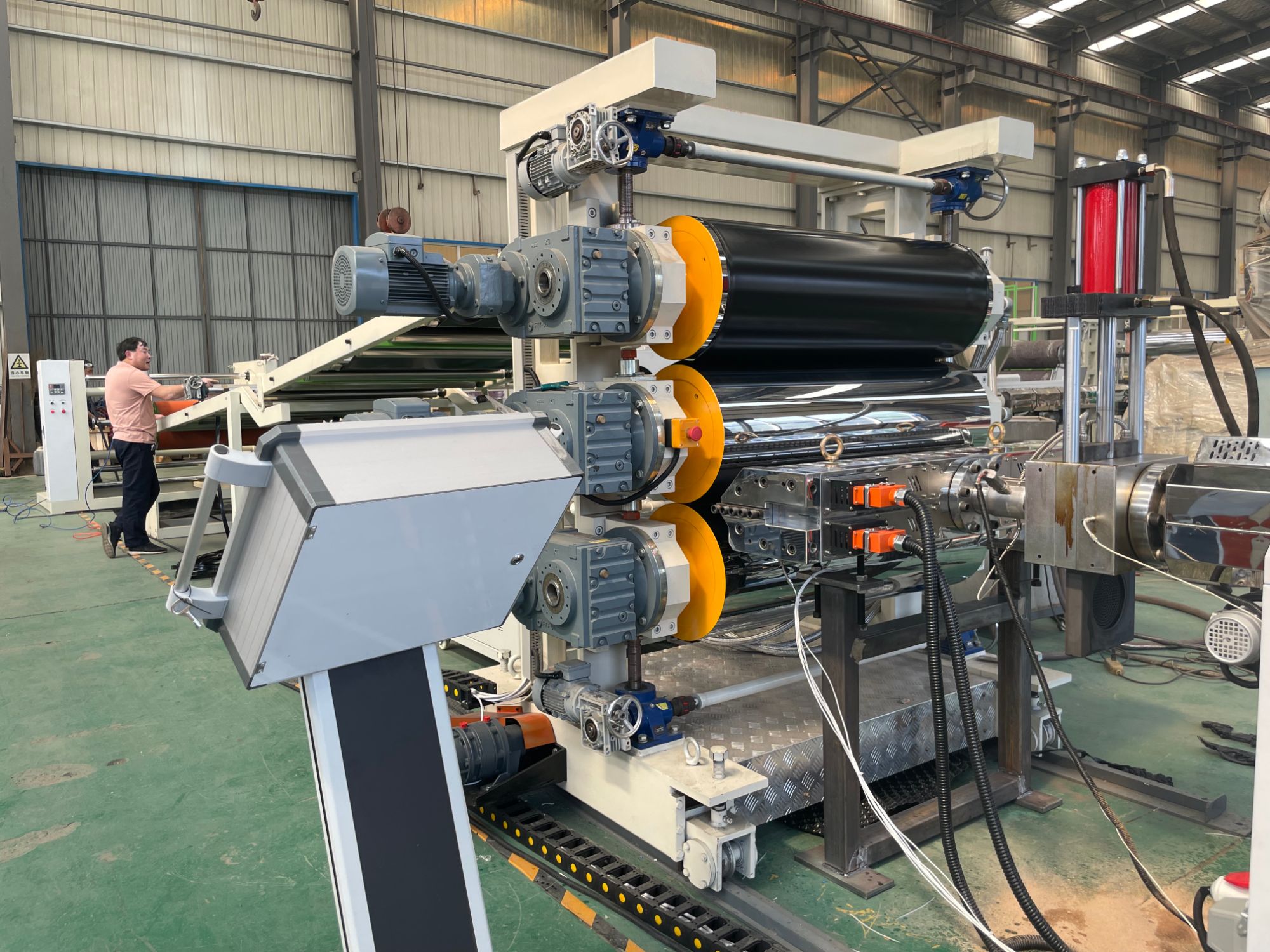
Ask any plant manager what separates a good production line from a great one, and you'll likely hear the same answer: speed without sacrificing quality. High-speed plastic sheet machines deliver exactly that—and more. They're not just about churning out more sheets per minute; they're about consistency, material efficiency, and unlocking new markets. From thin-gauge food packaging to heavy-duty industrial panels, the applications are broader than many realize. If you've been exploring ways to upgrade your output, COMRISE brings serious expertise to the table. Let's dive into the concrete benefits and the top uses that make these machines a smart investment.
Why a Faster Line Often Produces Cleaner Sheet
Running a production line at higher speed can actually reduce the chance of surface defects. When material moves quickly through rollers, coating stations, or cutting heads, it spends less time in any single high-temperature or high-friction zone. That shorter dwell time limits the formation of oxide layers, heat marks, or residue that often appear when a sheet lingers too long under pressure or heat.
A faster line also helps maintain a more consistent gap between tooling and the sheet. At slow speeds, minor vibrations or buildup on rollers can create uneven contact, leaving streaks or micro-scratches. The momentum of a quicker pass tends to smooth out these small inconsistencies, giving the sheet a more uniform finish without the need for extra polishing steps.
Operators sometimes assume that slowing down is safer for quality, but that is not always true for thin or coated materials. The brief exposure at higher velocity reduces the window for contaminants to settle or for chemical reactions to start. In practice, a well-tuned fast line can deliver a sheet that looks noticeably cleaner straight off the line, with fewer secondary cleaning operations required.
Cutting Scrap Without Touching the Settings
When a sheet has leftover pieces after the main job, the temptation is to adjust power, speed, or focus just to clear them. That usually throws off calibrations for the next run. Instead, the machine can be left untouched and a separate scrap-cutting routine activated from the control panel. This keeps the current setup exactly as it is.
This approach works because the path is generated on the fly using the same parameters that were already locked in. You simply mark the outline of the leftover area, and the cutter follows that boundary with zero interference to stored presets. No dials need to be moved, no material library entries edited, and no time is lost re-zeroing afterwards.
It’s particularly handy in mixed-material shops where switching settings back and forth introduces error. By separating the scrap pass from the active profile, you get a clean cut and a machine that’s still ready for the next production job immediately.
Tight Thickness Control Even at Top Speed
Thickness variation has a way of exposing itself the moment line speed climbs. What looks stable at moderate throughput can drift into streaks, sag, or edge build-up once the drives push past rated limits. Keeping the web or coating layer within a few microns at maximum velocity isn't just a matter of more precise tooling—it demands a control loop that reads actual material response fast enough to correct before the deviation reaches the roll.
At full speed, gap changes and pump adjustments act on a moving target. The most reliable systems pair high-frequency thickness scanning with closed-loop die or roll positioning that anticipates downstream readings rather than chasing them. This shifts the work from "measure and react" to continuous, position-synced correction, so uniformity holds even during acceleration and splices.
Operators notice the difference most during long runs where material, temperature, and viscosity shift. Tight control at top speed means fewer manual trim passes, less edge scrap, and a consistent profile from core to outer wrap. Instead of slowing down to stay in spec, the line keeps its throughput while the gauge stays flat.
Food Trays, Blister Packs, and Other Runs That Need Speed
Running food trays or blister packs at high cycle rates isn't just about cranking up the machine. Thin walls and shallow draws put heat transfer and material distribution under a microscope. If the sheet cools too quickly before forming, corners tear. If it stays too hot, the final part sags and warps. The real work happens in balancing sheet temperature, plug assist timing, and tool temperature so the material moves into detail without hesitation.
On these fast runs, small inconsistencies multiply. A half-millimeter shift in plug alignment can leave one cavity short-filled while another flashes. You learn to read the sound of the mold closing and the pattern of webbing between parts. Adjustments that would be minor on a deeper draw become the difference between a clean stack and a pile of scrap. Process windows shrink, so response time from operators and controls matters more than top speed alone.
Materials also play a bigger role than many realize. Recycled PET or thin PP can vary from lot to lot in stiffness and melt strength. At 40 or 50 cycles per minute, that variation hits harder. Pre-drying, consistent regrind ratios, and precise temperature profiling keep the run from drifting. Speed doesn't come from pushing limits blindly; it comes from removing every small delay that allows heat to escape or alignment to drift.
Automotive and Building Panels Without the Wait
Most suppliers quote a two- to four-week lead time on automotive and building panels. We keep a different model: full bundles of pre-finished aluminum, galvanized steel, and composite panel in our warehouse, so the material is already on the shelf before your order lands.
That means a damaged trailer side, an unfinished mezzanine, or a last-minute switch in cladding doesn't have to idle your crew. Orders placed by noon go out the same day on our trucks or a local freight partner, and you get tracking with a real delivery window.
Need panels cut to odd sizes? We shear and CNC-route before shipping, then palletize by installation sequence. It removes the second wait—waiting for fabrication—and lets your team start fastening panels the day they arrive.
Energy Per Sheet Drops When You Stop Crawling
Most people assume that energy use stays steady as long as the machine is on, but the real cost is tied to movement. When a printer, scanner, or automated feeder shifts into a slow crawl—often during alignment, calibration, or stuck-paper recovery—it lingers in a high-draw state without producing output. Once that crawl stops and the device settles into idle or completes the job, the average energy per sheet falls sharply because the power is no longer being wasted on unnecessary mechanical effort.
In practice, this means ignoring small stutters or periodic crawling can quietly inflate your per-page energy figures. Devices that frequently pause to re-crawl a document path or reposition a sheet rack up more consumption per finished copy than those that move once and stop cleanly. The fix is straightforward: watch for repeated crawling patterns, clear any obstructions, and let the machine finish its cycle completely. The drop in energy per sheet is often immediate once that motion stops.
FAQ
It delivers more output per hour while cutting labor and energy costs per kilogram. The higher line speed shortens production cycles, so a facility can meet larger orders without adding extra shifts or floor space. Consistent gauge control also reduces scrap, which directly improves net margins.
Food packaging, medical trays, automotive interiors, construction panels, and signage are the biggest users. Any sector that needs thin, uniform sheet for thermoforming or fabrication benefits, especially when high volumes and tight tolerances are non-negotiable.
Closed-loop thickness control and precision temperature zones keep the melt uniform from edge to edge. At higher line speeds, these systems compensate faster for variations in raw material or ambient conditions, so sheet thickness and surface finish stay within narrow specs.
Yes, many models handle post-industrial regrind, and some are configured for PLA, PBAT, or starch blends. The key is selecting the right screw design and venting, because recycled and bio-based resins often have different melt stability and moisture sensitivity compared to virgin PP or PS.
Daily checks on roll gaps, die lip cleanliness, and screen changer pressure are critical. Scheduling barrel and screw inspections before wear affects output prevents sudden downtime. Consistent lubrication of gearboxes and calibration of thickness sensors also matter more at high speeds.
It starts with the resin and the target sheet width, thickness, and output. A barrier screw works well for polyolefins, while a low-shear design is better for heat-sensitive materials. The die should match the expected gauge range and allow easy lip adjustment for edge-to-edge uniformity.
Automation handles recipe changes, roll transfers, and real-time thickness correction without operator intervention. This reduces human error at high speeds, shortens startup waste, and lets one operator oversee multiple lines instead of constantly adjusting manual controls.
Conclusion
Running a plastic sheet line faster doesn't just boost output—it often produces a cleaner sheet. At higher speeds, the polymer spends less time in the barrel and die, which lowers the chance of thermal degradation, gels, or discoloration. That same stability means you can cut scrap rates without ever touching the process settings. Once the line is dialed in for speed, the melt flow and cooling stay uniform, so edge trim and off-spec material drop on their own. Tight thickness control is another benefit that holds up even at top speed; modern gauging systems adjust the die bolts or roll gaps in real time, keeping variation within a few microns. And because the extruder, drives, and heating zones are already running, the energy per sheet falls noticeably as throughput rises—you stop crawling and let the fixed costs spread across more product.
That combination of speed and precision makes these machines ideal for runs that demand high volume without long waits. Food trays, blister packs, clamshells, and similar packaging rely on fast cycles and thin-gauge consistency, so a high-speed line keeps the downstream thermoforming presses fed without bottlenecks. Automotive and building panels—often thicker and more dimensionally critical—also benefit, as the same closed-loop controls deliver flat, stress-free sheet at a pace that cuts lead times from weeks to days. Instead of slowing down to hold tolerances, operators can run at full speed and still meet the spec, which shifts the bottleneck away from extrusion and back to the converting or trimming step where it belongs.
Contact Us
Contact Person: LISA LEE
Email: [email protected]
Tel/WhatsApp: +86 13780696467
Website: https://www.qdpipemachine.com