
China Trough Roller Vendor: How to Evaluate Quality and Reliability for Your Conveyor System
2026-10-12
Getting the right trough rollers for your conveyor system isn’t just about picking the lowest quote—it’s about ensuring every component can handle real-world load, speed, and dust without constant downtime. If you’re sourcing from China, the challenge grows: you need a vendor who balances solid manufacturing with dependable quality control. That’s where XAN comes into focus. In this guide, we’ll break down how to evaluate Chinese trough roller vendors on material selection, bearing quality, sealing, and after-sales support, so you can avoid costly failures and keep your conveyor line moving.
What Really Separates a Dependable Trough Roller from a Disposable One?
A trough roller that can be trusted for years doesn't just look heavier—it's built around a handful of specific decisions that cheap versions skip. The tube wall is usually more consistent in thickness, which means fewer balance problems and less flexing under load. Cheap rollers often use lower-grade steel that starts round but wears unevenly, causing the belt to wander long before the bearing fails.
The bearing and sealing arrangement is where the real difference shows up. Disposable rollers typically use a smaller, lighter bearing and a simple contact seal that gives out quickly in dust or moisture. A dependable roller uses a bearing sized to the actual load, paired with a labyrinth or multi-stage seal that blocks contamination without adding excessive drag. That's why one lasts through seasons of abrasive fines while the other grinds to a halt in months.
End caps and shaft fit matter just as much. On a quality roller, the end caps are securely welded or precision-crimped, and the shaft is ground to a consistent diameter so the bearing seats stay tight. Disposable versions often rely on stamped caps and raw shaft stock, which leads to vibration, increased noise, and sudden failure under normal belt tension. Those small tolerances are what separate a component you forget about from one you're replacing every shutdown.
Materials and Machining Tolerances You Should Verify Before Ordering
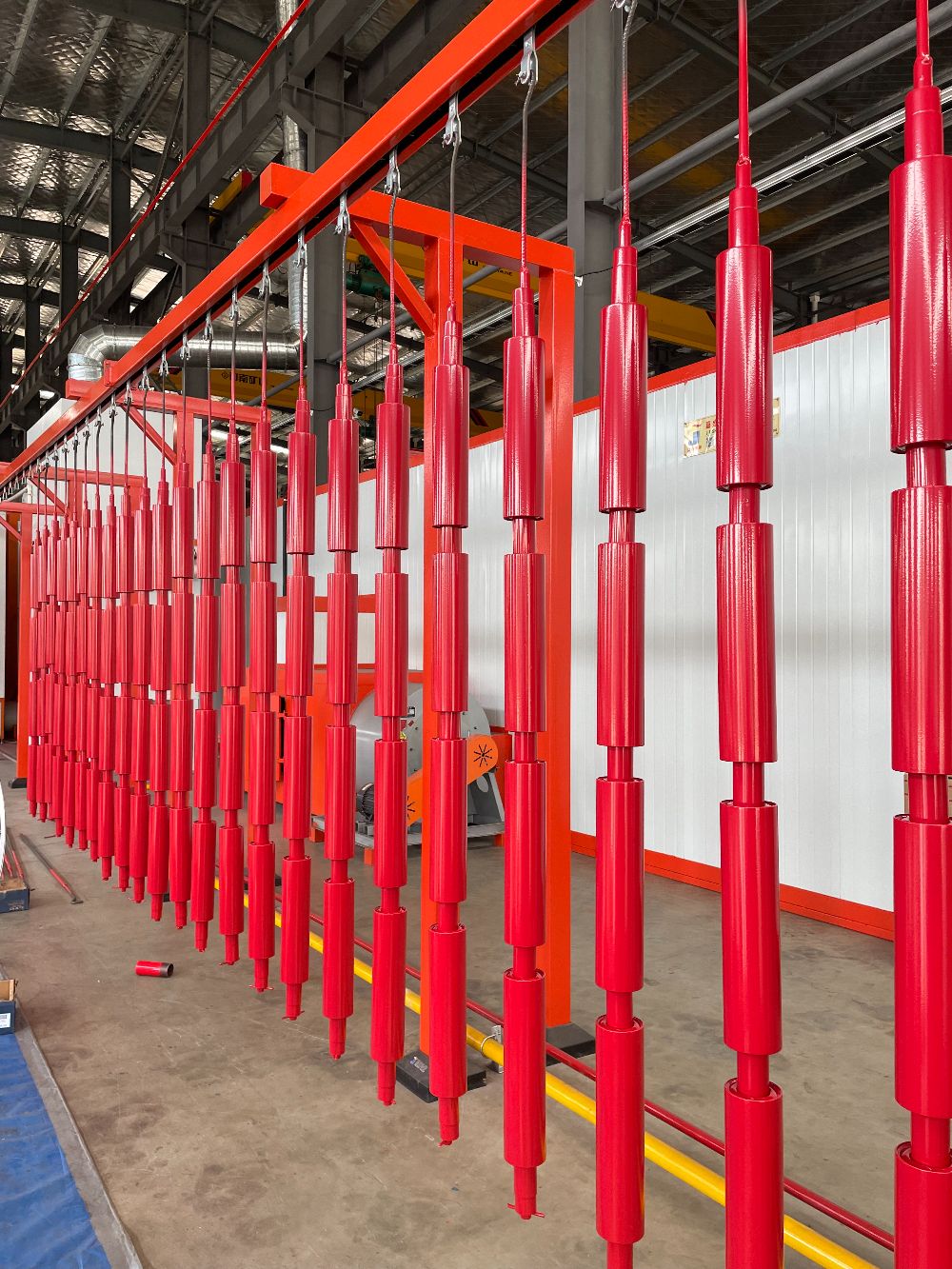
A lot of quoting goes sideways because the raw material's actual thickness or diameter doesn't match the nominal size on the drawing. Cold rolled, hot rolled, extruded, and cast stock all carry different standard tolerances depending on the mill and the specification they follow. If your part has tight features near the stock surface, you need to know the real as-received dimensions before locking in a machining allowance. Otherwise the first operation either removes too much or leaves witness marks that nobody wants to see on a finished component.
Machining tolerances also depend heavily on how the part is held and how stress relief is handled. A drawing might show a flatness of 0.05 mm, but if the material has not been normalized or stress relieved after roughing, that number can drift by the time the part leaves the fixture. It is worth asking the shop to confirm the raw material certificate and the planned sequence of roughing, stress relief, and finishing before you sign off on the order. This step alone catches a surprising number of mismatches between what the CAD model assumes and what the material actually does.
Surface treatments add another layer of dimensional change that often gets ignored until inspection fails. Anodizing, plating, or powder coating can add anywhere from a few microns to several tenths of a millimeter depending on the process, and those changes are not uniform across holes, threads, and edges. If a feature is called out as a final post-treatment dimension, the machining tolerance has to be tightened before coating to leave room for the buildup. Clarifying this early with the supplier prevents a batch of parts that meet the raw machined drawing but fail every functional check after finishing.
Seals, Bearings, and the Little Things That Decide Roller Lifespan
Most roller failures don't start with a dramatic crack or a snapped shaft. They begin in the spaces you never look at: the seal lips wearing a hair's width too loose, the bearing seats settling a few microns out of true, or a spacer that transmits vibration instead of damping it. These small mismatches quietly concentrate stress until the roller gives up long before its rated hours.
Seals are the first line of defense, but they also dictate friction and heat. A seal that's too tight burns energy and bakes the grease; one that's too loose lets in moisture and fine debris. Bearings, meanwhile, can only perform as well as their mounting. Even a tiny misalignment or a worn housing bore will force the rollers to scrub instead of roll, creating spalling that moves outward from the raceway. The fix usually isn't a stronger roller—it's a better fit around it.
That's why lifespan is decided by the little things: the tolerance on a shoulder, the runout on a shaft end, the choice of a seal material that handles a few degrees more heat. When those details are right, the roller itself is rarely the weakest link.
How to Spot a Supplier That Cuts Corners on Welding and Surface Prep
Look closely at the weld beads. A shop that takes welding seriously produces beads with a consistent rhythm — width and depth stay even, corners transition smoothly, and there's no sudden pile-up or undercut. If you see rough, uneven passes with spatter left stuck to the base metal like sandpaper, that's a sign someone was rushing or the parameters were never dialed in. Undercut along the weld toes, where the base metal gets gouged out, is even worse: on structural parts, it's basically a pre-installed crack starter.
Surface prep is where sloppy suppliers hide their shortcuts. They might claim they blasted to Sa2.5, but actually only gave it a quick sweep — mill scale and old paint remain, just disguised under a layer of dust. Run a fingernail around the weld area; if you scrape up rust powder or see shiny base metal under thin coating, the roughness profile wasn't achieved. Coating thickness is another favorite place to cheat: edges, inside corners, and bolt holes get a quick pass while the flat faces look fine. Ask for dry film thickness readings from each batch, not just a verbal promise.
The surest way to spot corner-cutting is to ask for process records. Welding procedure qualifications, welder certifications, preheat and interpass temperatures, environmental conditions before blasting — if these documents are missing or contradictory, field control is already broken. Some suppliers will show you a few polished photos, but when you request original inspection sheets or offer to visit and randomly check a batch in production, the excuses start. Honest shops don't flinch at that kind of request.
Load Testing and Real-World Performance: Questions Worth Asking Any Vendor
Ask any vendor to walk you through their load testing setup, and you'll quickly separate those who understand production from those who just run scripts. The first thing worth probing is whether their test traffic mirrors real user behavior or just follows a tidy, linear ramp-up. Real workloads spike, stall, and produce long-tail latency. If a vendor can't explain how they capture production traffic patterns, inject network jitter, or model diverse client devices, their performance numbers probably won't survive contact with your users.
Another area to push on is failure injection. Many load tests only measure throughput under perfect conditions, which tells you almost nothing about resilience. Ask how the vendor tests database lock contention, cache stampedes, third-party timeouts, or sudden queue buildup. A credible answer will include concrete examples of how the system behaves when things break, not just when everything is green.
Finally, demand access to the test artifacts and methodology rather than a polished summary chart. A vendor worth trusting will let you run your own scripts or tooling against their environment, and will share raw result files, not just the 95th percentile they cherry-picked. The whole point of load testing is to expose weaknesses before you're in production, so the questions you ask should reveal whether the vendor is doing the same.
Beyond Price: Warranty, Spare Parts, and What Happens After the Sale
Anyone can quote a low number on an invoice. The real test comes later, when the equipment has been running for six months and a critical component fails. A warranty is only as useful as the people who honor it. Some suppliers hand you a dense document and disappear; others answer the phone on the second ring, ship a replacement part the same day, and follow up a week later to make sure the machine is still running. That difference rarely shows up in the purchase price.
Spare parts matter more than most buyers expect. A pump or a gearbox isn’t just a one-time purchase—it’s a relationship with a supply chain. Ask how long parts stay in stock, where they ship from, and whether discontinued models still get support. Smart buyers treat the after-sale conversation as part of the negotiation, not an afterthought.
Post-sale support is where suppliers earn their margin or lose your business. The best ones keep records of your order history, recommend preventive maintenance before something breaks, and never make you repeat your serial number to five different people. If a seller can’t explain what happens on day 365, that low upfront price probably isn’t low at all.
FAQ
Focus on wall thickness and material consistency. Reputable vendors typically use high-frequency welded pipe with uniform thickness, often from Q235 or comparable steel, and avoid recycled or mixed scrap. Ask for the actual measured thickness rather than nominal values, and check that the shell is straightened and deburred before machining.
Look for a multi-stage sealing system rather than a single dust cover. A combination of a labyrinth seal on the outside and an inner grease-filled cavity keeps fines out of the bearing. Also confirm the vendor uses deep groove ball bearings from a recognized maker like SKF, NSK, or PEER, or can document equivalent performance through endurance testing.
Ask whether the bearing housings are pressed into the shell and welded on automated or semi-automated lines, not by hand only. Request details about weld penetration and post-weld inspection. The finish should include rust preventive treatment, and ideally a salt spray test report of at least 48 hours for standard powder-coated or painted rollers.
Request a process audit instead of just a sample check. Ask how they control incoming steel, bearing seats, and shaft tolerances. Vendors with in-house CNC machining for the shaft ends and housings tend to be more consistent than those outsourcing everything. Also look for batch traceability: each production lot should link to raw material certificates and final inspection records.
Even a small imbalance can create vibration that shortens bearing life and increases noise. For rollers above a certain speed, ask for dynamic balancing to ISO 1940 grade G6.3 or better. A reliable Chinese vendor should be able to provide balancing certificates for a sample from each batch, not just a one-time report.
Yes. Request a radial runout check (often under 0.5 mm for standard rollers), axial displacement limits, rotational resistance, and a no-load run test for a specified period. For harsh environments, ask for a dust chamber test or at least documented IP rating for the sealing system. Have the vendor sign off on these values in the inspection report.
Beyond the catalog, send your belt width, material density, and trough angle. A capable vendor will confirm the recommended roller length, shaft diameter, and bearing size, and may run a basic calculation for load rating and spacing. If they only quote price without asking about your application, that's a warning sign.
Insist on mill certificates for the steel, bearing brand and origin confirmation, dimensional inspection reports for each batch, balancing reports, and coating thickness measurements. For export orders, a pre-shipment inspection by a third party can be worth the cost. Also ask for clear packing and handling instructions to prevent damage in transit.
Conclusion
A dependable trough roller is not easy to spot from a catalog photo. The differences show up in the steel tube wall thickness, the concentricity after machining, and how tightly the bearing seats are held. Many suppliers quote the same diameter and length, but few hold the bore tolerance that prevents wobble under load. Ask for actual material certificates and check whether the shell is made from high-frequency welded pipe with a uniform wall. If the vendor hesitates to share the machining tolerance or the type of steel, that is already a warning. The seal arrangement matters just as much as the bearing itself. A simple labyrinth may look fine on a drawing, yet a triple-lip contact seal with proper grease retention will keep out coal dust and moisture far longer. Look closely at the weld where the end disc meets the shell. A smooth, full-penetration weld with cleaned spatter and no undercut indicates that the factory paid attention to stress points. Rough, uneven beads or heavy grinding marks often hide poor fit-up and future cracks.
Beyond the physical parts, ask how a vendor proves its rollers work. Request a load test report that matches your belt speed and burden, not a generic lab certificate. Real-world failures usually come from imbalance, high runout, or bearing lockdown, so a supplier should be able to walk you through how they measure runout after assembly and what rejection rate they accept. Price alone rarely tells the story. A lower quote may mean thinner tube ends, an unhardened shaft, or no post-weld stress relief. Instead, compare the warranty scope. Does it cover the bearing and shell for a stated number of operating hours? Will they stock common spare parts in a nearby warehouse? After-sales support often reveals more than any brochure. A vendor that follows up on installs, keeps serial numbers for traceability, and responds quickly when a roller fails early is the one that treats your conveyor downtime as its own problem. Ask for two or three reference sites running similar material, and if possible, visit one. Seeing rollers that have survived two years of abrasive service tells you more than any inspection checklist.
Contact Us
Contact Person: Anna Lu
Email: [email protected]
Tel/WhatsApp: 8618561668850
Website: https://www.x-conveyor.com