
China Paper Bag Making Machine Options and Key Features Explained
2026-10-29
As demand for sustainable packaging surges, choosing the right China paper bag making machine has become a make-or-break decision for converters worldwide. The market is full of options, but only a handful of features truly determine output quality, production speed, and long-term uptime. Before you dive into specifications and supplier comparisons, it pays to understand what separates a dependable workhorse from a costly compromise. In this guide, we’ll walk through the key options and performance factors that matter most—and along the way, you’ll see why ROKIN has earned a reputation for building machines that consistently meet real production demands.
What Bag Types Can You Actually Produce?
We regularly run totes, backpacks, duffels, and cooler bags, but the line doesn't stop there. If it carries something and needs stitching, we've likely made a version of it: drawstring pouches, cosmetic cases, laptop sleeves, wine totes, even oddball shapes like guitar gig bags and yoga mat carriers. The real limiting factor isn't the style, it's whether the pattern can be cut cleanly from the material you pick.
Most clients come in with a rough sketch or a competitor sample. From there we adjust pocket placement, strap length, zipper gauge, and base construction. You can specify heavy canvas for grocery totes, ripstop nylon for packable daypacks, or insulated foil lining for meal-prep bags. Small runs in 200-500 units work fine for simpler silhouettes; complex multi-compartment backpacks usually need at least 1,000 units to keep costs sane.
One thing we push back on: trying to copy a brand's exact shape without changing a single dimension. We're happy to make a similar bag, but we'll tweak panel angles or hardware so it's not a straight knockoff. Beyond that, if you can draw the basic shape and explain what goes inside, we can probably produce it.
Material Handling: From Kraft to Laminated Stocks
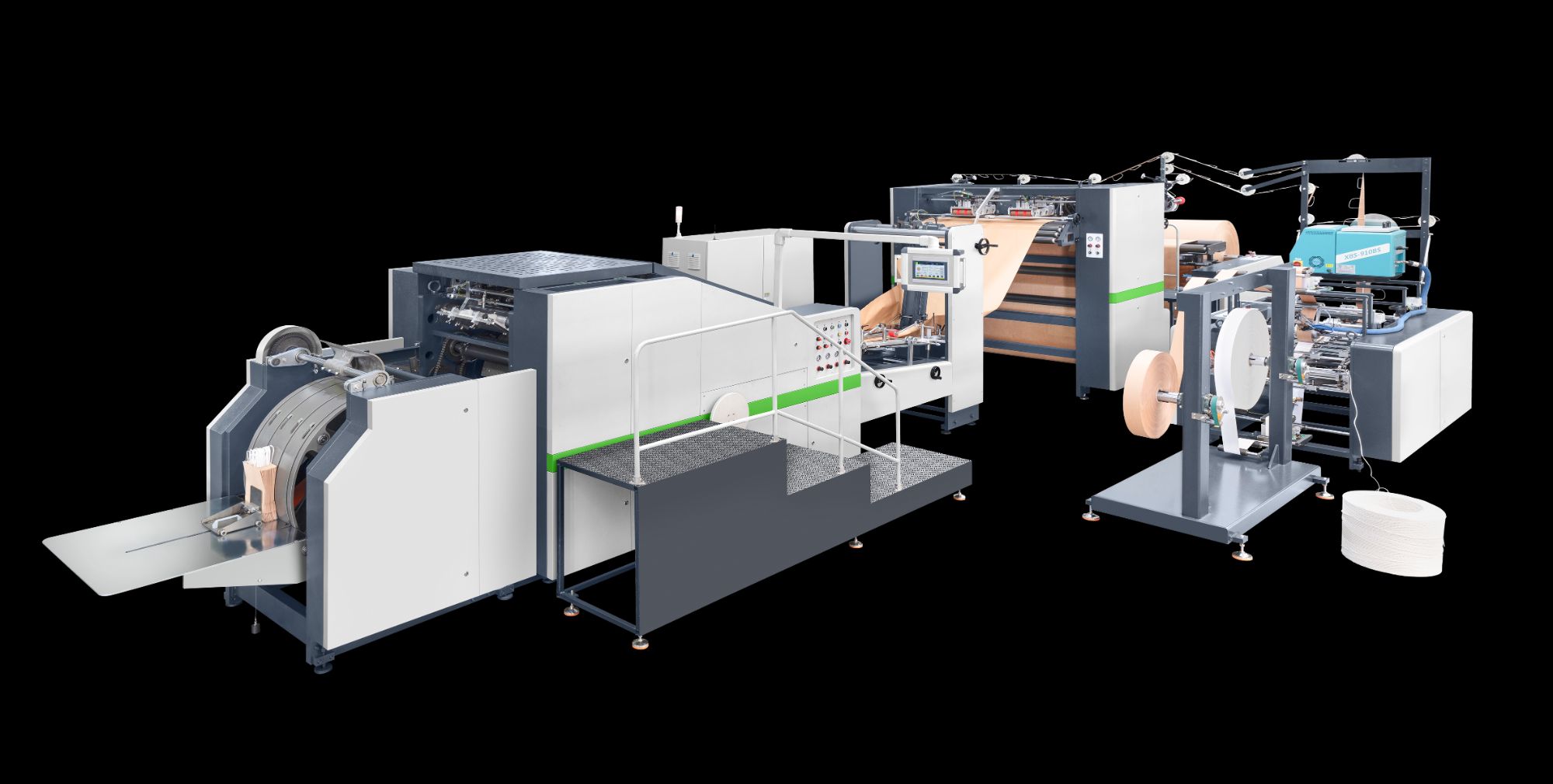
Switching from kraft to laminated stocks changes how material moves through almost every stage of production. Kraft’s porous, fibrous surface grips rollers and belts easily, while laminated sheets tend to slide or stick depending on the coating. Feed systems often need more precise air separation and static control, since laminated surfaces can cling together or repel each other in dry conditions. Adjusting the feed wheel pressure and using ionizing bars can reduce misfeeds and double-sheet pickups immediately.
Cutting and creasing are also affected. Laminated stocks have a harder, less forgiving surface that dulls blades faster and can crack along score lines if the crease depth is set too aggressively. Kraft, by contrast, cuts cleanly but can shed dust that builds up on sensors. Keeping cutting tools sharp and periodically cleaning the machine path helps maintain consistent registration when running both types in the same facility.
Storage and handling before the press matter just as much. Kraft absorbs moisture from the air and can warp if left unwrapped, while laminated stocks are more dimensionally stable but sensitive to heat, which can soften the film and cause blocking. Stacking laminated sheets flat on pallets, away from direct sunlight, and allowing kraft to acclimate to pressroom conditions for a day before use will reduce curl, jams, and waste across mixed-material jobs.
Automation Choices That Change Your Workflow
Automation choices don't just tweak your workflow—they redraw its boundaries. The moment you decide which tasks deserve a script and which ones still need your hands, you're not saving minutes; you're redefining how your team spends its thinking. A good rule of thumb is to automate the repetitive, not the judgment-heavy. If you find yourself copying data between three tabs every morning, that's a signal. If you're debating how to phrase a client email, that's not.
The trick is to pick tools that talk to each other without a middleman. A patchwork of disconnected bots creates more maintenance than it removes. Instead, look for automation that mirrors how work actually flows—starting at the trigger, passing through the same handoffs, and ending where the work gets used. When the automation feels invisible, you've chosen correctly.
Finally, treat automation as a habit, not a project. Small changes compound. Automate one recurring decision each week, and within a month your workflow will feel lighter, less reactive, and more like a system you designed rather than one you inherited.
Customization Beyond Basic Size Adjustments
True personalization rarely lives in the dropdown menu of S, M, and L. It begins where standard grading ends, considering not just how a garment fits, but how it moves with a body that is rarely symmetrical or static. From adjusting shoulder slopes to compensating for forward-rolled postures, thoughtful customization treats proportion as a conversation rather than a set of fixed ratios. A jacket that fits perfectly at rest might still bind at the elbow when reaching for a shelf, which is why measuring dynamic range matters more than taking a static chest measurement.
Beyond anatomy, material and construction choices unlock another layer of distinction. The same silhouette can feel entirely different when the lining is swapped for breathable mesh, or when a collar is fused by hand instead of by machine. Custom shops that offer uncommon options—like a choice between horn, corozo, or metal buttons, or the precise depth of a trouser pleat—signal that they treat garments as individual commissions rather than inventory. These details rarely appear in off-the-rack marketing, yet they define how a piece wears over years instead of seasons.
The most meaningful custom work also respects what should stay untouched. Pushing a client toward aggressive tapering or exaggerated lapels just to prove a point often produces a garment that ages poorly. Instead, skilled makers listen for what a person actually needs: perhaps a longer rise for someone who tucks in shirts daily, or a reinforced pocket bag for a tradesperson. The goal is not to redesign from scratch, but to quietly remove every small friction that mass production accepts as inevitable.
Maintenance Demands Most Buyers Overlook
A test drive and a quick look under the hood won't reveal every future expense. Oil changes are the baseline, but many buyers skip over less glamorous fluids like brake fluid, coolant, and transmission or differential oil. These degrade with age as much as with mileage, so a low-mileage vehicle can still be due for a full fluid service. The cost isn't huge, but it arrives sooner than expected and often gets pushed aside.
Rubber and plastic parts age on a calendar, not just an odometer. Belts, hoses, coolant lines, and suspension bushings dry out and crack even when a vehicle sits in a garage. Tires might have deep tread but be six or seven years old, meaning the compound has hardened. Battery plates corrode during long periods of inactivity. A buyer who only checks tread depth and voltage at the terminal is missing the full picture.
Maintenance history often matters more than mileage. Two cars with 30,000 miles can be in very different condition if one had regular fluid changes and the other never had the brake system flushed. Deferred maintenance doesn't always show up as a warning light; it shows up as a repair bill later. Ask for records, note the date codes on tires and batteries, and budget for the services the previous owner probably ignored.
Where the Real Long-Term Costs Hide
Most buyers fixate on the sticker price or the monthly payment, but the true financial drain often shows up years after the purchase. A product that seems affordable at checkout can quietly become a recurring expense through maintenance, compatible accessories, or energy consumption. For example, a budget printer may cost less than a dinner out, yet its proprietary ink cartridges can double the original price within a few months of regular use.
Another overlooked layer is the cost of upgrades and replacements. Cheaper versions of appliances or electronics frequently lack durable components, meaning they wear out faster or become obsolete sooner. You might save a hundred dollars today only to spend three hundred in two years on repairs or a new model entirely. This cycle doesn't just hit your wallet—it also consumes time, patience, and often forces you into making rushed decisions when something breaks unexpectedly.
Finally, there are the hidden costs tied to how you actually use the item. A car with a lower price tag might have poor fuel efficiency or expensive insurance rates that slowly bleed your budget. Software that seems free can lock essential features behind subscriptions, turning a one-time deal into a perpetual fee. Recognizing these delayed expenses requires looking beyond the initial transaction and asking what the product will demand from you over its entire lifespan.
FAQ
Suppliers usually split their ranges into square-bottom bag machines, V-bottom machines, and handle-attachment lines. Some models focus on grocery-style bags with twisted paper handles, while others produce flat satchels or SOS bags. Depending on the workshop, you can find fully automatic lines that fold, glue, and patch handles in one pass, or semi-automatic units where operators feed pre-cut sheets.
Inline flexo printing makes sense when your designs repeat across long runs and you want to avoid extra handling. A separate sheet-fed press gives more color stations and better registration for complex artwork, but you add a second process and more labor. If bag sizes change often, inline units with quick-change print cylinders tend to save more downtime.
Most Chinese machines are built around kraft paper from roughly 40 to 120 gsm, sometimes up to 150 gsm for heavier bags. Virgin kraft runs cleanly, while recycled stock may require stronger vacuum systems and different scoring. Coated or laminated papers need extra attention to glue curing and folding temperatures, so it is worth testing your exact stock before signing off.
Entry-level semi-automatic machines often deliver 40 to 80 bags per minute on simple sizes. Fully automatic square-bottom lines with handle attachment typically run between 120 and 250 bags per minute. The top speed depends on bag width, paper thickness, handle type, and how often the crew changes rolls. Treat any figure above 300 bags per minute with caution unless you see a live run with your own material.
Look at the thickness of side plates, the quality of gearbox brands, and whether servo motors come from recognized suppliers. Ask about bearing placement, lubrication access, and how the reel stands handle heavy parent rolls. A machine that uses thick cast iron or stress-relieved steel plates will hold alignment longer than a lighter welded frame, especially at higher speeds.
Yes. Twisted paper handle units are more complex and add substantial cost compared with flat paper handles or die-cut handles. Machines that also punch and patch reinforcement cards under the handle increase price further. If your market can accept a flat handle or no handle, you can often save 20 to 35 percent on the line.
Most established suppliers offer online video troubleshooting, spare parts lists, and one or two training visits. Some include installation and commissioning in the contract, while others charge separately. Before ordering, confirm response time for urgent breakdowns, whether the supplier has English-speaking engineers, and how long critical spare parts take to ship.
Compressed air quality and stable voltage often cause more problems than the mechanical parts. Many machines need 6 to 8 bar of clean, dry air, and servo-driven lines can be sensitive to voltage drops. Ask for the exact air consumption, electrical load, and floor space before the container arrives so the workshop is ready.
Conclusion
China's paper bag machine market isn't a single template—it splits into distinct builds depending on whether you need flat or satchel bags, V-bottom or square-bottom constructions, and whether the stock is lightweight kraft, heavy laminated sheets, or recycled blends. Roll-fed and sheet-fed designs each impose their own rhythm on the floor; a machine tuned for 40gsm virgin fibre won't simply absorb 120gsm coated stock without changes to tension control, creasing pressure, and glue application. Automation is the second fork: some lines bundle auto-feeding, inline flexo printing, window patching, and handle attachment into one continuous pass, while others leave those steps separate. That choice dictates not just output speed but how many operators you'll actually need and how often you'll stop for micro-adjustments.
Beyond size changes, the real differentiators show up in gusset depth, handle style, perforation placement, and patch film compatibility—details that often get locked into the frame design. Buyers who skip regular inspection of rubber rollers, pneumatic valves, and hot-melt nozzles tend to see quality drift within six months, not because the machine failed but because small wear points were never mapped. The largest expenses rarely sit on the invoice: compressed air consumption, adhesive waste on short runs, and downtime from a single obsolete servo drive can outpace the initial price difference between two suppliers. Mapping those operational loads before purchase, not after, is what separates a line that keeps making bags from one that keeps making service calls.
Contact Us
Contact Person: CARA
Email: [email protected]
Tel/WhatsApp: +8619519778302
Website: https://www.rokinmachinery.com