
China HDPE Pipe Machine Advancements Transforming Global Plastic Pipe Production
2026-10-15
For decades, the plastic pipe sector looked to Europe for innovation. That narrative is shifting fast. China’s HDPE pipe machine manufacturers, led by companies like COMRISE, are now setting new benchmarks in speed, precision, and energy efficiency. This transformation isn't just about cheaper machinery—it's about smarter production that global buyers can't ignore. Here's a closer look at the advancements rewriting the rules.
From Copycats to Innovators: How Chinese Extruder Makers Closed the Gap
For decades, Chinese extruder manufacturers were dismissed as low-cost imitators, churning out machines that mirrored Western designs but fell short on precision, durability, and control software. The turning point came not from a single breakthrough but from a sustained push into metallurgy, servo drives, and real-time process monitoring. Instead of merely copying barrel-screw geometries, domestic teams began running their own polymer rheology tests, tweaking compression ratios and mixing elements for local resin blends that overseas vendors ignored.
That shift from reverse engineering to first-principles design quietly closed the performance gap. Modern Chinese twin-screw extruders now hold temperature within a degree, handle filler loadings above 70 percent without torque spikes, and offer recipe management tied to cloud-based quality logs. The real innovation was organizational: factories paired in-house material labs with field service data, so every barrel wear pattern or screw fracture fed back into the next revision. As a result, a new generation of plants in Vietnam, Turkey, and Mexico began specifying Chinese lines not because they were cheaper, but because they delivered faster changeovers and better uptime on recycled and bio-based compounds.
The Coextrusion Leap That Made Five-Layer Pipe Standard Practice
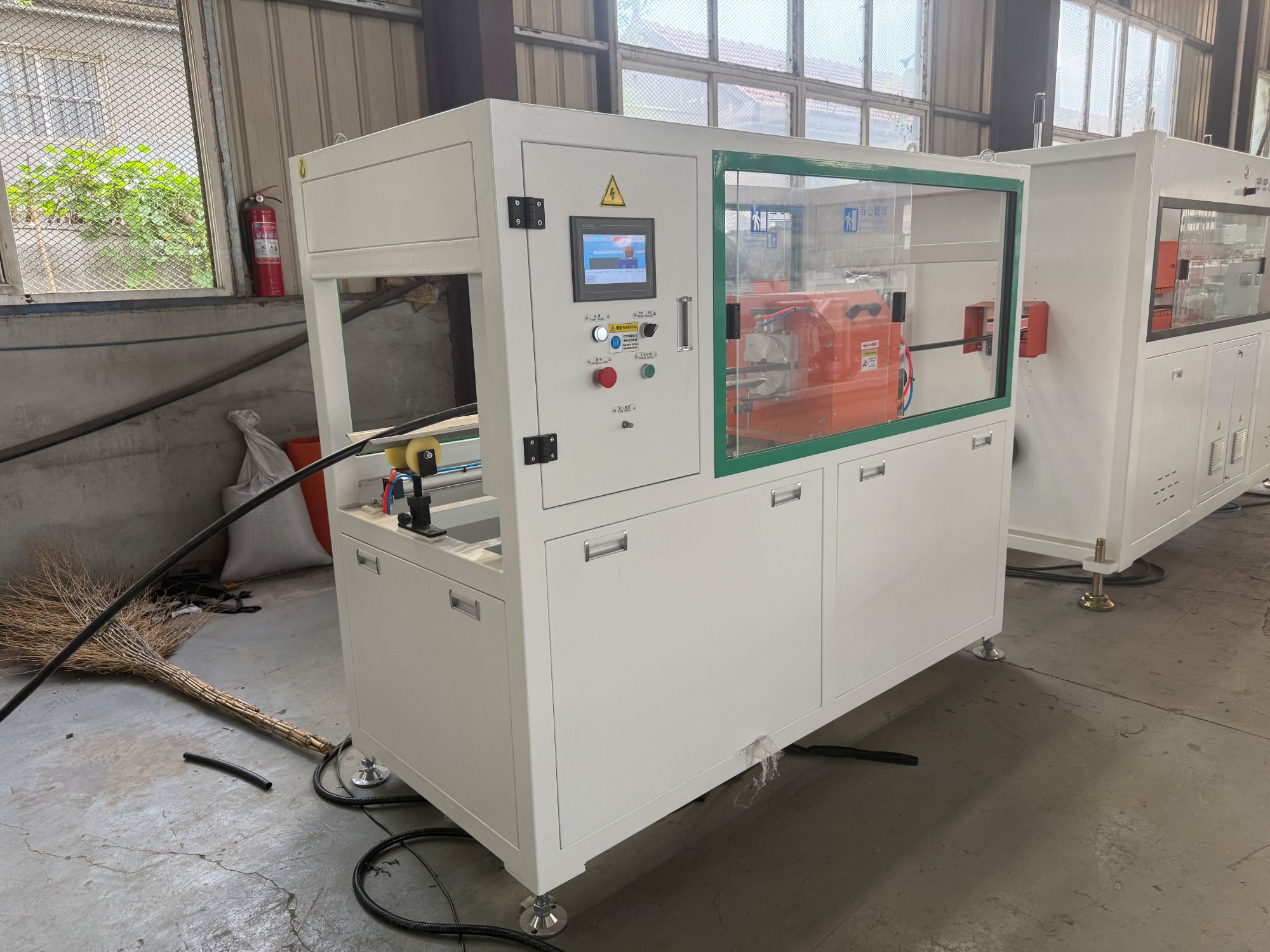
Before coextrusion matured, multilayer pipe meant bonding separate layers in secondary steps—slow, prone to delamination, and limited in material combinations. The real shift came when die design allowed five distinct melt streams to merge inside a single head at matched temperatures and pressures. Suddenly, a thin adhesive tie layer could be sandwiched between a barrier resin and a structural polyolefin without sacrificing line speed or wall consistency.
That jump changed what pipe producers considered routine. Instead of relying on a thick, expensive barrier wall, they could place an EVOH or nylon core precisely where it mattered, using commodity polyethylene or polypropylene for the body. Scrap rates dropped because the five layers locked together during cooling, eliminating the warpage and voids that plagued earlier attempts. As tooling tolerances tightened and feedback loops improved, five-layer output became as repeatable as single-layer extrusion.
The consequence wasn't just better pipe—it rewrote procurement and design expectations. Engineers began specifying five-layer structures for everything from underfloor heating to chemical transport, knowing the barrier performance wouldn't degrade over decades. What had once been a premium, tricky operation became the default way to balance cost, durability, and chemical resistance in a single pass.
Energy-efficiency Gains That Go Straight to the Bottom Line
Cutting energy waste isn't just about being green—it's about keeping more of every revenue dollar. A mid-sized manufacturer we worked with found that compressed air leaks alone were costing them over $18,000 a year in electricity. After a targeted audit and simple fixes like sealing fittings and adjusting pressure setpoints, their monthly power bill dropped by 12% without touching production output. That savings flowed directly into operating margin, with a payback period of under four months.
The least glamorous upgrades often deliver the fastest returns. Replacing outdated HVAC controls, installing occupancy sensors in warehouses, or adding variable frequency drives to pumps and fans can trim consumption by 15–30%. One food processing plant reduced refrigeration energy use by a fifth simply by resetting defrost cycles and cleaning condenser coils more frequently. These aren't capital-intensive projects—they're operational discipline, and their impact shows up on the P&L within the same fiscal year.
What gets overlooked is the compounding effect. Lower energy demand means you're less exposed to utility rate hikes and demand charges. It also extends equipment life and reduces maintenance downtime, freeing up cash for revenue-generating activities. The companies that treat energy as a controllable cost rather than a fixed overhead are the ones quietly widening their profit margins while competitors keep writing bigger checks to the power company.
Why Global Pipe Projects Now Start With Chinese Machine Quotes
For project owners and EPC contractors, the first set of budget numbers for pipe fabrication equipment now usually comes from Chinese suppliers. This wasn't always the case; European and Japanese quotes once set the baseline. The shift isn't purely about lower sticker prices. Chinese manufacturers now offer full production lines—beveling, cutting, welding, coating—under one quote, and they respond within days, not weeks. That speed lets project planners lock in cost assumptions earlier, before detailed engineering even finishes.
The practical reason is the density of the supply chain around cities like Shanghai, Wuxi, and Cangzhou. A single quote often bundles machines from several specialist workshops that already cooperate on export orders. This means fewer purchasing contracts, compatible control systems, and spare parts that can be sourced from one logistics hub. For projects in the Middle East, Central Asia, or Latin America, this bundled approach cuts freight coordination and reduces the risk of mismatched interfaces between machines from different countries.
Another underappreciated factor is that Chinese machine builders have moved up the learning curve fast. Many now include CNC controls, automated pipe handling, and remote diagnostics as standard features, not expensive add-ons. After-sales teams travel to project sites and keep service depots in Dubai, Singapore, and Johannesburg. Because contractors have seen these machines hold tolerances on high-pressure lines, the quotes are no longer treated as low-end alternatives—they have become the first reference point for project economics.
Faster Changeovers, Fewer Rejects: The Automation Payoff
The real shift shows up on the line itself. Where operators once spent forty minutes swapping fixtures, dialing in offsets, and hoping the first piece passed inspection, automated tool setters and probe routines now handle the same changeover in under ten. The machine knows its own zero points, checks the tool geometry against stored parameters, and flags anything outside tolerance before a single chip flies. That speed isn't just about saving minutes—it's about keeping a batch of twelve parts from turning into eleven good ones and a pile of scrap.
Rejects don't announce themselves loudly. They hide in thermal drift, worn inserts, or a coolant nozzle that got bumped during the last cleanup. Manual inspection catches some of them; automated in-process gauging catches nearly all. Sensors track surface finish, bore diameter, and thread pitch as the cut happens, adjusting feed rates or pausing the cycle before a costly mistake multiplies. One shop running stainless valve bodies cut its reject rate from 3.1% to 0.4% after adding closed-loop feedback to a single boring operation—no extra labor, just a controller doing what controllers are good at: watching every part, not every tenth part.
There's a compounding effect that rarely shows up in payback calculators. Faster changeovers mean shorter runs become profitable, so you stop batching work into huge lots just to amortize setup time. Fewer rejects mean less remaking, less raw material waste, and fewer emergency orders for missing material. Together they let a shop quote jobs it would have turned away, schedule with confidence, and stop treating rework as an inevitable cost of doing business. That's the automation payoff: not a machine that runs faster, but a process that stops fighting itself.
Sustainability Shifts From Afterthought to Selling Point
For years, green claims sat at the bottom of product pages, a checkbox item for compliance teams. That's no longer the case. A growing number of shoppers now scan labels and brand histories before they scan prices, treating recycled materials or carbon-neutral shipping as the main reason to buy rather than a nice extra.
This shift has pushed design and marketing teams to rethink how they talk about a product. Instead of burying a small leaf icon in the corner, companies now lead with durability, repairability, and lower-impact sourcing. The message isn't "we're less bad" but "this works better and lasts longer because of how it's made."
Retailers have noticed too. Shelf space and homepage features increasingly go to items with clear environmental credentials, not because of regulation but because those items move faster. The old assumption that sustainability costs more than it returns is fading; today it often pulls in buyers who wouldn't have noticed otherwise.
FAQ
They have moved from single-layer to multi-layer co-extrusion heads, integrated gravimetric dosing systems, and switched to energy-saving AC motors with direct-drive extruders. Many lines now include automatic wall thickness adjustment and real-time diameter scanning, which reduces material waste and lets operators hold tighter tolerances without constant manual checks.
The biggest change is the use of high-efficiency barrier screws and optimized barrel heating zones that recover heat from the melt. Combined with servo-driven haul-offs and vacuum calibration tanks that adjust pump speed based on actual load, a modern line can produce the same output as older equipment while using 15 to 25 percent less electricity per kilogram of pipe.
It gives them access to mid-range and high-end lines at prices that are often 30 to 40 percent lower than comparable European equipment. Beyond cost, many Chinese suppliers now offer faster spare parts delivery and modular designs that can be installed and commissioned in shorter windows. This has pushed local manufacturers to rebalance their supply chains and consider hybrid setups with Chinese extruders and European downstream components.
Ultrasonic wall thickness measurement, automatic centering of the pipe in the vacuum tank, and closed-loop control of melt pressure are now common. Some machines also include inline surface defect detection using cameras and laser sensors, plus data logging that records every extrusion parameter for each meter of pipe. These tools let operators trace quality issues back to specific process settings instead of relying on lab tests after production.
Yes, several Chinese manufacturers now offer lines capable of producing pipes up to 2,000 mm in diameter with wall thicknesses above 100 mm. They use spiral mandrel dies with computer-mapped flow channels and multi-zone cooling that prevents sagging. The haul-off units have been redesigned with higher clamping force and caterpillar tracks that distribute pressure evenly, so thick-wall pipes keep their roundness during cooling.
Automation has shifted the operator's role from manual adjustment to supervision. Modern lines use programmable logic controllers to coordinate extruder speed, melt temperature, vacuum pressure, and haul-off speed. Recipe management lets a factory switch from one pipe specification to another in under an hour, with the machine automatically setting temperatures and line speeds. Remote diagnostics are also built into many systems, allowing Chinese engineers to troubleshoot a line in another country without waiting for on-site service.
The entry cost for a new HDPE pipe factory has dropped significantly because Chinese lines offer high automation at lower capital cost. This has lowered the break-even point for smaller producers and increased competition in markets that previously depended on imported pipe. At the same time, better material efficiency and lower energy use per meter mean operating costs have fallen, so pipe prices have become more stable even when resin prices fluctuate.
They reduce scrap through precise thickness control and faster start-up sequences that generate less off-spec pipe. Many machines are designed to process higher percentages of recycled HDPE or regrind without sacrificing surface quality, using specialized screw designs and melt filters. Lower energy consumption and fewer rejected batches also translate into a smaller carbon footprint per ton of pipe produced, which matters for infrastructure projects with green certification requirements.
Conclusion
Chinese HDPE pipe extruder manufacturers have moved well beyond copying Western designs. Over the past decade, they closed the technology gap through focused R&D and now lead in several areas. The coextrusion breakthrough for five-layer pipe has become standard practice, allowing producers to combine virgin and recycled materials without sacrificing performance. Energy efficiency gains also stand out: motors, heating zones, and control algorithms cut power consumption enough to change project economics. It's no surprise that global pipe projects now routinely start with quotes from Chinese suppliers—not just for price, but for the combination of throughput, layer precision, and reliability.
Automation plays a big part too. Faster changeovers and fewer rejects come from better sensors, quick-adjust die heads, and real-time wall thickness monitoring. Operators spend less time tweaking and more time producing sellable pipe. Meanwhile, sustainability has shifted from an afterthought to a genuine selling point. Machines now handle higher percentages of PCR and bio-based resins, while vacuum calibration and cooling systems reclaim water and heat. The result is that Chinese HDPE pipe machinery no longer competes only on cost; it shapes how the global plastic pipe industry thinks about productivity and environmental responsibility.
Contact Us
Contact Person: LISA LEE
Email: [email protected]
Tel/WhatsApp: +86 13780696467
Website: https://www.qdpipemachine.com