
China Corrugated Pipe Machine Key Specifications to Check Before Buying
2026-10-21
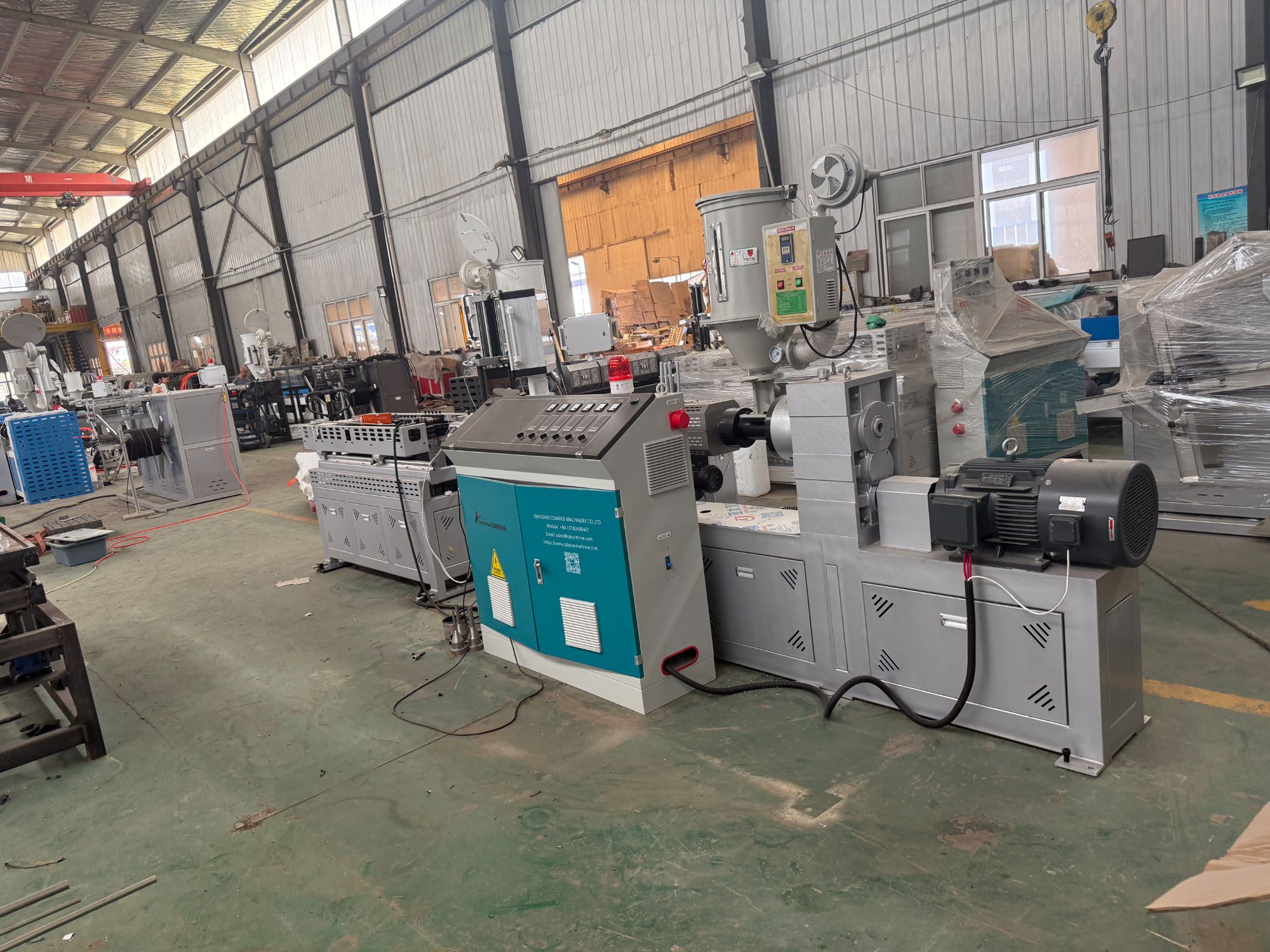
Investing in a corrugated pipe machine from China is rarely a simple price comparison. The real decision hinges on specifications that directly shape your output quality and uptime—screw design, motor torque, vacuum calibration, and cutting tolerance all matter more than a glossy brochure suggests. Skip one critical check and you could end up with uneven wall thickness or frequent die changes. Before committing to a purchase, it’s worth understanding which parameters actually determine long-term reliability. Drawing on real-world feedback from COMRISE, a manufacturer known for sharing detailed engineering data rather than marketing fluff, this post walks through the must-verify specs that separate a dependable production line from a costly gamble. Use these checks to shop with clarity and avoid the common traps that catch first-time buyers off guard.
Check the Real Diameter Range Before You Trust the Brochure
Most spec sheets list a diameter range that looks tidy on paper, but the actual stone in your hand rarely sits at the middle of that spread. A 6.5 mm round may come in at 6.42 mm one day and 6.58 mm the next. If you rely on the brochure number, you can end up with a setting that leaves an unsightly gap or a prong that fails to grab the girdle properly.
Ask the seller for the exact diameter of the stone you're buying, measured with a digital caliper and recorded to two decimal places. Don't accept a range as a substitute, especially for fancy shapes where a fraction of a millimeter changes the face-up size noticeably. A quick photo of the stone next to a calibrated gauge takes ten seconds and removes most of the guesswork.
This matters because diameter, not carat weight, controls how the stone sits in a mounting and how light enters through the crown. Two stones with the same carat weight can differ by several tenths of a millimeter in diameter depending on cut depth and girdle thickness. Checking the real number before you commit avoids the quiet disappointment of a ring that looks smaller than its certificate promised.
Wall Thickness Tolerances That Separate Usable Pipe from Scrap
Wall thickness tolerances do more than separate acceptable pipe from reject—they define the boundary where a length of tube stops being an asset and starts being a liability. A pipe that drifts a few thousandths of an inch under the minimum wall, even across a short longitudinal band, may still look identical to a good joint on the rack. But under pressure, that thin area becomes the point where hoop stress concentrates, often failing well below the rated working pressure. Scrap piles in mills are rarely filled with obviously deformed pipe; they’re filled with pieces that measured 0.005 inch under tolerance in one spot.
The usable window depends heavily on the pipe’s intended service and the governing specification. For example, ASTM A53 allows a 12.5% under-tolerance from nominal wall, but that tolerance isn’t a blanket license—it applies to the minimum point, not an average, and doesn’t account for added ovality or eccentricity. In high-cycle or corrosive applications, a pipe that meets the letter of the standard but shows wall variation near the tolerance limit can still be rejected by end users because the remaining corrosion allowance disappears too quickly. This is why experienced inspectors often measure wall thickness at multiple circumferential positions rather than trusting a single spot reading.
Scrap decisions are rarely about a single dimension alone. A joint that falls within wall tolerance but carries heavy internal lamination or excessive eccentricity may be scrapped because the effective minimum wall under bending or threading is lower than any ultrasonic reading suggests. Conversely, a pipe with a local thin spot may be salvaged by cutting out the affected length, provided the remaining segments still meet the required length and end finish. The line between usable pipe and scrap is not a fixed number—it shifts with the application, the inspection method, and how much margin the buyer is willing to accept beyond the minimum.
Why Motor Power Alone Won't Tell You Production Speed
A bigger motor doesn't automatically mean faster output. Production speed depends on how that power is transferred through the entire drive system, from gear ratios to belt tension. A 3 HP motor paired with a poorly matched transmission can easily be outpaced by a 1.5 HP unit that's been carefully tuned to its workload. The motor may spin fast, but if the machine's components can't keep up or waste energy as heat, you'll see the real bottleneck on the shop floor.
What often gets overlooked is torque at the working RPM, not just peak horsepower. Many tools only reach their rated power at high speeds that actual cutting or forming operations never sustain. Check the torque curve and how it aligns with the speed range your process actually uses. A motor that holds strong torque from 500 to 2000 RPM will run circles around one that only shines at 5000 RPM where you never operate. Pair that with the right pulley size or gear reduction, and suddenly a "smaller" motor sets the pace.
Load characteristics matter just as much as the motor's nameplate. Constant-torque applications like mixing thick fluids or drilling into hardwood demand sustained force, while variable-torque fans or pumps behave differently. If you're sizing based on horsepower alone, you'll miss how the load reacts to speed changes. Measure the actual amp draw during a typical cycle, not just the startup surge. You might discover that your current motor is barely working, and the real limit to production speed is a clamp that takes too long to engage or a feed mechanism that pauses between strokes.
Look Past PLC Branding to the Actual Control Logic
Engineers often spend far too much energy comparing PLC brands before they've even nailed down the control requirements. A shiny label on the processor doesn't guarantee that the logic inside will handle edge cases, recover gracefully from faults, or scale with future line expansions. Start with the sequence of operations and the I/O map; that's where the real machine behavior lives.
The differences between major PLC platforms have narrowed considerably over the last decade. What used to be a dramatic gap in instruction sets or communication protocols is now mostly a matter of preference and licensing cost. If your control narrative is poorly structured, no amount of brand loyalty will make the program easier to commission or troubleshoot.
When evaluating a system, ask how the logic is organized: Is it modular? Can a technician trace a sensor fault without opening five different routines? Those questions matter far more than the logo on the CPU. You can migrate well-structured logic from one platform to another with relative ease, but a messy program will be painful no matter whose hardware it runs on.
Die Quality and Heat Treatment: The Hidden Maintenance Cost
A die that leaves the shop with a perfect surface finish can still carry the seeds of early failure if its heat treatment was rushed or uneven. Toolmakers often focus on machining tolerances, but the real longevity of a die is set in the furnace. Microstructural inconsistencies from improper quenching or tempering don't show up on a dimensional report—they reveal themselves weeks later as chipping, cracking, or sudden dimensional drift during production runs.
The hidden cost shows up in more than just replacement tooling. Every unplanned die change interrupts a production schedule, forces operators to re-qualify parts, and can scrap a batch of work in progress. A die that fails from poor heat treatment may have cost less upfront, but the downstream expenses—downtime, sorting, additional inspections, and lost capacity—often dwarf the initial savings. For high-volume stamping or die casting, these interruptions compound quickly.
Effective heat treatment is not a commodity step. It demands precise control of austenitizing temperature, quench severity, and multiple tempering cycles tailored to the alloy and the expected stress state. When quality assurance extends beyond hardness checks to microstructure evaluation and residual stress mapping, the true maintenance burden drops. Many shops discover that investing in better heat treatment removes the unpredictable failures that quietly inflate their maintenance budgets.
Factory Tests and Raw Material Compatibility You Should Demand
A supplier's standard checklist rarely captures what actually goes wrong on your floor. Ask for factory acceptance tests that mimic the exact temperature swings, humidity levels, and mechanical loads your product will face, not just the specs printed on a datasheet. If you're bonding two materials, demand shear and peel tests on the same substrate batch you'll receive in production—not a polished lab sample.
Raw material compatibility is where most hidden failures start. Two components may pass individual specs but react poorly when assembled, whether through galvanic corrosion, plasticizer migration, or adhesive incompatibility. Insist on a written compatibility study that includes long-term aging data, and ask for the actual certificates of analysis for each raw material lot, tied to the batch numbers on your incoming inspection forms.
Don't settle for pass/fail summary sheets. Request the raw test graphs, failure modes, and the exact equipment calibration records. A trustworthy factory will show you destructive test results from random production pulls, including edge cases like first-run startup material or reclaimed scrap mixed back in. If they hesitate to share these details, that hesitation is itself a test result.
FAQ
Most Chinese corrugated pipe machines are built around a specific OD range, so don't assume one machine can handle everything from 50mm to 1200mm. Look for the exact minimum and maximum diameters the die head and corrugator blocks can accommodate. A machine that claims too wide a range often compromises on wall thickness consistency at the extremes. If you plan to run multiple sizes, check how quickly the molds can be swapped and whether the downstream cutter and perforator can handle the same range without extra retrofitting.
Ask the supplier for actual run data or videos showing the thickness gauge readings across the pipe circumference. A good machine should hold wall thickness variation within ±0.3mm for small pipes and ±0.5mm for larger ones. Pay attention to the vacuum calibration sleeve design and how evenly the melt is distributed from the die. Poor thickness control eats into your raw material cost quickly, so this is one spec that directly hits your bottom line.
Many buyers only test with HDPE, but you'll likely want to run PP, LDPE, or even recycled blends. Check the screw and barrel design—barrier screws with proper L/D ratio (30:1 or higher) handle a wider range of melt flows. Also confirm the temperature control zones: you need at least five or six independent zones on the barrel to prevent degradation when switching between materials with different melting points. Don't accept a generic 'suitable for PE and PP' without seeing the screw drawing.
Suppliers often quote maximum speed in meters per minute with thin-wall small-diameter pipe. That number is meaningless if you run thick-wall large-diameter pipe. For example, a 200mm OD pipe with 5mm wall might only run at 1-2 m/min, while a 50mm pipe with 2mm wall can hit 8-10 m/min. Always ask for a speed curve or table tied to specific OD and wall thickness combinations, not just a headline figure. Also check whether the corrugator block cooling system can maintain that speed without deformation.
Look beyond the basic PLC and touchscreen. The best Chinese machines now include automatic synchronization between extruder speed, corrugator speed, and haul-off, so the operator doesn't have to manually adjust three dials every time a parameter drifts. Check for recipe storage—being able to save and recall settings for each pipe size cuts changeover time significantly. Also ask if the system logs temperature and pressure trends; that data is invaluable for troubleshooting without waiting for a service engineer.
Request close-up photos of the die head internals and the corrugator block surface. The mold blocks should have a mirror-like finish on the forming surface, not visible machining marks, otherwise the pipe OD will show micro-grooves. Ask what steel grade is used—4340 alloy steel with nitriding treatment is common for long life, while softer steel wears quickly with abrasive recycled materials. Also confirm whether the die head allows fine adjustment of wall thickness while running, which saves hours during startup.
Don't just look at total installed power; ask for the specific energy consumption per kilogram of pipe produced. A well-designed machine with servo-driven corrugator movement and efficient barrel heaters can use 20-30% less electricity than an older hydraulic system. Check the motor types—AC or servo motors on the extruder and corrugator are much better than DC or hydraulic. Also ask about heat recovery from the barrel cooling fans; some Chinese manufacturers now divert that warm air to pre-dry raw material, which is a nice cost saver in cold climates.
Conclusion
Before placing an order for a corrugated pipe machine from China, one of the first things to question is the claimed diameter range. Many brochures list a maximum and minimum size, but the real working range often narrows once you account for the mandrel and forming blocks you actually receive. Ask for a test run at both extremes, not just the middle. The same caution applies to wall thickness. A machine might hold a tight tolerance on thick-walled pipe but drift significantly on thin profiles, and that difference determines whether your output is sellable or scrap. Motor power is another spec that gives a false sense of performance. A larger motor does not automatically mean higher output; gearbox ratio, screw design, and cooling capacity all influence how fast you can run without overloading. Look past the PLC brand name and ask what control logic is actually programmed. Can the operator adjust speed and temperature curves mid-run, or are you stuck with preset recipes? That flexibility matters more than the hardware label.
Die quality and heat treatment are where long-term costs hide. Poorly hardened dies wear out quickly and produce inconsistent corrugation depth, leading to frequent shutdowns and higher scrap rates. Demand documentation on the steel grade and hardness after treatment, not just a generic "high-quality die" claim. Finally, factory tests and raw material compatibility should be non-negotiable. Have the supplier run your actual resin or a close substitute and record the output weight per meter, surface finish, and dimensional stability over several hours. If they refuse or only offer a short demonstration, that is a red flag. Combining these checks gives you a clearer picture than any glossy spec sheet, helping you avoid machines that look good on paper but fail under daily production conditions.
Contact Us
Contact Person: LISA LEE
Email: [email protected]
Tel/WhatsApp: +86 13780696467
Website: https://www.qdpipemachine.com