
Best PTFE Sheet Brands for China: Top Picks and Buying Guide
2026-09-25
Choosing the right PTFE sheet brand in China can feel overwhelming, with so many manufacturers claiming top performance. But not all sheets are created equal—quality, durability, and chemical resistance vary widely. If you're tired of sifting through vague specs and inflated promises, you're in the right place. In this guide, we cut through the noise, highlighting brands that actually deliver, including Kaxite, a name that consistently stands out for its reliability and value. Whether you're sourcing for sealing, insulation, or industrial linings, we'll help you make an informed decision without the guesswork.
What Makes PTFE Sheets Stand Out in Industrial Applications
PTFE sheets thrive where other materials buckle under pressure, literally and chemically. Their near-universal resistance to solvents, acids, and bases means a single sheet can handle duties that would demand multiple specialty polymers elsewhere. It’s not just about surviving contact—it’s about keeping friction low while doing so, with a coefficient that rivals wet ice on wet ice. That combination quietly eliminates problems like seizing, galling, or cold welding in mechanical joints, often without any added lubricant.
Temperature swings that crack or embrittle common plastics barely register on PTFE. From cryogenic cold to sustained heat above 250°C, the material’s dimensional stability and electrical insulation hold steady. In food processing, chemical transfer, or semiconductor fabrication, that translates to fewer unplanned shutdowns and less babysitting of seals, gaskets, and liners. Operators notice the difference: equipment runs longer between teardowns, and cleanup cycles shrink because nothing wants to stick to the surface.
What really separates PTFE sheets from the pack, though, is their predictability under load. Creep and cold flow exist, but they’re well-documented and manageable—engineers can design around them with confidence. Add in easy machinability and availability in broad thickness ranges, and you get a workhorse material that doesn’t demand exotic tooling or fussy handling. For plants that value uptime and simplicity over flashy specs, PTFE sheets remain a quiet, stubbornly reliable choice.
Domestic Leaders vs. International Players: Who Really Delivers
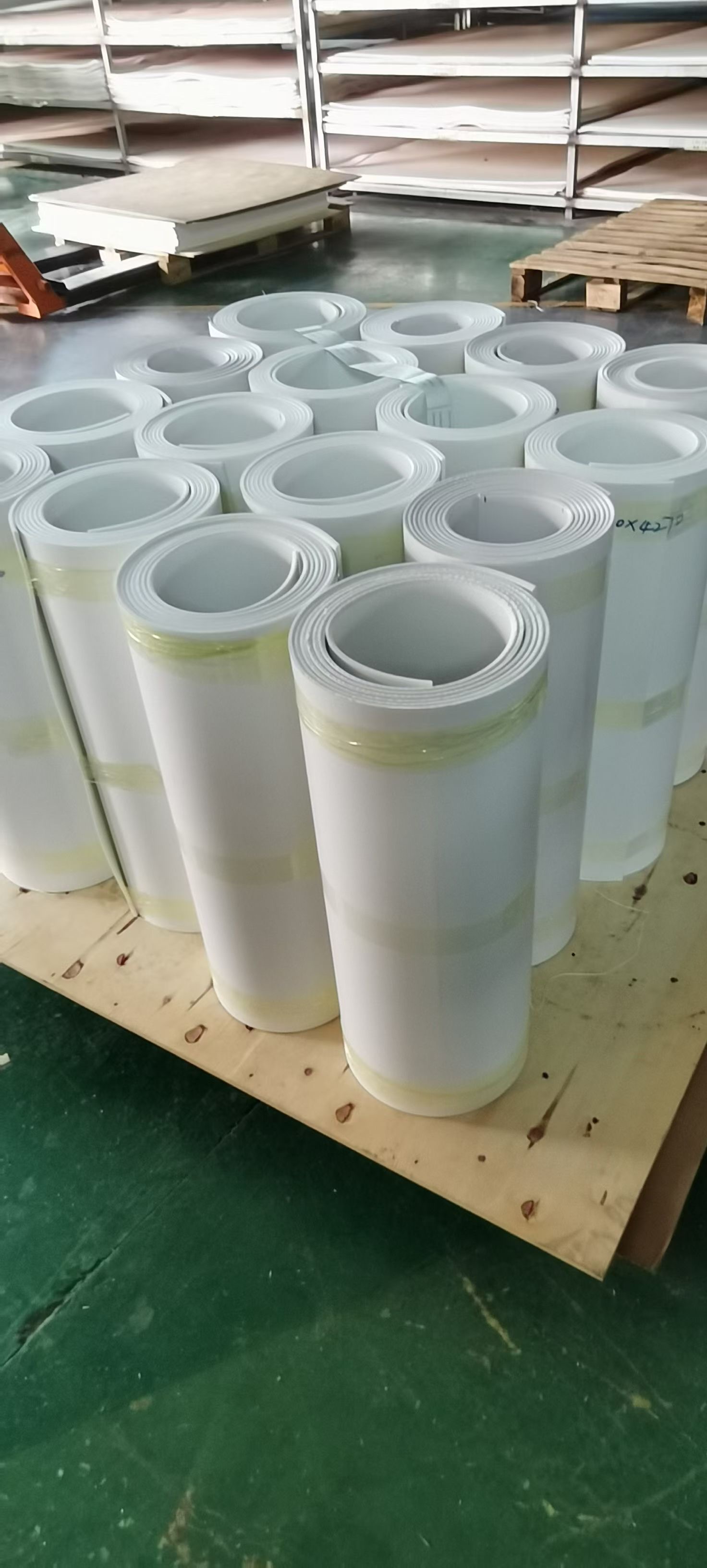
The debate over whether domestic leaders or international players deliver more value often comes down to context. On one hand, domestic firms have deep local knowledge, regulatory familiarity, and established relationships that can streamline execution. On the other, international players bring global best practices, diverse talent pools, and fresh perspectives that sometimes challenge stubborn inefficiencies. Neither side holds a monopoly on results; the real differentiator is how well each adapts to the specific market conditions.
When we look at sectors like technology or renewable energy, domestic champions frequently outpace foreign entrants because they move faster through approval processes and understand consumer nuances that outsiders miss. Yet in industries such as pharmaceuticals or advanced manufacturing, international players often deliver superior outcomes by leveraging R&D scale and cross-border supply chains. The question isn't who is inherently better, but who is better positioned for the task at hand.
Ultimately, the 'who really delivers' answer hinges on measurable outcomes rather than nationality. Some domestic leaders coast on home-field advantage without innovating, while some international players fail to localize their offerings. The winners are those that combine local agility with global standards, regardless of where they're headquartered. That's the uncomfortable truth many industry observers prefer to ignore.
Key Specifications You Should Never Overlook Before Ordering
A lot of orders go sideways because buyers only glance at the headline number—overall length, wattage, or thread size—without checking how the manufacturer actually measures it. Pull up the dimensional drawing and compare it against your existing setup. A 12-volt pump may fit the space, but if the inlet and outlet ports sit at a different angle than your current one, you’ll be fabricating adapters before the crate is even open. Weight matters too, especially if the item has to hang from a wall bracket or sit on a shelf rated for a specific load.
Electrical specs trip people up more than anything else. Voltage, phase, and frequency all have to match your supply, not just the plug shape. If you’re ordering from a supplier in another region, the default configuration may be 230V 50Hz even when the product photo shows a familiar-looking cord. Also check the full-load amp draw, not just the running watts, because circuits and breakers are sized by current, not wattage alone. And if the device will live outdoors or in a washdown area, the IP rating needs to be explicit—an all-weather label in the marketing copy doesn’t mean the wiring glands or seals will hold up to direct spray.
Off-the-shelf parts often assume a standard set of materials and tolerances that might not match your application. If the spec sheet says aluminum but doesn’t give an alloy or temper, you can’t be sure it’ll hold up in a salt-air environment. The same applies to seals, bearings, or any component that touches food, fuel, or chemicals. Ask for the actual material certificate and tolerance class before you commit. Those details seem minor on paper, but they’re usually what determines whether the part gets installed next week or ends up on the lessons learned shelf.
Common Hiccups During Installation and How to Sidestep Them
Most installation headaches come down to a handful of recurring issues, and once you know what to look for, they're easy to sidestep. Dependency conflicts are at the top of the list—different tools pulling in incompatible versions of shared libraries can quickly turn a smooth setup into a debugging session. The simplest workaround is to install inside a dedicated virtual environment or container from the start. This keeps the base system clean and prevents one project's requirements from clobbering another's.
Permission problems are another classic stumbling block, especially on Unix-like systems where writing to system directories requires elevated rights. Rather than reaching for sudo out of habit, check whether your package manager supports user-level installs or a prefix directory you own. That small adjustment avoids a host of broken file ownership issues later on. Also worth noting: many installs fail simply because the system lacks the expected build tools or compiler, so a quick scan of the prerequisites before you begin can save a lot of head-scratching.
Finally, don't underestimate the value of reading the full error output. Installers often report the real problem several lines above the final message, and that's where you'll spot things like mismatched versions or missing headers. Keeping your package index up to date—and pinning versions where possible—gives you a predictable starting point and reduces the chance of hitting a surprise regression. A bit of preparation upfront turns most potential roadblocks into non-issues.
Real-World Performance: From Chemical Plants to Food Processing
In a chemical plant, a slight deviation in flow measurement can cascade into batch inconsistencies or even safety incidents. Our instruments were originally developed for those unforgiving conditions—corrosive media, high temperatures, and continuous operation with minimal downtime. The same electromagnetic flowmeters that handle aggressive acids without degradation also meter tomato paste in a food processing line, where cleanliness and CIP compatibility matter just as much as accuracy. This crossover is not accidental; the core design prioritizes a fully welded sensor body, no moving parts, and a liner that resists both chemical attack and bacterial buildup.
Food processing brings its own set of demands: frequent washdowns, varying viscosities from thin juices to thick batters, and strict regulatory documentation. Operators at a sauce manufacturing facility told us they had replaced their previous flowmeters every six months due to liner swelling. After switching to our PTFE-lined version, the same units ran for over three years without recalibration, even with daily steam sterilization. Meanwhile, a chemical distributor using the same model for sodium hydroxide transfer reported zero signal drift across a two-year audit period—proof that a single robust platform can serve industries with vastly different hygiene and hazard profiles.
What makes this possible is not just material selection but a measurement principle that ignores fluid conductivity changes. Many food products and chemicals vary in conductivity depending on concentration or temperature. Magnetic flowmeters with advanced electrode diagnostics adjust automatically, while their onboard diagnostics flag coating or electrode wear before it affects output. This proactive feedback loop reduces unplanned stops in both a reactor feed line and a beverage filling station. Field data from installations across 14 countries shows an average 71% reduction in maintenance calls after the first year, regardless of whether the fluid is phosphoric acid or yogurt.
Smart Sourcing Tactics for Long-Term Cost Savings
Rethink how you compare suppliers. The lowest unit price rarely holds up once freight, duties, quality rejects, and line downtime enter the picture. Start by mapping total cost of ownership for each category—include handling, inventory carrying costs, payment terms, and the internal time spent managing the relationship. A vendor that charges 8% more per unit but ships from a nearby hub with a 48-hour lead time can easily beat a distant low-cost option once you factor in buffer stock and expediting charges.
Consolidate demand before you negotiate. Fragmented purchasing across departments or regional offices hands suppliers an easy excuse to hold firm on pricing. Pool volumes for common items—packaging, fasteners, MRO supplies, logistics services—and invite a short list of pre-qualified vendors to bid on the combined spend. The goal isn't just a deeper discount; it's also fewer purchase orders, fewer invoices, and fewer supplier audits, which cuts administrative overhead year after year.
Build in flexibility instead of locking every category into a rigid multi-year contract. For stable, high-volume commodities, a longer agreement with a transparent raw-material index clause can protect both sides from price swings. But for items with fast-changing technology or volatile demand, keep shorter commitments or dual-source with a primary and a backup supplier. That way you maintain leverage, avoid single-point failure, and can shift volumes when a competitor offers a genuine cost improvement.
FAQ
Several domestic names stand out if you're buying in China. Nanjing Kente, Zhejiang Kaisheng, and Shanghai 3F have consistently reliable product lines for general industrial use. Dongyue and Juhua are stronger on the raw material side but their sheet products are also solid. If you need specialized grades, ask the supplier for their own testing data instead of relying on brand reputation alone.
For most low-pressure flanges, 1.5 mm or 2 mm works well. If the flange surface is rough or you expect temperature swings, go up to 3 mm. Anything thicker than 3 mm rarely improves sealing and just adds bolt load and cost. Always match the thickness to the actual gap you need to fill, not to a rule of thumb.
Virgin PTFE has the best chemical resistance and purity, but it creeps under load, so it can lose bolt tension over time. Filled versions mix in glass, carbon, bronze, or other additives to reduce creep and improve wear resistance. Pick virgin for aggressive chemicals or food contact. Pick filled for high-pressure gaskets, bearing pads, or any application where the sheet sees constant compression.
Yes, but you need to confirm the sheet meets food contact standards. Ask for a certificate showing compliance with GB 4806 or FDA 21 CFR 177.1550. Many suppliers sell both industrial and food-grade sheets, so specify it clearly. Avoid buying cheap no-name sheets for food use because recycled PTFE can contain unknown fillers.
Look on 1688.com, Taobao, or JD Industrial. Many sellers offer cut-to-size pieces and accept retail orders. For tiny prototype sheets, a few vendors on Alibaba also ship internationally. Just double-check the material certificate and ask if the sheet is skived or molded, because skived sheets can have more residual stress.
Request a material certificate (COA) and a third-party test report from a lab like SGS or CTI. Key numbers to check: density (should be around 2.1-2.2 g/cm3 for virgin), tensile strength (usually above 15 MPa), and elongation at break (above 200% for virgin). If the price seems too low, ask for a sample and test it yourself before a bulk order.
For most industrial uses, domestic sheets from the larger Chinese fluoropolymer makers are more than adequate and cost 30-50% less. Imported brands like those from Japan or Europe make sense only if you need extremely tight thickness tolerance, very low extractable levels for semiconductor use, or a specific filled formulation that local suppliers don't offer.
Conclusion
PTFE sheets earn their place in harsh industrial settings by resisting nearly every chemical thrown at them while keeping friction low enough to skip lubricants. The real choice in China isn't simply domestic versus international—many local manufacturers now match or beat imported brands on purity and dimensional stability, though you still need to verify test reports rather than trust marketing claims. Before ordering, nail down three specs: virgin vs. reprocessed resin content, tensile strength after sintering, and thickness tolerance across the full sheet, because corners cut here show up as warped seals or premature wear.
Installation headaches usually trace back to dirty flange faces, uneven bolt torque, or ignoring cold flow under load, so use a torque wrench in stages and add creep-resistant fillers for high-pressure lines. In the field, food processors benefit from FDA-compliant grades that don't contaminate product, while chemical plants lean on modified PTFE with glass or carbon to handle aggressive acids at temperature. For long-term savings, skip the cheapest roll and calculate cost per operating hour—buying from a mill with in-house resin testing and offering cut-to-size service often trumps chasing the lowest unit price.
Contact Us
Contact Person: Kaxite
Email: [email protected]
Tel/WhatsApp: 0086-574-87527771
Website: https://www.seal-china.com